


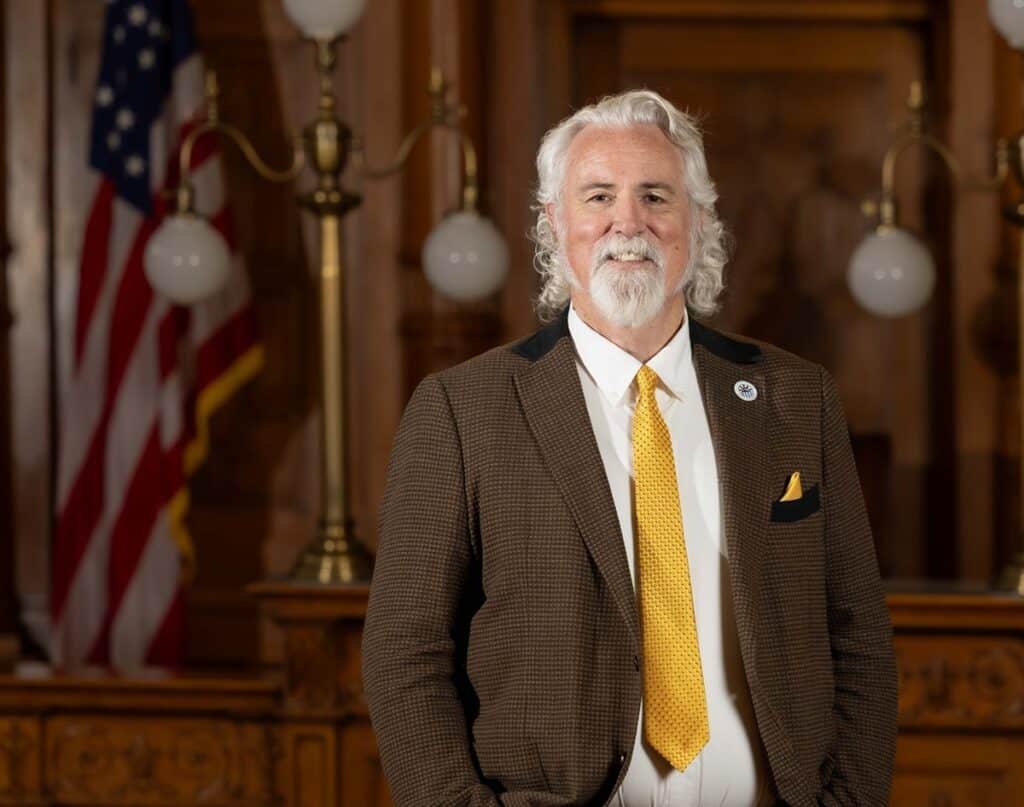
Guest Post by David Leinweber, Colorado Springs City Councilman
Every person living on our streets has value. No exceptions. No one plans to sleep under a bridge. No one aspires to addiction or untreated mental illness. If we lose sight of that, we lose our humanity.
Before serving on City Council, I spent decades as a retailer. Early on, I thought success meant buying something at a good price and marking it up. The higher the markup, the better. What I learned is that retail success is not about what you price something at. It is about whether you can sell it. If it just sits on the shelf, it does not matter what the markup is. You have not succeeded until it sells. In retail, things have to move. They have to get from the shelf to the customer. People are not merchandise. But systems still matter.
In the homelessness debate, we often focus on adding more. More beds. More housing units. More programs. More funding. Sometimes more capacity is necessary. But if people remain stuck year after year, we have not solved the problem. We have simply expanded the holding pattern and continued to grow capacity without producing movement.
Several years ago, a man I will call Bob lived under the bridge next to my business. He slept between piles of rocks. A church group faithfully brought him food, water, and clothes each day. He sold what he did not use to support his addiction. He lived there for over two months. A member of the HOT team warned me not to go under the bridge. Bob had been feeding rats. They crawled on him day and night. One even tried to run up the officer’s leg. Bob told people he preferred living that way. Eventually, he was gone. I still think about him. Not with anger but with sadness. How did we come to accept that leaving a man under a bridge, surrounded by rats, was compassion?
This is why the camping ordinance is important, whether someone is in a tent or living long term in a parked vehicle. Public spaces are shared spaces. Allowing indefinite camping does not move people toward stability. In many cases it leaves people further disconnected from services and recovery.
The ordinance is designed to begin with warnings, not arrests. Those initial contacts create an engagement opportunity. When an officer makes contact, services and support are offered, and organizations that want to help are brought into the conversation. The goal is connection and a push toward the support that already exists.
I often hear that we should treat people like adults. I agree. Treating someone like an adult means recognizing both dignity and responsibility. Adults live within shared rules, especially in public spaces. Adults are capable of decisions. Adults are capable of change. To treat someone like an adult is to believe they can move forward. It means offering help and expecting engagement. It means saying we will walk with you, but we will not pretend that crisis is the destination.
Responsibility is not cruelty. Responsibility builds confidence. It builds self respect. Many people experiencing homelessness already feel separated from the community, talked about rather than talked with. When we create a system with no expectations, we risk reinforcing that separation. When we expect participation and effort, we communicate something different. We believe you can take steps forward.
For those newly experiencing homelessness, early and generous support is critical. The sooner we intervene, the better the outcome. But when individuals cycle repeatedly through encampments and emergency responses without movement, simply expanding tolerance does not help. Without an expectation of progress, progress rarely happens. Compassion without progress leaves people where they are, left alone, isolated, alienated, hopeless.
Colorado Springs is a generous city. Our churches, nonprofits, outreach workers, and volunteers show that every day. But generosity must be paired with structure. Support must be paired with expectations. Public space must remain public. We can value every human being and still support community standards.
That is not cruelty or criminalization. It is refusing to normalize crisis and not giving up on people.