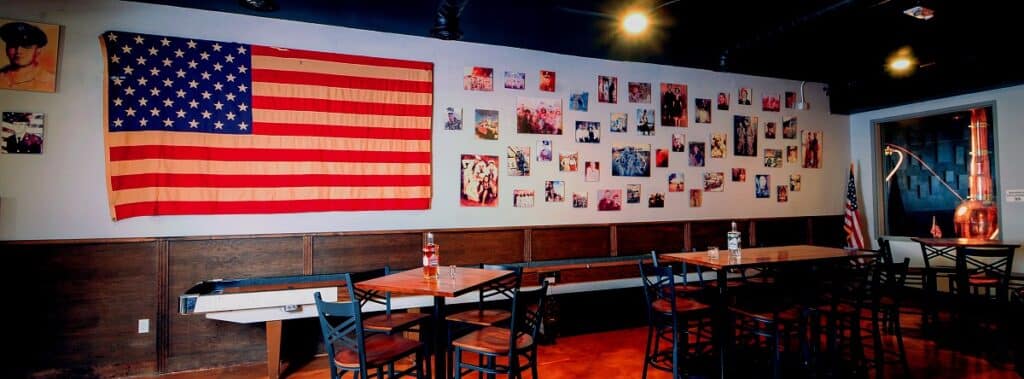


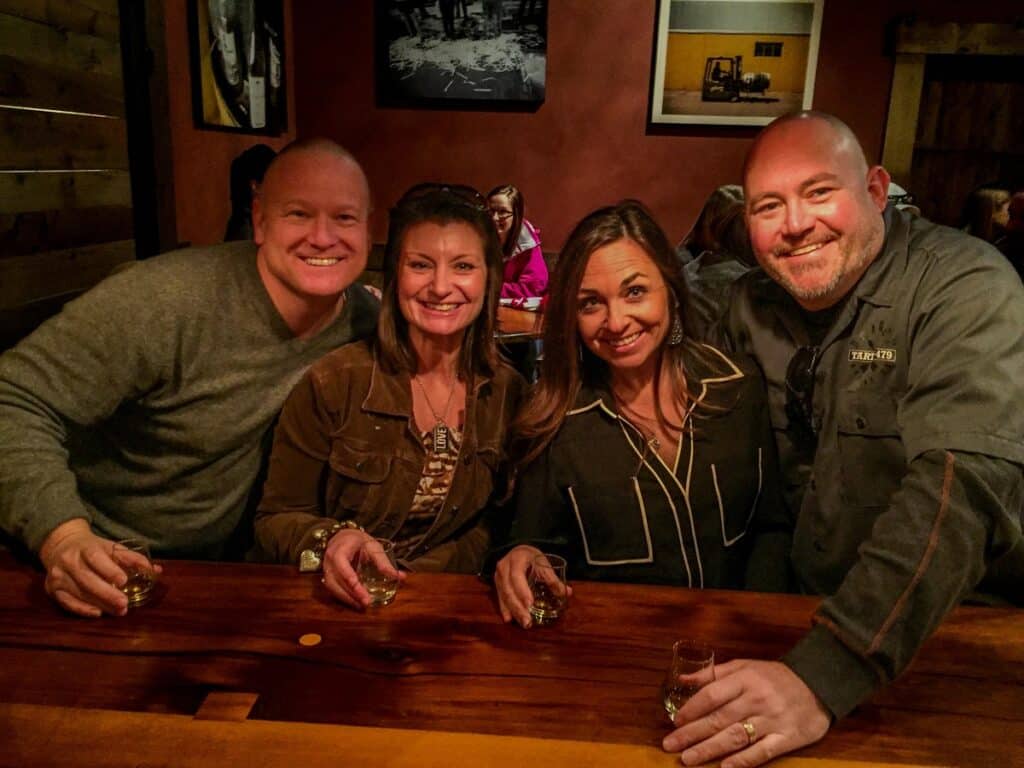
As co-founder of 1350 Distilling, Jake Weien has always been committed to the stars and stripes within his history. As the son of an airman and Air Force Reserves for 25 years, Weien ended up co-founding/co-owning 1350 with his wife, Abbie, and their friends, Phill and Kandis Bragg. Phill had served in the Marine Corps during the Gulf War. This collaboration allowed for a balance of responsibility both to the business and to supporting the local armed forces community.
Weien says, from the beginning, community interaction was always part of their creed. They wanted to source locally as much as possible in producing our spirits using Colorado sugar beets. “We wanted to try to keep as much as possible American-made too. So in that regard, we get our molasses from Louisiana. There are only a few ingredients that we use in our spirits as well as behind our bar that are not American-made or by an American company.”
As middle-aged folks starting a new business in a popular sector. Weien says they followed the practices of successful breweries in the area, namely New Belgium Brewery and Bristol Brewery, in how they give back to the community. Both couples/owners wanted to make sure they gave back, especially to those who served. “So we dedicate, on every single one of our bottles, 10% back to local military veteran family and children nonprofits.”
Weien says they also have a private room, which depending on the event, can hold up to about 30 people. “We provide this for nonprofits if they need a meeting spot, and we don’t charge for it.” They also give discounted rates for teachers and military for events.” In addition, since COVID, they have established Angel Battalion, their philanthropic arm, which focuses on a different local nonprofit each quarter. “And we keep it within that realm of children, family, military veterans.” Different nonprofits they have spotlighted include Mount Carmel, Christmas Unlimited, and Honor Flag Of Southern Colorado.
A Path to 1350 Distilling from Beer
For Weien the path actually began with beer. He formerly lived in Flagstaff, Arizona where he had met his wife going to school at Northern Arizona University. In Flagstaff, Weien got into home brewing and beer in general. “And, of course, at that time in 1996, the microbrew industry was booming. I worked at a Beaver Street Brewery there and really enjoyed it. I just hung out with a bunch of friends and brewed beer.”
Weien also thinks that is why craft distilleries are booming now too, because they are doing what the microbrew industry did for beer when it began: it opened up people’s taste buds as well as their desire to try something different. He reckons that the generations who seemed only to like Coors or Coors Light, are now more willing to try new things. He also thinks the coffee industry has helped with its introduction of a variety of flavors.
The key for Weien was in making something unique and yet recognizable. “I mean, people that have been to Stranahan’s in Denver may see a little bit of similarities in our decor.” He also says when the couples would travel south, they would check out different places. “There was a place in Tucson where the owner was doing everything with five-gallon stills, and I was like, ‘Oh my gosh. This is crazy!’ There was also the balance of what spirits were of interest in making a business. At the time, Weien says the ladies liked their vodkas. “And of course, we liked our different styles of whiskeys. not necessarily knowing the differences or the nuances.” Weien asserts that their taste buds have improved a bit. “But I think the big thing is that none of us were big fans of gin, and that was the one thing when we were trying to figure out. We knew we were going to make it [but it was about] ‘what kind of flavor profile are we wanting?’ And that experience [of discovery] was pretty amazing.”
During their travels, Weien explains they encountered one distiller who had a different style of still, which inspired their plans of being diverse. It was still made of pure copper with no stainless steel which would allow them to make vodkas, gins, rums, and whiskies. This kind of still is not common for vodka and gins. “We knew immediately we’d have a different flavor. And for our vodkas and gins and even our rum, the smoothness that we get out of the copper still versus a stainless still is very noticeable in the taste.”
A Process of Learning
As with all ventures, not everything is perfect but it is a process of learning. “It was a lot of just trial and error. And actually, what we were aiming for wasn’t where we landed but that creative process is fun too.” Weien points to this fact as the one thing holding them back from releasing their spiced rum. “There are so many botanicals that you can use that we just haven’t found the one that’s right. And we’re really fortunate because it only took a few – I mean, half dozen different variations — before we nailed the gin where we’re at now.”
This is also reflected in their bottle design which harkens back to the military. “We knew we wanted a bottle that, sitting on the shelf, people could know, ‘Hey, that’s the 1350 bottle.” The coloring and imagery on each one represent a branch of the armed forces, whether it’s for the army or the air force, in a nice, respectful way. “And that has also expanded out to our firefighters and law enforcement as well.”
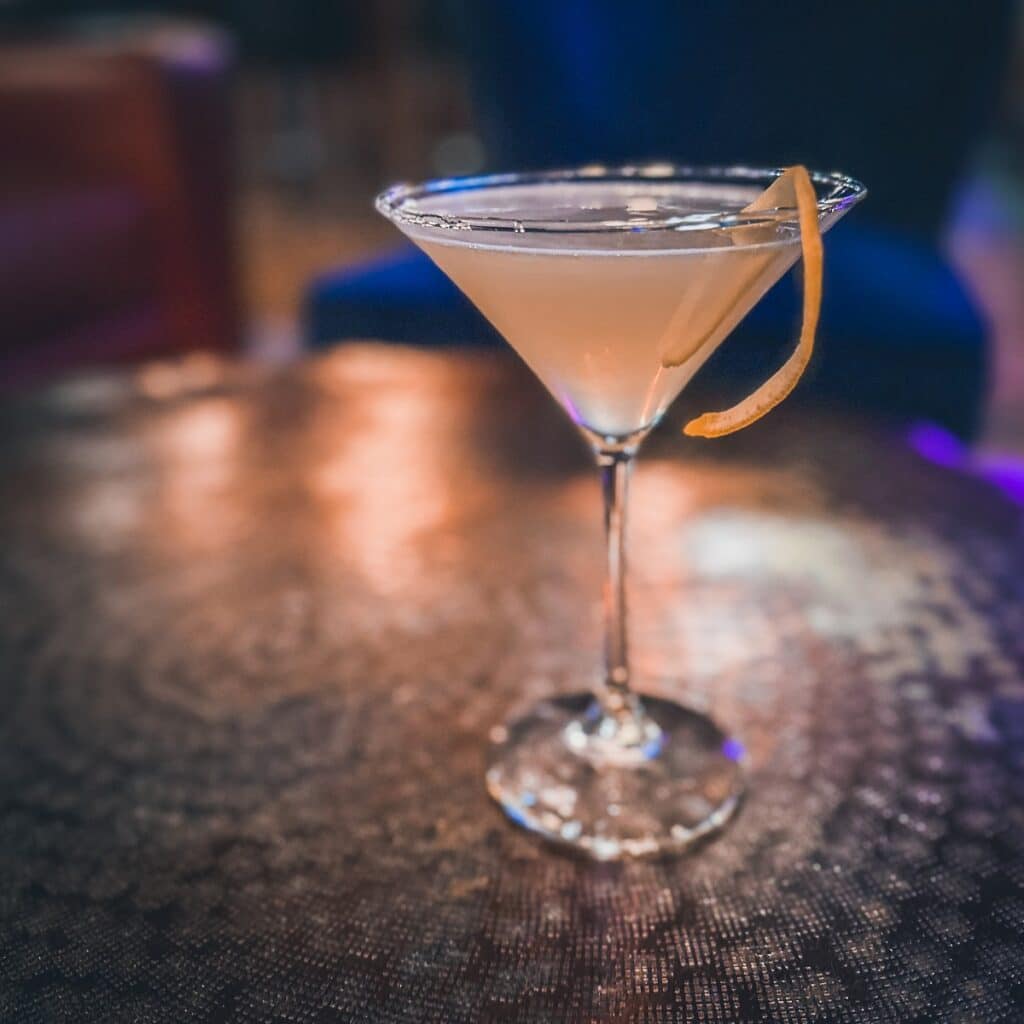
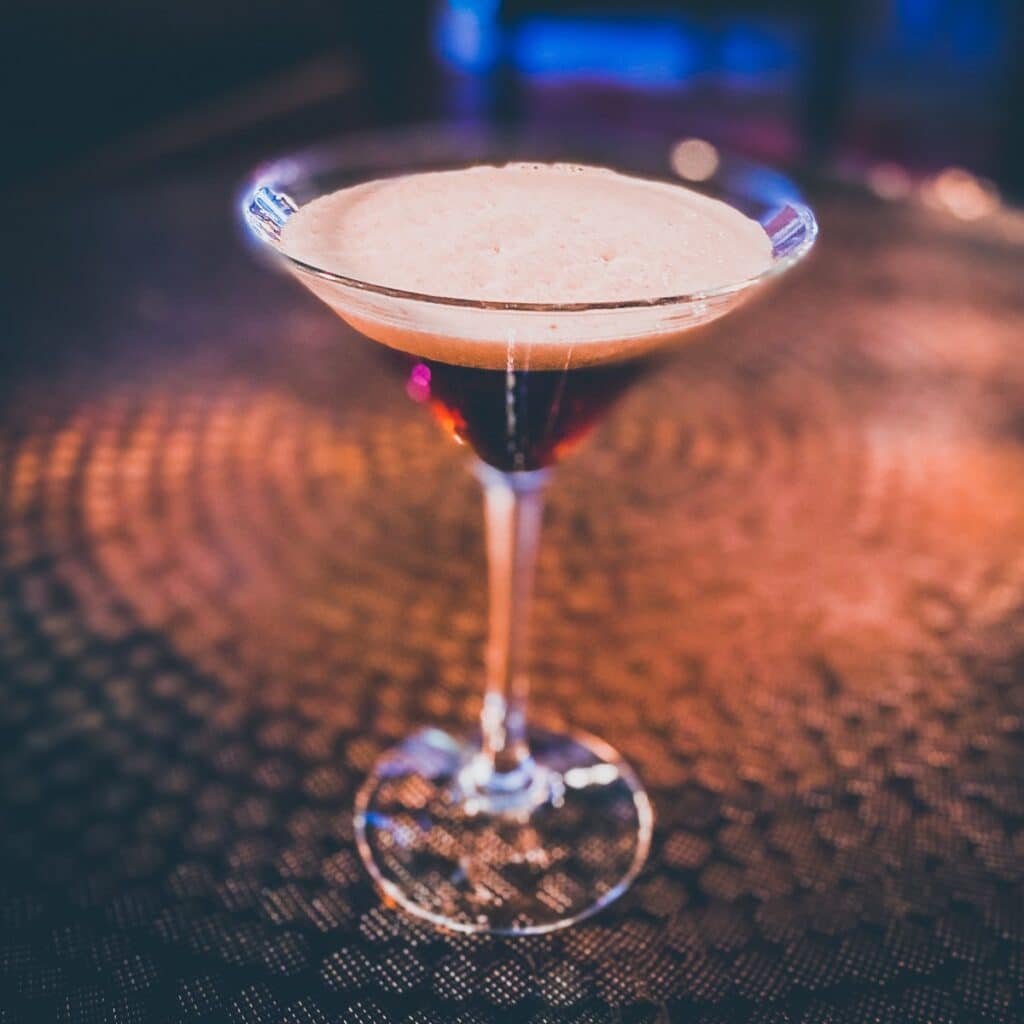
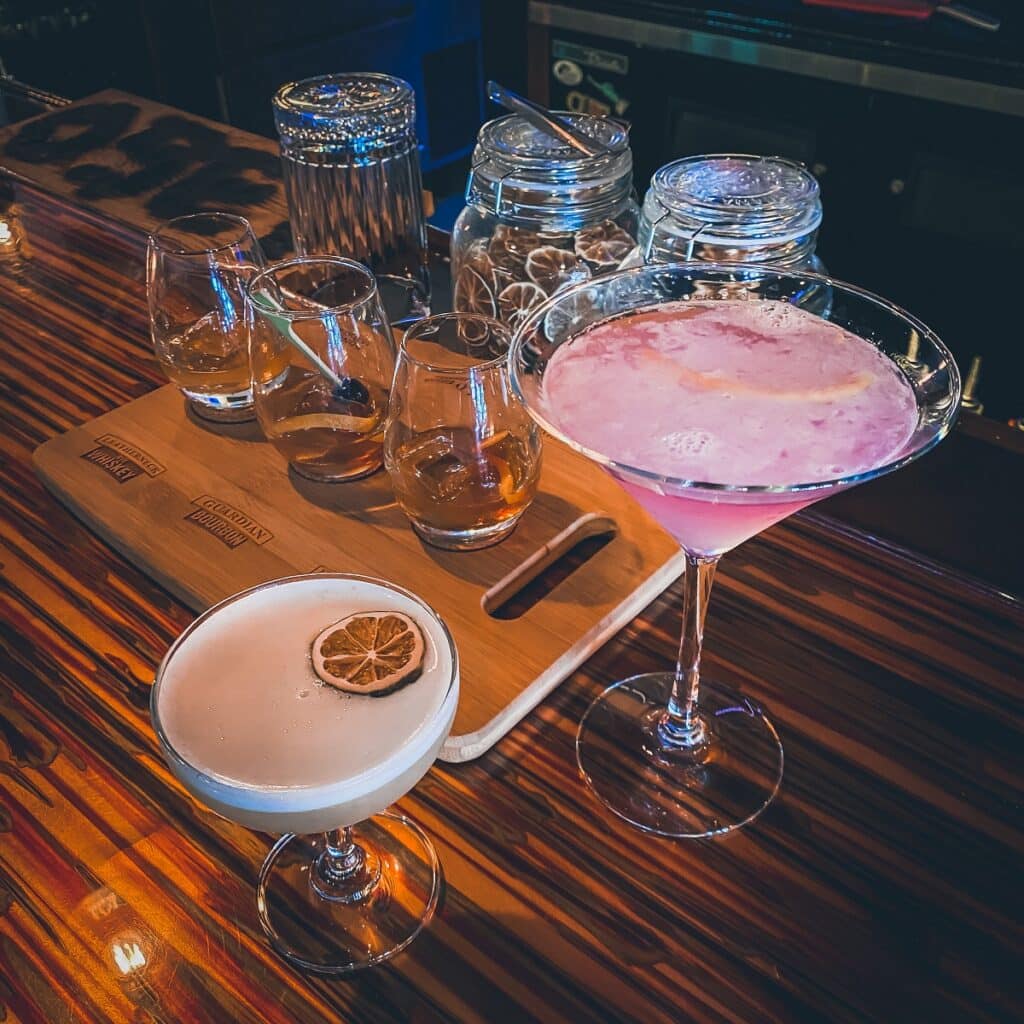
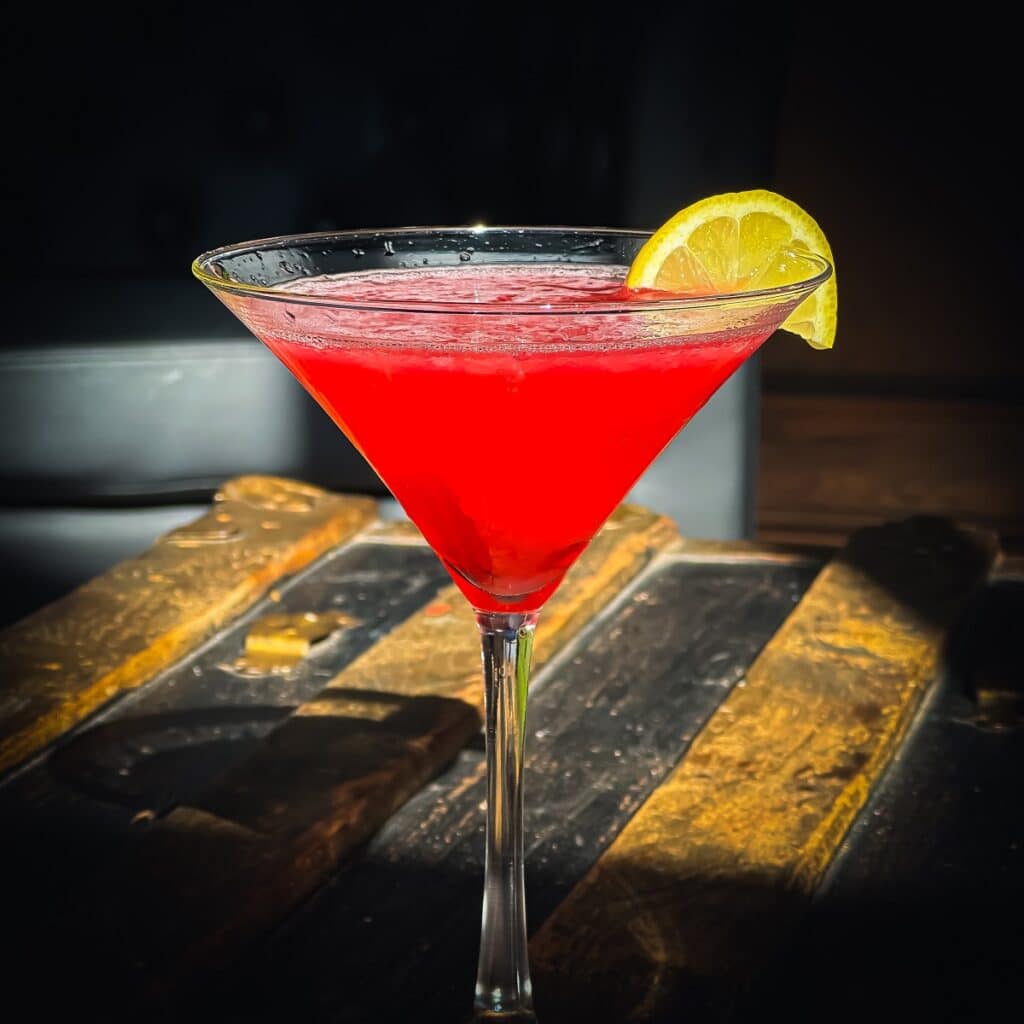
Weien explains that this reflects in the cocktails they created for their tasting room as well. “A lot of our cocktails have more jargon in their style.” He mentions “The Bubble Gummer,” which is a World War II-inspired rum drink. “That [slang] was kind of like a ‘whippersnapper’ which was the term for the young bubble gummer [back then].” He adds that 1350 also has the Sikorsky Pie, which uses Guardian Bourbon and is dedicated to the Coast Guard. The Sikorsky HH-52 Seaguard is the recognized helicopter in its iconic red and white color scheme for the Coast Guard The drink recipe dedicated to law enforcement features a local product. “We use a lot of local ingredients, like Pike’s Peak Lemonade. That one has a cherry-type flavor and it’s called ‘Berries and Cherries’ optimizing the colors of ‘code four,’ which is the term for the red and blue lights on the police car.”
Even the name 1350 was really important to the business as well as to the owners. “Since we all have affiliations with different branches of the military…the one thing with all of our family and ourselves is that we have served in one way or another. It was one thing that everybody could relate to — because, to be honest, the different branches of the military are like siblings. The one thing we all could agree on – even in what it means to us as our own thing — is the American flag. So it was trying to find a way to incorporate the American flag.” Hence 1350…13 Colonies…50 States.
“So that was our foundation. We knew what we wanted. We knew the bigger idea of the brand and that really just solidified it.”