

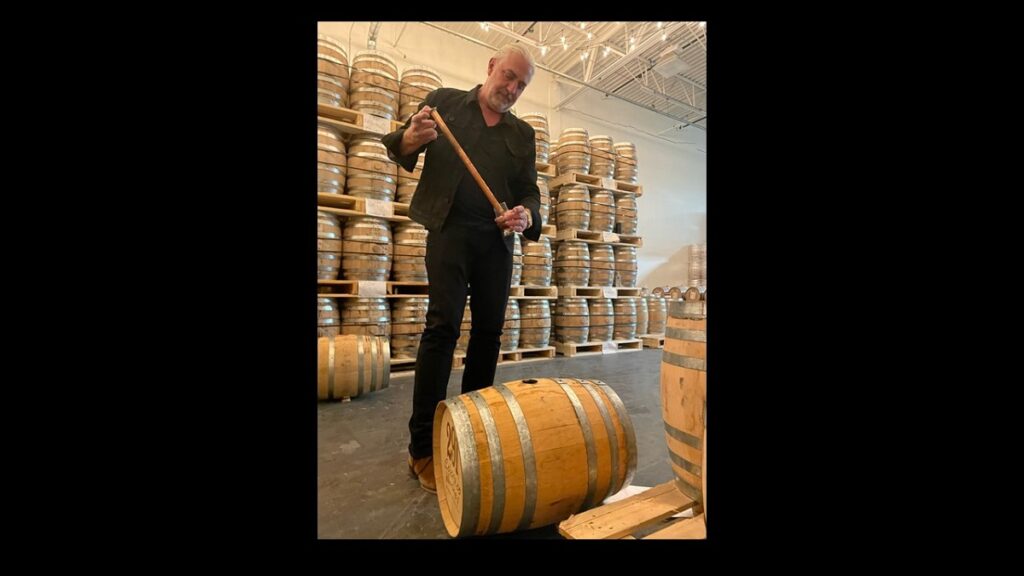
291 Distillery Founder Michael Myers has lived many lives; first as a professional fashion photographer earlier in life in New York City before becoming a whiskey maker after moving to Colorado post-9/11. But the lessons learned in both point to a specific goal: to tell personal and textured stories. As he continues to expand his whiskey empire, he also wants to make it undeniably Colorado while pushing the boundaries of what is possible with taste.
Myers was born in Johnson Ferry, Georgia. Right around high school, his family moved to Alpharetta where they had around 70 acres. “My road there is still a gravel dirt road. And I used to walk the woods, I had a .22, and would just wander around during the day. I really love just being by myself and walking. To this day, I hike daily. I did six miles today in the mountains of Colorado. It gets my head straight.”
Myers went to college at Savannah College of Art & Design. He moved into dorm room 291. That was the second instance of karma in the name that would eventually adorn his distillery.
“291 was the very first gallery ever in the world. Gallery 291, Alfred Stieglitz in 1907 on 291 Fifth Avenue in NYC.” It made Myers think: “Wow! I’m meant to be a photographer, I guess from the fashion business, I knew I needed to tell stories, right? But whiskey is all about telling stories.”
Myers says before he shot a lot of fashion (including for such luminaries as Vanity Fair), “I shot still life. And I really loved still life, but I actually didn’t want to be a still-life photographer because I didn’t want to get tired of it and hate it, so I only did it so often.”
Parallels Between Still-Life Photography and Whiskey-Making at 291 Colorado Whiskey
With still life, he explains that it is about lighting a subject and looking at all angles. He parallels it with when he started making whiskey, “I was in a 300-square feet space by myself with my still that I had built and approached it that way.”
He says it was almost the same as a still-life shoot, looking at all the angles. “I just came up with a recipe and I worked through the motions to get the right distillate off the still.”
He walks through the whiskey-making process starting with mashing water and grain and then fermenting it, which takes five to seven days. After that, it is about stripping, which is pulling the alcohol and water off the grain. Finally, is the finish to make the distillate cleaner. “And so that’s a very similar process to me in the darkroom.”
Myers says, as a whiskey maker, he works by feeling. “And I worked that way with photography. You have a concept that you’re doing, and you’ve been creative about everything up to that point. You’ve picked the right makeup artist, the right hairstylist, and the model.”
He would then just go by feeling when they were all there. “It was looking at the clothes, looking at hair and makeup, and trusting everyone’s talent. I’m big on trusting. I hired them because they’re incredibly talented. And I let them do what they like to do. And that’s kind of the way I’ve approached whiskey making.”
Experimenting with Design in Whiskey
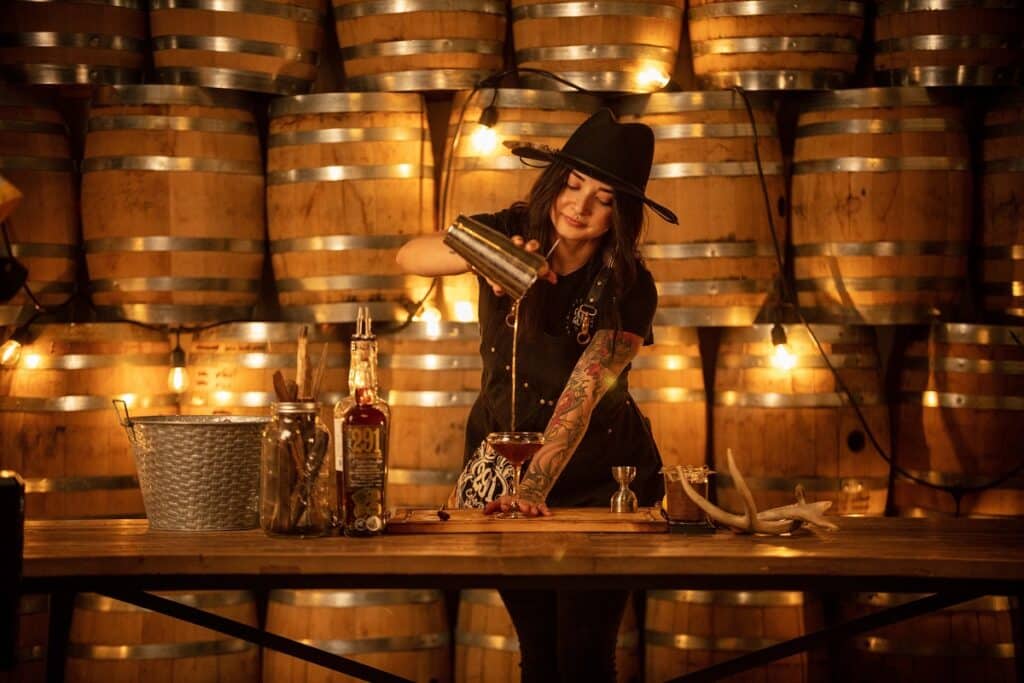
Myers says his first whiskey experiments when he started were his bourbon and his rye, both of which they now make daily. “But I do have my experimental batches, the 291 E. And when I think about that one, that’s where I kind of just rack my brain and think about what I can do to be different.”
Myers will talk to his distiller now, Eric Jett, and come up with a recipe that he has a feeling about. “And so far, that has really done me well. We have done 11 batches of E and every batch is completely different. And most of them have won major awards.”
One of the batches (either 9 or 10 he says) won “world’s best whiskey” from Whiskey Magazine. There were only 158 bottles in that batch. This helps him appreciate and trust the way he makes whiskey now. “I have a lot more knowledge so I can do it by feel.”
He is proud that everything they make is from scratch. “I’ve never sourced whiskey at all. Everything is my recipe from scratch.” But he used a novel approach that comes from the fact that he is a self-taught whiskey maker, but it was just through the necessity of both his constraints and, at that time, lack of experience.
Thinking Outside the Box with Old-School Knowledge
When he was first starting 291, “I had read a book that Bill Owen had written, and he said it would be nice to pair up with a brewery because then you wouldn’t need all your equipment and they could brew your beer stillage for you.”
Mike Bristol of Bristol Brewing Company was a friend of Myers. “I thought, well, let me take his beer and run it through the still, the one that I like [an IPA] and I did. “The hops that come out of the process are nasty as alcohol and are pretty gross by Myers’ own admission. “I went to dump the stillage and it was still hot. But then came out, it just was like all this flavor going down the drain.”
His mind moved to a culinary strategy and perspective at that moment. “I love to cook and like a roux of a stew, when you make rice, a lot of time you put in chicken stock. And I’m like, ‘Why can’t I do something like that? Why don’t I take this spillage, which has no alcohol in it; nothing left to it, just flavor, and put it instead in as the backset (which is the acidic liquid strained from the mash after the primary distillation) and mash that in, in a small percentage, with the corn and rye, ferment it and see what it does?”
This process, which he still implements, created a thread through all his whiskies. “It is the reason my whiskies are consistent, and nobody in the world has done that to my knowledge.”
While Myers doesn’t see himself as traditional, he does look at tradition sometimes and riffs off that to create that different feel in his whiskies. He grew up around Jack Daniels being from Georgia and his family also owned a farm in Tennessee seven miles from the Jack distillery.
“And I thought about [those flavors]: sugar, maple, and charcoal, and was like, ‘Well, why don’t I run my 291 Fresh brand, which is bourbon Nashville, white whisky, 80% corn, and filter it with Aspen staves?’” For some batches, he finishes with these wood cuttings, putting them in the backset.

Using Ingredients of Colorado in New Ways
“When we do single barrel, the Aspen goes in those barrels for about three weeks. And it just shifts the caramel notes to maple, adds a little spice and a little smoke. It’s a very soft note … not a strong note. A lot of people think that’s why 291 tastes differently than any other whiskey, but it’s not. It actually is the shape of my still that I built and the yeast I use. That’s really what makes 291 what it is.”
One of the traits that make Myers great at both photography and whiskey-making is his attention to detail. One of the great documentaries that gave him an insight into distilling at the beginning was one on Popcorn Sutton: “A Hell of Life” [2013].
“In that, he’s got whiskey coming off the still just starting and he reaches down to the ground and picks up this little stick. He breaks it at just into a right angle and puts it in the end of the worm. And he goes, ‘If it comes out any thicker than the stick, it’s fighting whiskey.’”
What Myers took from that lesson was: slow the still down, clean it, and just turn the heat down so you slow down the output to just a dribble. “I think that’s why my whiskey is also so good. Truthfully, one of the reasons is that it’s incredibly clean. The other I think is how I use copper.”
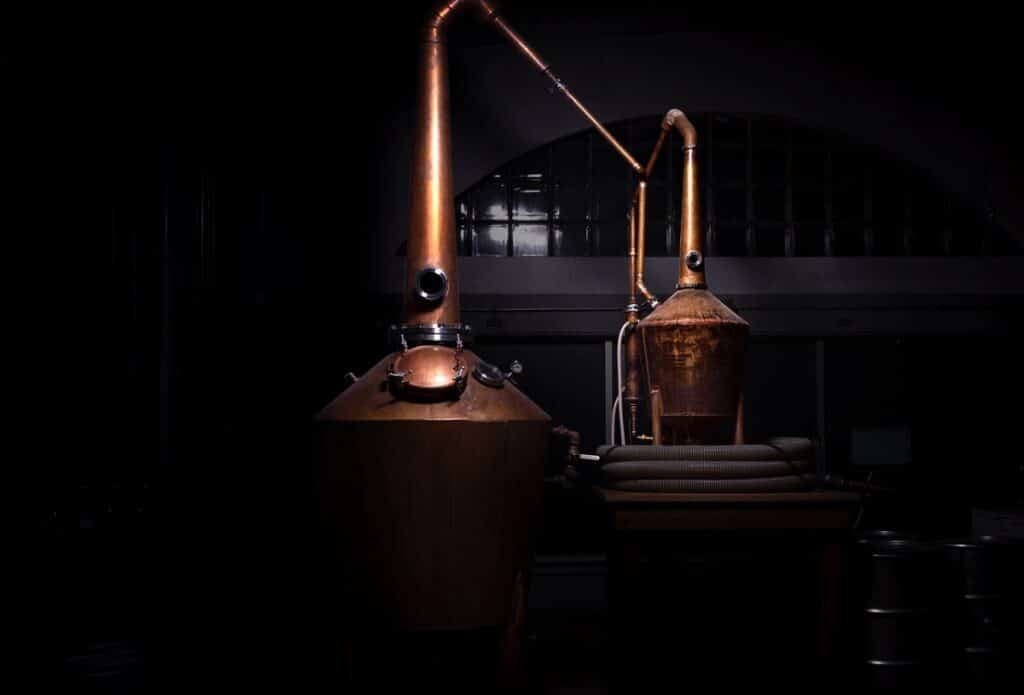
“The more copper whiskey touches, the better it is.”
Myers explains that the more copper whiskey touches, the better it is, cleaner it is. A lot of what he initially researched, especially with Scottish distillers, was how they used stainless steel stills and then converted them to a point with copper. “You have to have some copper in the line to pull out the sulfur.”
Myers’ original stripping still he designed was a stainless 55-gallon drum with a nice copper column on it, but it did not look like a normal column.
The legacy of that original still, and a bit of irony, is that his original 45-gallon still, his first one, was built out of photograph yield plates – a flat copper plate, which has a chemically etched image on it. If one of those actual plates was inked and run through a press it would create an actual photograph that reflects the duality and meaning personally to Myers of the still itself.
He made seven plates, each with individual images he had taken across the country, and designed a still integrating them. He had a CAD (Computer Assisted Design) firm waterjet-cut the patterns into the plates and integrated them with stainless steel rollers. He then had Al Novak, a local artisan, tig-weld the copper. “It’s an incredible still. And it works really well.”
That original still is now the thump keg to his 300-gallon still, which he says is the exact same design as his original one, just blown up.
At his current distillery, “My two stripping stills are 1,500-gallon stainless steel tanks with a copper column on it but it’s not straight. It’s tapered up to the top. They’re actually pot stills. My whisky is three times distilled in pot stills. And my third distillation is in a thump keg which is that original still with the plates, so every batch touches that original.”
Cojectic, a DoD contractor in town who does parts for nuclear subs, offered to help him build his larger stills when he scaled up (“We like whisky. We’ll make you a still.”). He is proud, saying “Almost all my equipment, just not my fermentation tanks, are built a mile up the street from me right now.” Myers is keeping his whiskey pure Colorado.