




Abortion Legalities and Constitutionality – How Will the Supreme Court Rule?
In 1973, two cases decided by the Supreme Court made abortion available on-demand and for almost any reason. In Roe v. Wade, the Court found that a fetus is not a person and is instead a “potential life,” and a woman’s right to privacy means the state can’t regulate abortion for any reason during the first trimester.
The Court further ruled that states could regulate abortion during the second trimester to protect women’s health, and during the third trimester, to promote the interest of the “potential life” of the fetus. In this way, Roe legalized abortion for approximately the first six months, or until fetal viability.
In Doe v. Bolton, which was decided the same day as Roe v. Wade, the Court ruled that the state couldn’t limit access if a woman wanted an abortion to protect her health. Pointedly, because the Court vaguely defined health as “all factors — physical, emotional, psychological, familial, and the woman’s age — relevant to the well-being of the patient,” the right to an abortion was expanded beyond viability and to all three trimesters. However, in its ruling, the Court maintained the right to an abortion was not absolute, allowing for legal grey areas.
The above two cases made abortion legal in all 50 states and provided a framework for state abortion regulations. But these cases didn’t stop the abortion debate. Since the rulings, many states have passed laws that challenge abortion access, and now two court cases are poised to gut or even completely overturn Roe v. Wade.
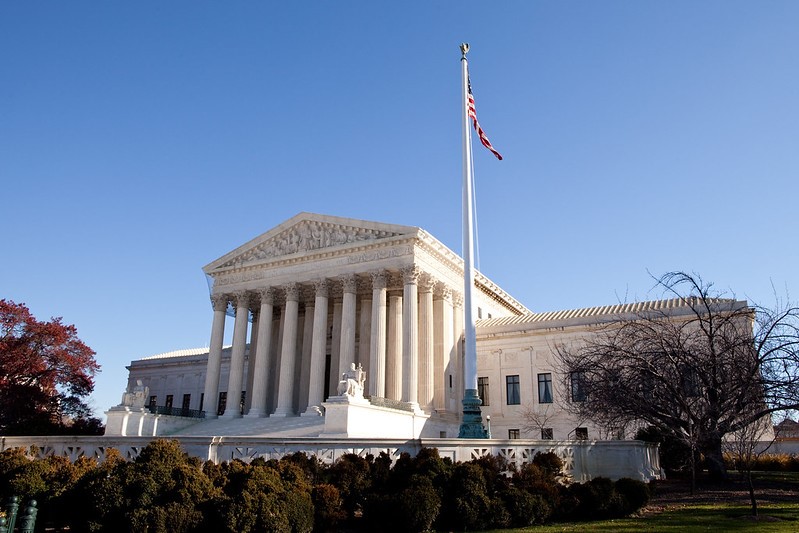
Abortion Regulations Over Time
Roe and Doe made abortions legal and established that states have the right to regulate abortion once a fetus is viable. In other words, if a baby could survive outside the womb with medical care, states had the right to restrict abortion. At the time of Roe, fetal viability was considered the third trimester. But, following the Supreme Court case Planned Parenthood v. Casey, the trimester framework was replaced with pre- and post-viability.
However, a baby’s ability to survive outside the womb is constantly changing thanks to advances in medicine. As a result, many states now have laws outlawing abortion starting at 20 to 22 weeks.
Of course, the goal for pro-life activists isn’t just to restrict abortion access. Instead, it’s to undo what they consider a grave human rights abuse and allow states to make abortion illegal.
Texas passed Senate Bill 8, which effectively bans abortions after an unborn child’s heartbeat is detected. SB 8 prohibits abortions starting around the sixth week of pregnancy, but state officials don’t enforce the law. Instead, individuals can sue anyone who performs or assists in abortion for up to $10,000. In this way, lawmakers hoped to make it harder to challenge the ban’s constitutionality in court.
Similarly, Mississippi passed House Bill 1510, which prohibits abortions after 15 weeks gestation except in cases of severe fetal abnormality or medical emergency. However, unlike SB 8, HB 1510 was intended to challenge Roe v. Wade and Casey by arguing that they were wrongly decided, and fetal viability is outdated and based on illogical scientific assumptions.
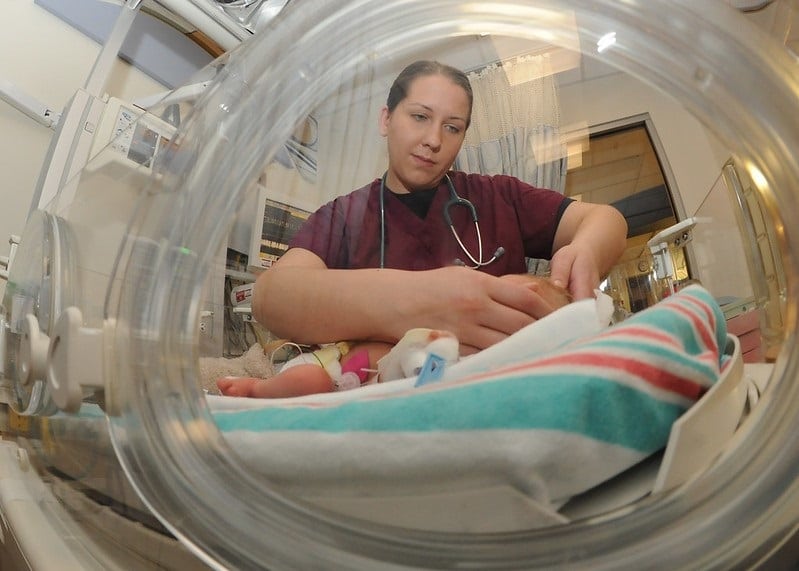
Challenging Roe
The above two laws resulted in Whole Woman’s Health v. Jackson for Texas and Dobbs v. Jackson Women’s Health Organization for Mississippi. Both cases made their way through the lower courts, finally resulting in the Supreme Court agreeing to take them up:
- In Whole Woman’s Health v. Jackson, the Supreme Court heard arguments on Nov. 1, 2021, and decided to let SB 8 stay in effect until a final ruling, which is expected sometime this year.
- In Dobbs v. Jackson Women’s Health Organization, the Supreme Court heard arguments on Dec. 1, 2021. HB 1510 has never gone into effect, and a decision is expected in June 2022.
Both cases have the potential to impact Roe, but Mississippi’s ban has the potential to overturn it altogether. This is because HB 1510 directly challenges the constitutional basis for the viability rule and argues that science has advanced dramatically since Roe v. Wade and Casey.
As the Amici Curiae Catholic Association Foundation in support of the petitioners, states, “Advancing science has painted an intimate portrait of the fetus and its humanity. Science has told us volumes about the unborn child’s development and its capacity to feel pain, and mainstream medicine treats the unborn child as a patient. Yet amici physicians are also witness to the fruits of abortion jurisprudence that is out-of-sync with the latest medical science. As they care for their unborn patients, they are confronted with the evidence of their undeniable humanity.”
Simply put, Mississippi argues in Dobbs v. Jackson Women’s Health Organization that science proves the unborn child’s humanity. As such, states have an interest in promoting this life, and viability should not be the defining line.
Potential Impact
The Supreme Court won’t rule on the above cases for a few months. But there is reason to believe they’ll vote in favor of overturning the constitutional right to an abortion. President Trump appointed Justices Neil Gorsuch, Brett Kavanaugh, and Amy Coney Barrett, and they have shown skepticism over abortion rights. Barrett pointed out a pregnant woman could put the baby up for adoption if she didn’t want to raise the child herself, during arguments. Kavanaugh pointed out that some of the Court’s greatest rulings were overturned, including Brown vs. Board of Education. They could join with Justices Thomas and Alito, who are staunchly pro-life, to make the majority decision.
However, if the constitutional right to abortion is overturned, that doesn’t mean abortion will automatically become illegal in all 50 states. Instead, each state will have the right to decide which laws they want to adopt regarding abortion. In practice, that means states like Texas will likely outlaw all abortions. Other states like Colorado will continue to allow abortions up until the day of birth. In point of fact, Colorado is one of eight states that allow abortions for any reason up until the day of birth, and is home to one of only five clinics nationwide that perform late-term abortions, according to the Christian Post.

The Right to Life?
Abortion has been legal in all 50 states since 1973. However, that doesn’t mean the debate is settled regarding human rights. Indeed, since 1973, medicine has advanced dramatically and allowed glimpses into the womb. In turn, pro-life advocates have continued to challenge the narrative that the unborn child isn’t a baby.
Those challenges have resulted in both cases before the Supreme Court. Regardless of how the Supreme Court rules regarding the constitutionality of abortion, abortion won’t become illegal overnight. Instead, states will decide if they want abortion to be legal and what regulations make sense given the changing science.







may the killing of babies stop once and for all may god restore his blessings to our nation
[…] I previously detailed, in 1973, Roe v. Wade and Doe v. Bolton legalized abortion in the US. Indeed, in Roe, all nine […]
[…] if a fetus is only a “potential life” and not a “life,” as was found in Roe v. Wade, then the fetus doesn’t yet qualify for protection under the Constitution. […]