


Russ Ware’s new restaurant, Epiphany
Creating a community space in the Springs requires aesthetics, a focused idea, a sense of style and an endgame. Russ Ware, the co-founder of Wild Goose Meeting House, who also opened Good Neighbors and, most recently Epiphany, understands every venue serves a certain vibe but it is also about making the brands work together in lifting the downtown identity through food, the space and, ultimately, the customers who populate it.
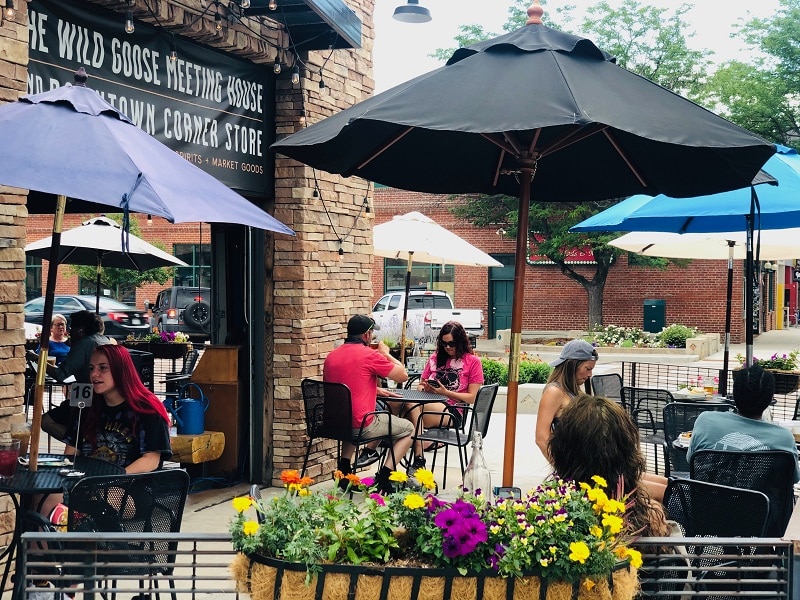
“For me and my business partner, our first business together, or with anyone (laughing), was the Wild Goose Meeting House here in Colorado Springs. That really started from a couple of guys who wanted to build community here, particularly in the downtown area. We wanted to create a space that would bring people together, that would foster community development and economic development, certainly, as well. But primarily, we wanted it to become a community hub,” Ware says. They felt like a corner coffee-shop cafe was “a really intriguing little model to put our foot in the water.”
At the time, Ware explains, when they opened the Wild Goose, just over eight years ago, Downtown Colorado Springs was just beginning to come alive. He saw it as a “sort of early renaissance of Downtown, if you will. There were some hints of it, but I wouldn’t say it was in full swing by any means.”
Evolution of a Cool Idea
“It wasn’t obvious that what we were doing was going to be successful or that it was what people wanted.” Ware says they had a hunch, and really believed that the downtown area had a lot of potential. They believed (at the time) they were unique, with more of a progressive city vibe.
“There wasn’t really anything like what we were doing. Now that’s changed, which is wonderful. We are one among many really exciting and cool places in downtown. But we were definitely on the front end of that.” Ware says some people have mentioned that they were part of the catalyst in helping downtown grow, and he hopes this is true.
From the beginning, Ware says they wanted to create the Goose as the type of space where people would want to linger, make connections, and have a conversation. “And that’s different from a lot of restaurant models, where it really works best if people are in and out as quickly as possible or, at the very least, coming in, having their conversation, and freeing up a table for someone else.”
While this is usually true in a standard lunch rush situation, Ware said they made a commitment early on (obviously way before COVID) that they would rather be a community gathering space during the day instead of being a pure lunch rush scenario where people are moved to free up tables. “You have to decide what your priorities are going to be. Obviously having the revenue we need is very important to us, but we always want to balance that with what we’re trying to achieve in the community.”
Establishing a third-wave, single-origin coffee shop at the time they opened was a rarity in Colorado with only one other opening concurrently in the Springs and two in Denver. Now it is more commonplace. “So that is an incredible evolution and incredibly rapid growth for this particular sector.”
Finding a Balance of Offerings
Ware also thought from the beginning they wanted to have a bar function at the Goose as well so that they weren’t just coffee in the morning and coffee sippers in the evening. He says it was something more akin to a latte in the morning and then at a gathering around at 6 or 7 p.m. with a glass of wine. “We actually opened originally with just a beer and wine license, but now we have a full liquor license.”
Food offerings, Ware says, comparatively was an interesting lesson because they felt revenue-wise (because they had the coffee and wine) that they needed something for people to nibble on so they created just a tiny, little cafe kitchen. “But we never dreamed that that food would be the lead, which it was almost immediately right out of the gate. That was the biggest surprise in terms of what we were doing at the Wild Goose is that we opened up thinking we were a coffee/wine bar that had food and what the community told us almost immediately was, ‘No! You’re a restaurant.’”
The primary revenue driver “for better, for worse,” he says, at the Wild Goose, has always been food, which is not what they expected, but that’s what happened. “People want to gather around food. “
Moving into a Second Possibility
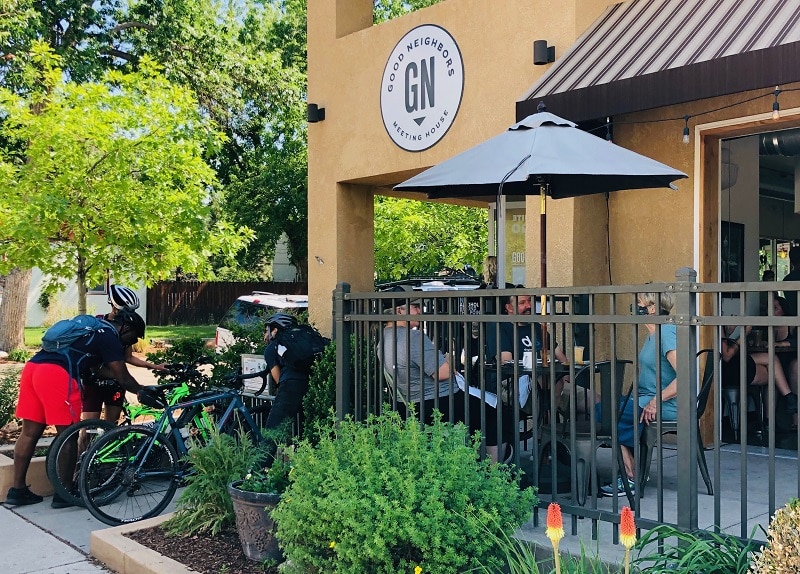
Good Neighbors, their second outlay, Ware explains, was kind of lateral in the sense that the people who owned that building came to them and said, “Hey, we’re big fans of the Wild Goose. We have this space opening up. Would you consider doing something here that would be of the genre of The Goose?”
Ware says they said yes almost immediately, because of its location in their neighborhood. “We’d looked at some other things within the first couple of years The Goose had opened, and this was the first one where we were like, ‘You know what? This is kind of a slam dunk!’”
Ware says the most obvious difference between the two would be to look at the breakfast offerings at each place. Good Neighbors, he says, has a larger kitchen. “Well, I should probably put it this way … Good Neighbors actually has a kitchen. Wild Goose has … the bar just kind of fades into the back and morphs into more of cooking space.” They knew that at Good Neighbors they could do more things from scratch.
“One of the things the Goose always was – and is still – very good at is lots of breakfast offerings. But it’s burritos, it’s quesadillas. We don’t do a breakfast plate at the Goose where you can get a plate of eggs and bacon and that kind of thing.”
At Good Neighbors, the customer has that option. “The breakfast feels pretty different.” They feature waffles at Good Neighbors, “which is kind of one of the main things that people love.” Good Neighbors has sweet and savory waffles, which Ware says anchors the menu along with their biscuits and gravy and tiny breakfast plate. “None of those things happen at the Goose. At the Goose … it’s things we can wrap up so, I guess, in a sense, it is more casual.”
The Opening of Epiphany
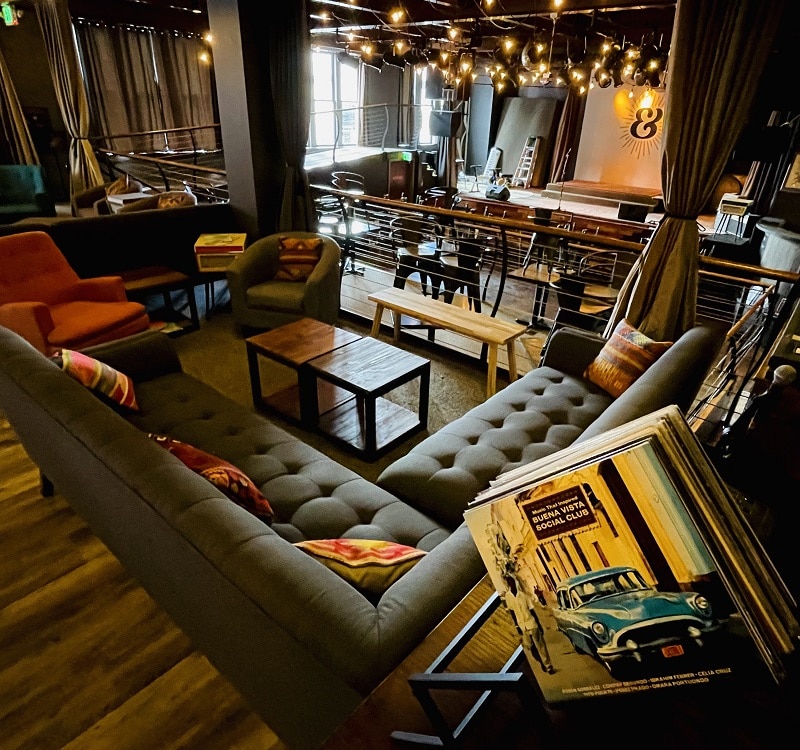
Ware’s new venue is Epiphany, which is more enclosed and unlike Good Neighbors and the Goose as it is situated on the second floor of a downtown building. At 6,000 square feet, it is much larger than the other two businesses. “This space is the size that it is because it is the size that it was (laughing). The upstairs of this building has the stage and is multi-level [which gives it a] very interesting dimensionality.”
Again, Ware was approached by developers asking, “Would you be interested in doing something here?” He looked at it, saw the stage and saw the potential for reworking the existing bar and improving on it. The difference between a venue like the Goose and Epiphany is that it’s all enclosed, with no patio, no outdoor seating, and no deck on the second floor. “It does have lots of windows, which are quite beautiful looking down onto downtown, so it feels very, very urban in that sense.”
Ware sees Epiphany as “Wild Goose on steroids. We’re a restaurant, which has a kitchen, so we do breakfast, lunch, and dinner. But we also have an espresso machine and do coffee all day and we have a bar.”
Epiphany though, he says, runs like a traditional restaurant. No counter service here. They have servers. They wait tables. They take reservations. “So, it’s very interesting how some things are very different, and some things are really just bigger versions of the same thing.”






This aged poorly…