


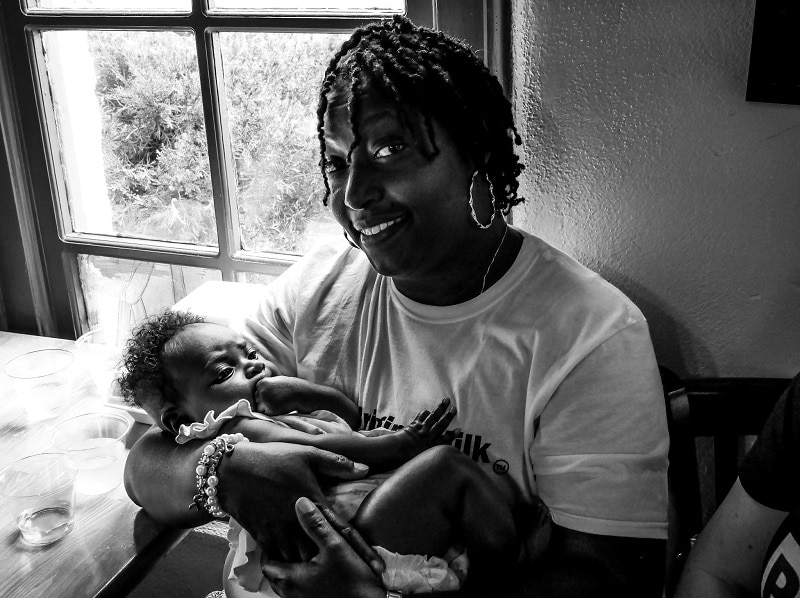
Demetra Seriki knows there is no better catwalk than the hospital. Staff and visitors encounter her eye-catching, fashionable T-shirt: Breastfeeding Sucks. She is not a model. Seriki is a professional certified midwife, who uses all avenues to support black women breastfeeding.
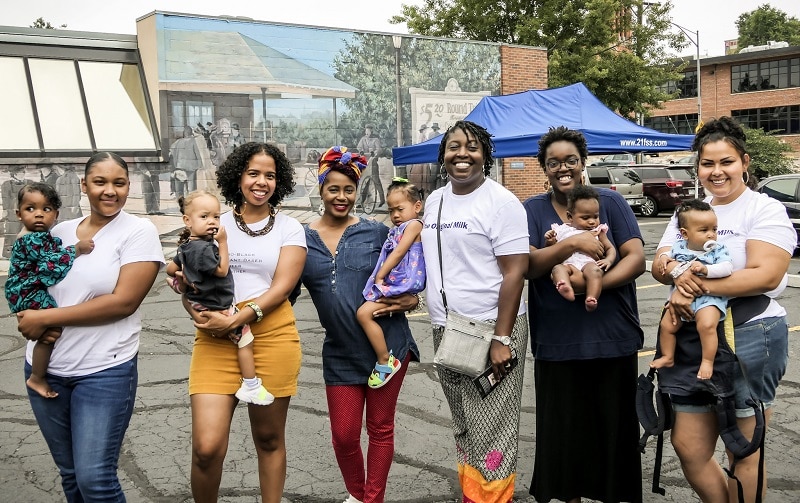
In 2013, three black women created Black Breastfeeding Week (BBW). BBW and National Breastfeeding month are nationally recognized in August. In 2019, A Mother’s Choice held a BBW event to celebrate Black families who breastfeed with food and photos. In past years, BBW did not exist in the state of Colorado.
Black Breastfeeding Week
In 2016, Seriki’s doula friend in Denver, decided to host the event beyond a week, “For the Denver site, she did it for the entire month.” In 2019, Seriki followed-up with a BBW in the Springs. Both cities planned to host BBW in 2020, but COVID happened. Seriki hopes there will be a BBW event this year.
In her thriving practice, A Mother’s Choice, Seriki focuses on the brown bellies and brawn who enter the facility. Since most of her clients are black, one of many resources offered to mothers are Black lactation counselors in Colorado Springs and Denver. While Black fathers are handed modern bras.
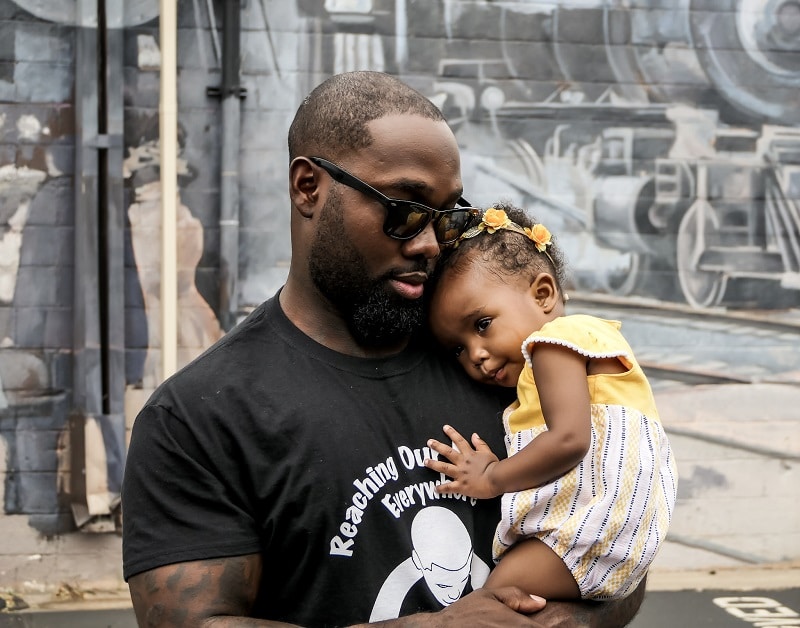
To teach fathers the mechanics of breastfeeding, Seriki uses Black silicone breasts to place in the bras, and the men put them on. “After the giggles, I show them how to hold the breast. Where to place their fingers on the areola (skin surrounding the nipples). How to press down on the tissue. How to bring baby to the breast (not the breast to the baby,) and to watch the baby’s jawline. Then listen for the suck, suck, suck, swallow. Black daddies participating at this level bring me joy. As a midwife, it is my job to center the family, and not just the pregnancy.” When it comes to breastfeeding, the nutritional components and the mother’s mature immune system benefit the infant. Seriki speaks and educates on these topics. But this was not information her grandmother and mother heard.
A Mother’s Choice
In the grandmother’s era, Black women’s big breasts were hyper-sexualized, while breastfeeding was depicted for poor people. So, Seriki’s grandmother bottle fed. “All of her granddaughters breastfed their children. My grandmother was so uncomfortable at the site of breastfeeding, that she would leave the room.”
While her mother was supportive of breastfeeding, she followed in her mother’s
footsteps. “Mom said she didn’t know she had the option. In the hospital they gave her Similac in a bottle and a case of the formula to go home with.”
As a pregnant teen, Seriki attended alternative school. Having peers who had no one to support them on delivery day, she was asked, and she accepted their invitation. When the baby was brought to the mother, “I picked-up on the different nursing options due to race. Whenever a young Black mom did breastfeed, it was encouraged by a Black nurse.”
As the “auntie” of her family, Seriki told her nieces if they wanted to breastfeed, she would go to the hospital with them. One of her nieces took her up on her offer, only to decide later to stop breastfeeding. “I told her that’s OK. You have to do what is physically and mentally best for her.” A mother’s choice is Seriki’s top concern. Even if mom’s decision results in someone else doing the work. Seriki shares the following story:
“During a homebirth, one of my clients was pushing for hours. Which ended with her going to the hospital for a C-section. My colleague and I also went to the hospital with them. Now mom’s clearly exhausted and the baby needs to be fed. So, the nurse brings the father a bottle to feed his child. Then the father looks in my direction. I ask the mother for her permission to touch her and latch the baby to her breast. The mom says, “Yes.”
Seriki explains, that initial latch sets the tone for mother and baby. Supporting a new mom (or mom who adds on to existing children) with a latch can take five minutes to two hours. For the infant with the extremely tired mother, the latching took 45 minutes.” For Seriki, keeping mom’s option in place, “was a win.”
Where to Place Them?
Black women do breastfeed. Seriki’s seen the movement and profiles on social media. “On Facebook, Black moms do post and share their breastfeeding journey.” Though she describes this as a “beautiful thing,” she wants the healthcare establishment to contribute to the visibility of nursing black mothers.
“I want to see the image in every community health center and hospital. 90% of women give birth in a hospital. Black women who walk through their doors need to see Black bodies breastfeeding.”
For questions about A Mother’s Choice, email Demetra Seriki at: dseriki@amcmbirth.com.