


Downtime, Complicated Repairs, and Availability Cited as Reasons for Shuttering Coal-Fired Power Plant Amidst Backdrop of Intensifying Push for Renewables by Governor, Certain Legislators, and Ecology Activists
Wind and Solar Powers’ Effectiveness
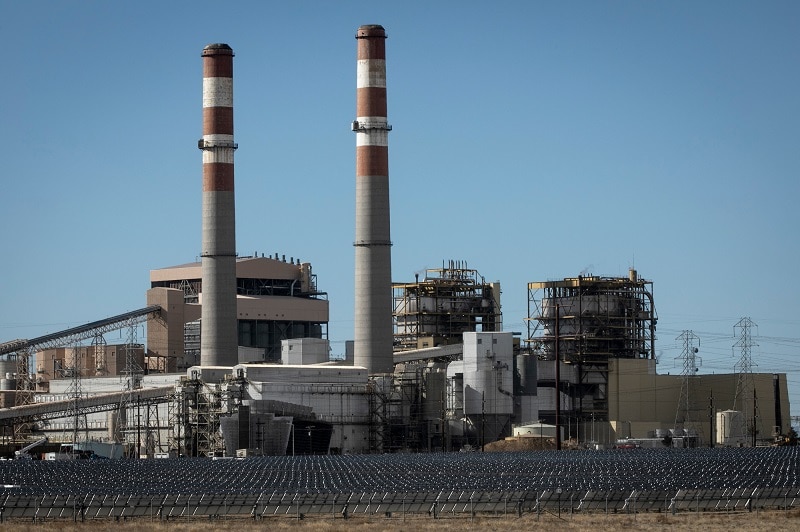
XCel energy’s Pueblo County coal-fired Comanche Generating Station is slated to close in 2031. Environmentalist groups and state utility officials successfully shortened the deadline for closure several times. Concurrently, state leadership, including Gov. Polis, are cruising through legislation, messaging, policy, and more to accelerate their proposed full transition to renewable energy. Their goal is a 100% sustainable energy-supplied grid by 2040.
Built over five years and coming online in 2010, Comanche has suffered shutdowns and complicated repairs from the 2010s to the present, leading to electricity supply problems. With that completion date of 2010, based on recent data, the plant may be one of the last coal plants to be built in the US, symbolizing the US’ institutional sprint from fossil fuels to renewable sources.
- Why is the plant closing?
- Should it be closed?
- How complex is the transition from fossil to renewables?
These are the questions in Colorado – but also nationwide and globally.
More Than a Homeowner Turning on the Lights
The Comanche plant went online on May 14, 2010. Though sources differ, the cost of construction was at least $784 million to over $1 billion. From May 14, 2010, to the present, it has had over 1,000 days of downtime. This large offline ratio has been cited by the Sierra Club among others as a primary reason to close it.
State agencies were part of the pressure to shutter the plant, especially the accelerated timeline. These included the Colorado Energy Office and the Office of the Utility Consumer Advocate. Sierra Club and other environmentalist groups were part of the effort as well. Western Resource Advocates, out of Boulder, are still pushing for a 2029 closure.
The 2031 closure settlement “does not include environmental groups involved in the proceeding, including Western Resource Advocates and the Sierra Club,” according to a report on Colorado Public Radio. This, despite their public lobbying, to shut it down.
Eli Bremer’s take on a more holistic and informed notion of green technology was featured in a Fox News story. Like their omission in the April settlement, the author noted that the Sierra Club and the League of Conservation Voters did not respond to Fox News’ inquiry about Bremer.
Documentation indicates the hearings, settlements, and revised settlements between Xcel’s Comanche and its opponents have been off and on for over two years. Groups ostensibly trying, for the greater good, to reduce pollution’s effects are surprisingly arm’s length from the public and the bargaining table.
If getting Colorado citizens consistent, affordable, industrialized-nation-level electricity is the goal, why are these agencies seemingly so distant and opaque from the people.
Are These Really Deal Breakers Requiring Closure?
An 89-page Colorado Public Utilities Commission report, dated March 1, 2021, details what the authors believe to be the causes, along with a detailed accounting of outages, their lengths, and various measures are taken to resolve them.
Digging into the report, we find that the mean of 91.5 days per year offline has some critical details buried inside.
Up and Running? Closer Look at Comanche Pueblo Closures, Shutdowns, and Offlines
- 1,000 total is the number of days that a given section, component, or more, of the plant, was down or minimized in function
- Downtimes for a serious shutoff was only a minimum of three days
- Five of the 49 incidents, comprising over 250 of these days (or one-fourth of total downtime) were planned for maintenance or other needs
- 40 of the 49 incidents spanned 20 or fewer days
- 30 of these 49 incidents spanned 10 or fewer days
- Well over 300 of these days come from 2020; a period of state, national, and worldwide downshifting of economy, and infrastructure; among other challenges and changes
- The 300-plus days of outages from 2020 are in a “chart detailing the outage costs per year, but this lopsided sample does not appear in a later graph that would have illustrated that 2020 had three times the number of down days as 2011—sharply skewing the average
- 2011, the year with the second-most downtime days, was Comanche’s first full year; and over 90 of those 130-plus days were planned
The problems of Comanche’s downtime and fixes are persistent. But are those problems alone a hard-and-fast deal-breaker?
Wind and Solar Renewables: Improvement, Substitute, or Rollback?
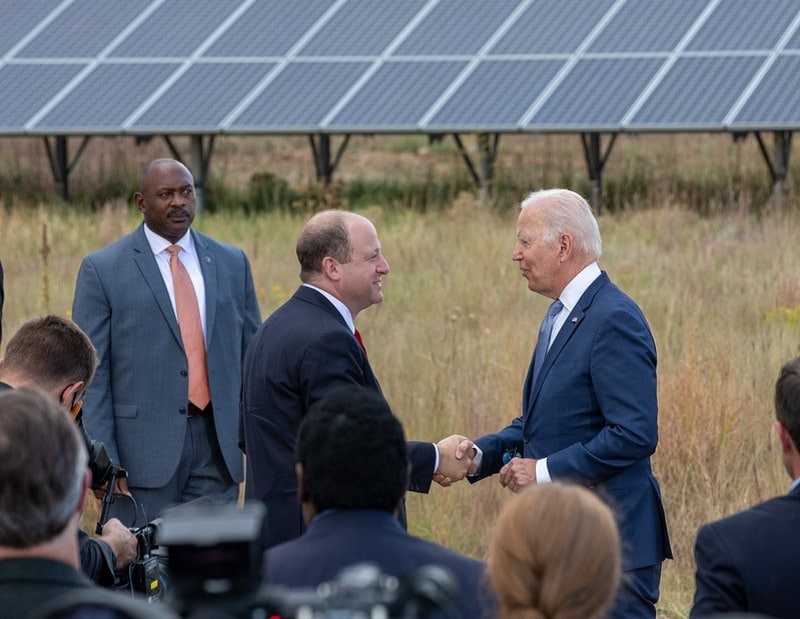
Environmental groups, Colorado Governor Jared Polis, and most of the state’s Democratic leaders are saying they are fully on board with renewable energy.
Polis Actively Pursued Adventurous Environmental Goals
- Colorado energy to be 100% renewable by 2040
- Pegs CO2 reductions to 2005 levels: 26% of 2005-levels by 2025; 50% by 2030; and 90% by 2050
- Reduce greenhouse with heavier regulations around home-building and construction to reduce apparently makeup about 14% of Colorado’s GHG
- Aggressive appliance and water fixture (toilet, shower, faucets) efficiency standards
- Private company and government rebates for certain energy-saving home modifications
Renewable energy has an unmistakable presence in all discussions around tangible infrastructure. Even businesses, big ones, have ESG or (E)nvironmental and (S)ocial (G)overnance policies that heavily favor renewables. The primary sources touted as the cleanest renewables are wind and solar.
Wind and solar are the cleanest in a sterile equation such as kilowatts produced in a year. Nothing is combusted to produce energy as the wind blows or the sun shines once the panel or turbine is in place. Virtually no emissions.
However, as Eli Bremer, a Colorado senate candidate mentions, wind, and solar energy are not a simple, sterile equation. Offloading of mining of elements used in renewables to nations with weaker environmental — and labor — laws can balloon the global net carbon output of renewable energy used for most industrialized countries.
China, a worldwide coal powerhouse announced just last fall that they will be creating 43 new coal plants adding to the scores they already have, many built after 2000. The radiated effects of first-world ambitious environmentalism are not an academic concern.
Immediate vs. Future Needs for Renewables
Nearly all the arguments for wind and solar are teleological, and long-term at that. Most calculations claims and economic figuring are based on the “lifetime” costs. We see this in claims on EnergyStar literature. Even the environmentalist-sympathetic, left-wing factcheck.org essentially concedes wind and solar pollute less but with the indispensable caveat of “life cycle greenhouse gas emissions.”
In the present, however, Colorado looks to be addressing the failures of the Comanche plant, particularly its intermittent functionality. Public Utilities Commissioner John Gavin spoke about the most recent shutdown at Comanche: “I have major concerns about reliability,” he said. “Having an unreliable asset in your [power] dispatch stack may be worse than not having it there at all.”
But the biggest strike against wind and solar are very similar practical concerns: Presently they cannot supply on-demand energy that sustains the bottom-line quality of life for Coloradans.
Wind and solar are intermittent sources of energy. Coal and fossil fuels can be stored and procured on demand. For coal, this has been part of its utility for millennia. Wind and solar require the construction and use of large generators to kick in at night, during fog or a lack of wind.
These generators or storage batteries required to hold electricity in reserve are fundamentally counterproductive to conservation: the goal–as journalist, ecology expert and renegade environmentalist Michael Shellenberger says —is fewer transfers. A battery is just adding another step: the goal is to reduce steps. Without some form of time-shifting for storage—a DVR for electricity — wind and solar are impossible as a single source for a medium-sized city, let alone a state.
Reliability is essential. Most citizens accustomed to electricity as a permanent and immediate part of life will say this. Yet reliability is one of the main arguments to shut down the Comanche coal plant in Pueblo. It’s also the Achilles heel of wind and solar.
Bills continue and the legislature continues debates on green policy. Continued wrangling between XCel and Polis over bill hikes has started and looks like it will continue. The renewable debate and timeline continue as a back-and-forth in Colorado.