

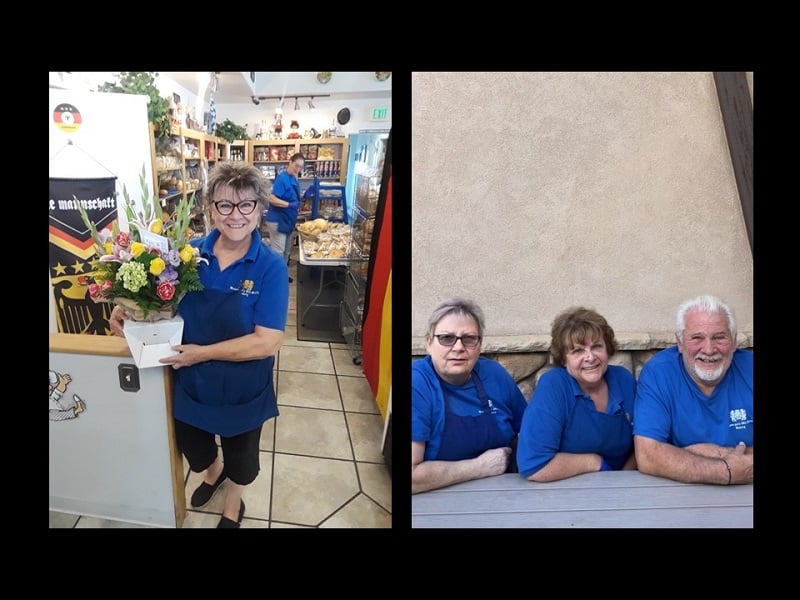
Ulrike Wimberger, co-owner of Wimberger’s Old School Bakery & Delicatessen, knows the importance of old-school taste in German and Bavarian delicacies. She joined the bakery in 1989 when she came into the business with her husband Randy Wimberger. The key to their success has been to expand the possibilities with imported meats but also maintain original recipes that undeniably spout from her roots in Bavaria.
Wimberger’s in-laws (Gisela and Robert Wimberger started the business in 1970. They came from Germany, immigrated to Montreal, then moved to Ohio. They went on vacation in Colorado and loved it because it reminded them of Bavaria. They decided to move to Colorado and started a bakery in Colorado Springs.
“My mother-in-law was very hungry for German rye bread, so this is how this bakery got started. In the beginning, they only made rye bread. And then, as it evolved, they made some rolls.” Originally, the bakery was only open on Saturdays. Ulrike came into the picture in 1989 and expanded the bakery with her husband. They then opened a bigger store but were strictly only wholesale.
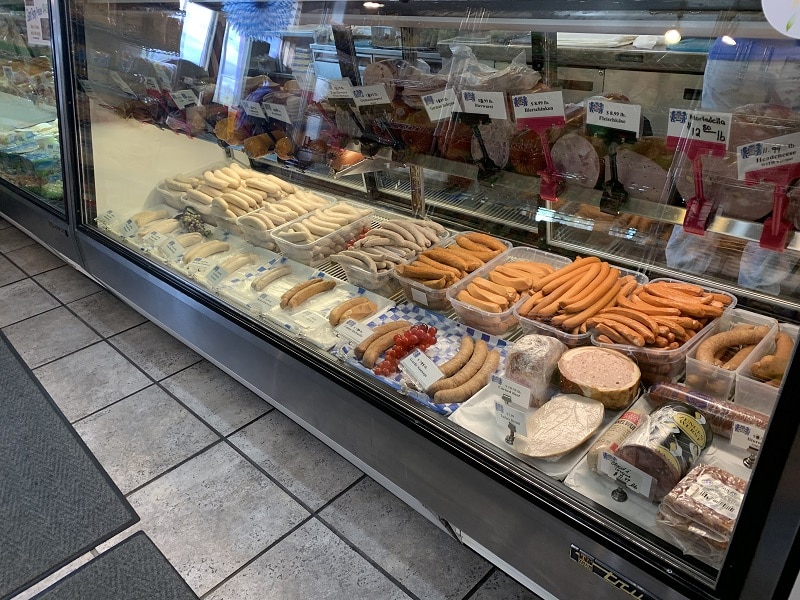
Building Outward at Wimberger’s
They ran out of space and built their current building in the mid-90s and decided to create a deli at the same time. “We had a drive-up window at the beginning.” They never made any kind of sweets before that but now they make cakes, though not tortes (which require different base ingredients]. She says in Europe, it’s separated so they kept with that tradition. “So, we make strictly baked goods: rolls, pretzels, rye bread in any kind of variation.”
As a native Bavarian, when she first came to the bakery, Wimberger was a customer herself. For her, it was necessary to have her rye bread.“We do make some white bread and we do make some French bread, but the rye bread is the Eastern European way.”
They make the Berliner bread as well as the King Ludwig bread, which is made with some spelt flour in it. Ninety percent of the Berliner bread is rye, with very little wheat. They also make whole grain bread that is also full corn bread, with oats on the outside. “A lot of people like that. We bake that once a week. And then we have a Kommis bread [translated to farmer’s bread], which is also baked in a low form, not free tossed.” That process she says goes back to World War II when they couldn’t get any rye flour, only wheat.
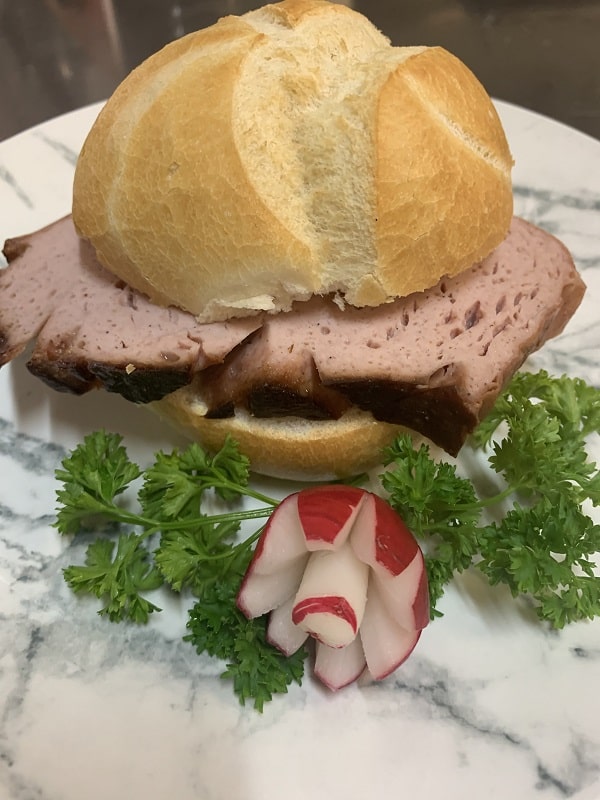
A misconception is that there are different breads for different meals in Bavaria such as breakfast, lunch, or dinner types of bread. “It’s your preference, Ok?” Wimberger explains. “I come from a small town. So, we didn’t have anything but bread in the evening. My parents preferred having bread with caraway seeds in it. So, what they liked, we got. And we would have lunch meat with it and would not have another meal that day. So, our breakfast usually would be a Kaiser roll or, as I do, I eat a pretzel for breakfast every morning. I either eat it with butter or this morning, I had it with liverwurst. So, it’s your preference.”
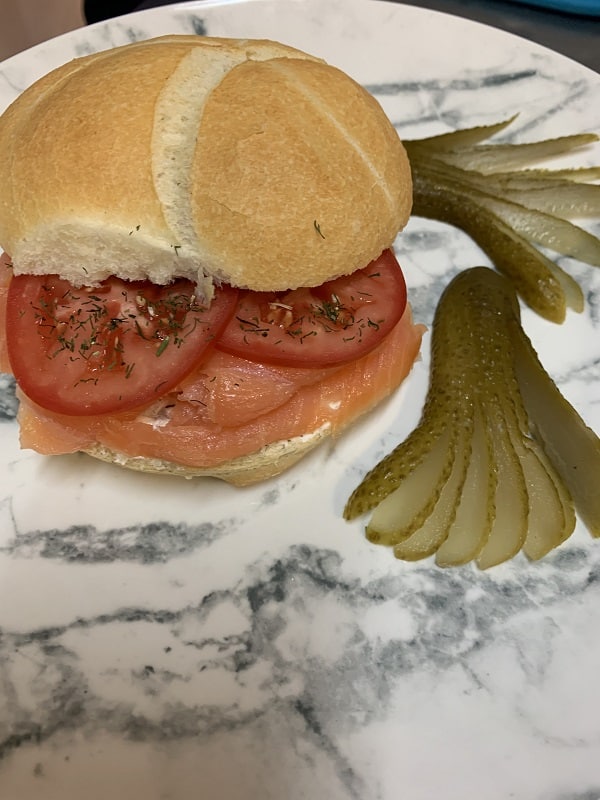
A Following for Sandwiches
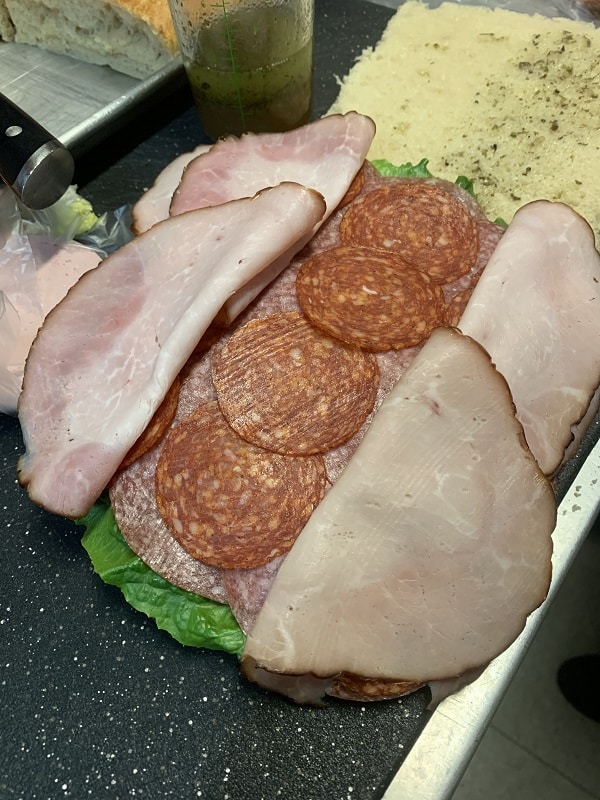
While people come for their imported meats and cheeses, Wimberger’s has gained a following for its authentic sandwiches. Wimberger says they make a Reuben sandwich on Wednesdays. On Thursdays, they have a schnitzel sandwich. On Fridays and Saturdays, they have a fleischbase, which is a typical Bavarian dish served with either sweet or regular mustard. She says the closest approximation she can make to an American dish is meatloaf but in a sandwich.
She says the schnitzel sandwich, of course, is very German. It is a pork loin that is pounded down, dipped in flour, and then dipped again in egg wash and breadcrumbs. Wimberger’s makes their breadcrumbs in-house out of their rolls when they dry out, which only takes one day in Colorado because of the altitude and climate. Their Reuben is actually American-styled, and they make our own sauerkraut to go with it and use extra lean corn beef topped with cheese. All their cheeses and many of their meats are imported for that authentic taste.
Benny Wimberger, Ulrike’s brother-in-law, handles a lot of the logistics at the company. In addition to their retail, they have many ship-out orders: grocery store orders, military bases, and orders from around the country in addition to the pickup orders that people do here.
Benny says, “You always try to make a little extra because you’re going to have people that walk in and say, ‘Oh, give me five loaves of bread’ that they didn’t order.’” He says many of the restaurants around town use their bread. Colonel Mustard Sandwich Emporium, for example, is one with a standing order. “Every Tuesday they get like 50 large pretzel rolls. So, you get down to where you figure out what you need each day and put it in, and then the bakers make it.”

Making Bread with Old-School Recipes
Ulrike says they also make their own sourdough. “We still use real yeast, block yeast instead of dry yeast, and the old recipes from way back when so our rye bread tastes different. Our rye bread is dense. It is not fluffy. And like I said, we use rye flour. A lot of the grocery stores that sell rye bread, if you look at it, well, it is wheat, and they use curry powder to kind of put the flavoring in.”
She says she meets people that say, “Oh, I don’t like rye bread at all.” To that Ulrike says, “Well, you haven’t had real rye bread. Let me give you a slice and you can make up your mind.” She says usually people say, “Oh my gosh, this is delicious” because it doesn’t fall apart when you put butter on it.
In addition to their meat and bread selection, Wimbergers also makes a lot of their condiments in-house. “We make a honey mustard dressing. We make liver pate. We make curry ketchup. I myself make a house-made dressing instead of mustard and mayonnaise and ketchup. I make that. And I make an Obatzda, which is a brie spread from Bavaria with onions, caraway seeds, paprika, and butter. Every festival in my hometown, you would get that.”
Customer is King (or Queen)
And as far as what people want, Wimberger says the customer is the king. “He or she tells us what they want on their sandwich. You can have lettuce and tomato. You can have pickles. We can put curry ketchup on it. We can put brown mustard. We can put mayonnaise on it, they tell you how they want it fixed. We make samples and show the people what it looks like on Facebook.” But she says sampling is the key to sales. “We let you sample anything we have.”
“And then, of course, if you come in here and you cannot make your mind up, I’ll tell you ‘Ok, I’ll make you an Ulki special. Like that, OK? We’re also off the beaten track so it’s the loyalty of our customers to us that we are still in business. And I want the legacy to be that they remember us for our product, for the rye bread that we gave them that they could not get anywhere else.”
Wimberger’s, in this way, as Ulrike sees it, is a part of the home. “In memory, what you remember is mainly food. Do you remember what your mom made you and what you ate? It brings back the memories that you go, ‘Oh, my gosh!’ I have people sometimes crying here, and they say, ‘Oh my gosh, my mom used to make that for me!’”