

Monica Phelan, co-owner of Phelan Gardens, understands how to balance the strength of native plants with the interests of the public – which is a particular challenge in a botanical space like Colorado Springs.
Monica and her siblings Mark and Valerie took over the business from their parents in 2003. The elder Phelans – Don and Sue – established Phelan Gardens in 1981. “We just celebrated 40 years of business, which is pretty sweet,” says Monica.
Part of the parents’ succession plan was to first offer the business to their kids. Out of their four kids, three were interested. “And so, for 13 years, Sue and Don Phelan got a check once a month from the kids and that is how the kids got involved,” Monica says. “It wasn’t a hand-me-down. It was a buyout at a fair price.”
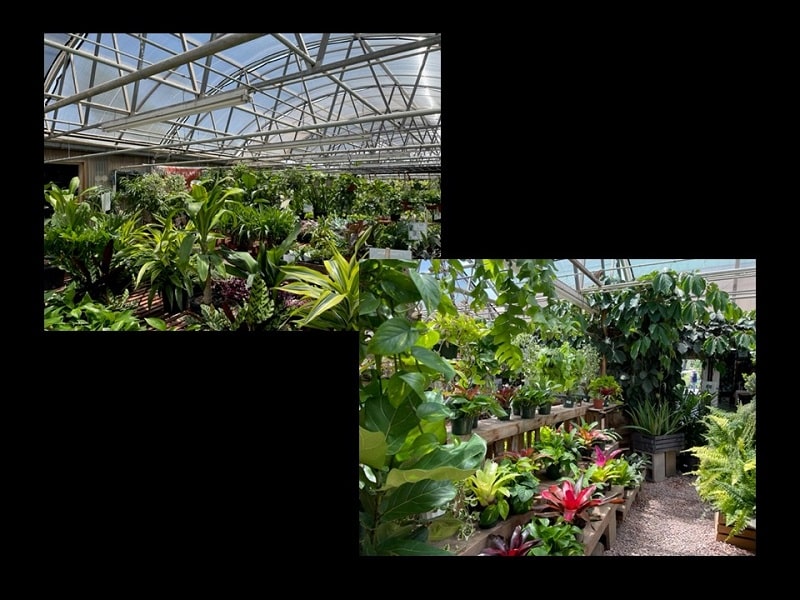
Monica says Phelan Gardens and their sister company Sunset Greenhouses, both garden centers, are considered small growers in the big world of agriculture but that they continue to grow operations. She says their reputation was built on locally grown plants, specializing in both ornamental and vegetables. Phelan’s philosophy for growing in the Colorado Springs area is to offer varieties that are best suited for the climate.
Exponential Growth in the Green Industry at Phelan Gardens
Phelan continues that everyone in the green industry that had a strong business pre-COVID experienced huge growth through the end of 2021. Consumers, who were stuck at home and had to look out their windows day in and day out, found the earth again and the value in the landscape.
“I think resiliency and sustainability became huge areas of awareness for folks when they couldn’t find groceries at the store. From what I heard; 30 million new gardeners were born from COVID.” She says many of them have since quit but estimates that about 15 million new gardeners are still gardening. “That has become super special for many.”
Phelan has always had a strong inventory of edibles from vegetables to small fruits to fruit trees so those continue to sell well.
One of Phelan’s concerns, which she is trying to bring awareness to, is, “We are scraping earth in all directions in Colorado Springs, and we are losing many native species of plants. And to me, that is pretty scary.”
She points to a recent personal experience at a huge field trial flower show-up in Fort Collins put together by CSU. “They have huge trial gardens there where companies, seed companies, and plant companies, have sent samples of their latest and greatest [to plant] with categories [ranging] from petunias to geraniums to every species of flowers that we sell.”
But as she was walking through these gardens, she noticed something.
“I was shocked to walk through this field trial, and I didn’t see a bee. I could have counted maybe five bees in the whole field trial. How can you have this field of flowers and have no bees?” Phelan, herself a beekeeper, which she does as a hobby on the Phelan property. She got into it to deal with some allergies. “So, I am super interested in where the bees are. I’m looking for those guys that are hitting what flowers.”
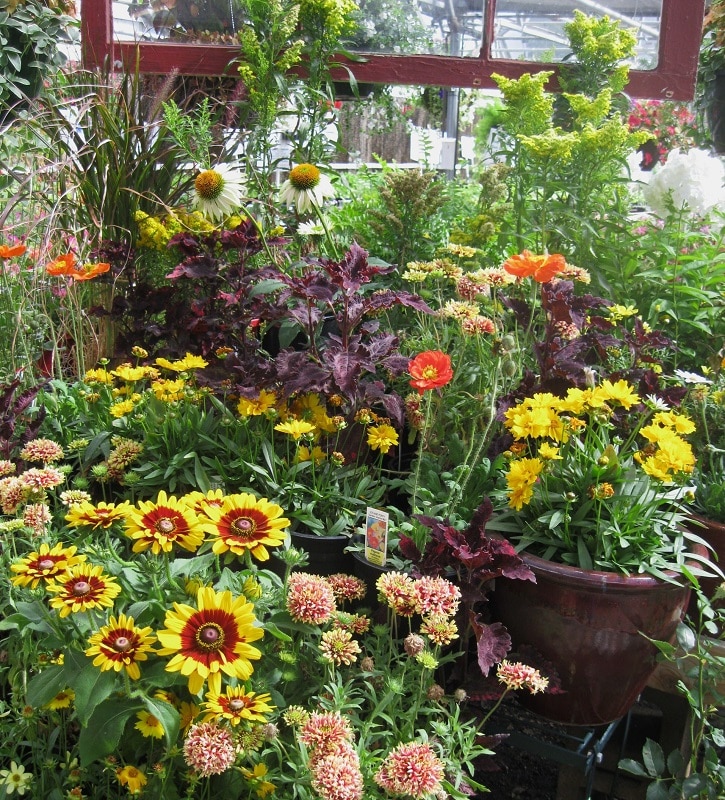
Phelan explains that many of these companies are playing around with the genetics of these plants so much so that they’re producing ones that have no nectar or pollen. They’re hybridized, and so there’s no value to the pollinators. This speaks back to trying to keep local plants native, especially within their business as possible.
“We try to not replace the native plants with adaptable plants but we do what we can. And that’s why we talk about supporting green space and open spaces where we can protect that.” Phelan reasserts that this is “super important for the microclimate and for the little, tiny living species that need the natural and the native.”

Helping the Plant Grower and New Gardeners
Her business is also about helping the plant grower but also bringing new gardeners in. Phelan’s big season is summer. Though that season starts in February and goes unabated through July and then into August. She says that they are helping people with plants in September through October but that it winds down.
Aside from retail, Plant ID and diagnostic work is a large part of Phelan’s business. Monica says people bring in branches of trees or shrubs or vegetables that they are growing but are getting eaten up or are dying or struggling. They problem-solve the issue to see what is wrong in each case. She describes her staff as “the doctors of plants. It’s kind of what we are. And it’s amazing. We have the support product to help a lot of people.”
Many gardeners as well as the staff at Phelan are going through master gardener classes or certifications making them experts in their field.
As winter comes around, the plant growing and care at Phelan moves indoors inside the greenhouses. Phelan says one of their big revenue centers in this way has become tropical plants. She says there’s a huge craze going on in the area with tropical succulents and the young population. She says she was concerned about millennials and the next generation in terms of interest in the garden. The tropical succulents, surprisingly enough, are what got them going.
Understanding the New Generation of Plant Owners
Phelan says she has been asking all kinds of youth that come in: “Why are you getting into plants and why do you have so many?” She says that they are not just buying three plants. They are collecting 25, 50, 75, and 100 plants. And the number one reason she says they are giving her for buying so many is that this is something that belongs to them, and they get to care for it. “It is very bizarre to me that anybody would need 100 plants, but it’s an obsession.”
This reflects that many of the millennials, including her children who are in their 30s, are very concerned about their future. “They are stressed out. Many I think feel like my generation and generations before got us to where we’re at.”
Climate change is a huge concern. She says this generation also is not wanting children like previous generations and sustainability and resilience is also of great interest to them. They are anti-box stores. “I wouldn’t say anti-Google or Amazon, but I think that they are looking at ‘local’ as being more important than ever. They see it as their environment, their planet, their place on this earth.”
Despite these overarching elements, it eventually comes down to practicality and problem-solving when caring for a garden large or small. She says the questions can be so simple. “Here’s one that we answer each and every day. The number one killer of a plant is too much water or lack of water. Can you believe that?” And it is super easy to fix. “A lot of people plug in drip lines for their plants who seem to struggle for whatever reason.”
Phelan says about 90% of gardening problems are water-related but that “we are always coaching the most organic approach to pest control and plant health as we possibly can. But water … number one killer of plants. Isn’t that funny?”