


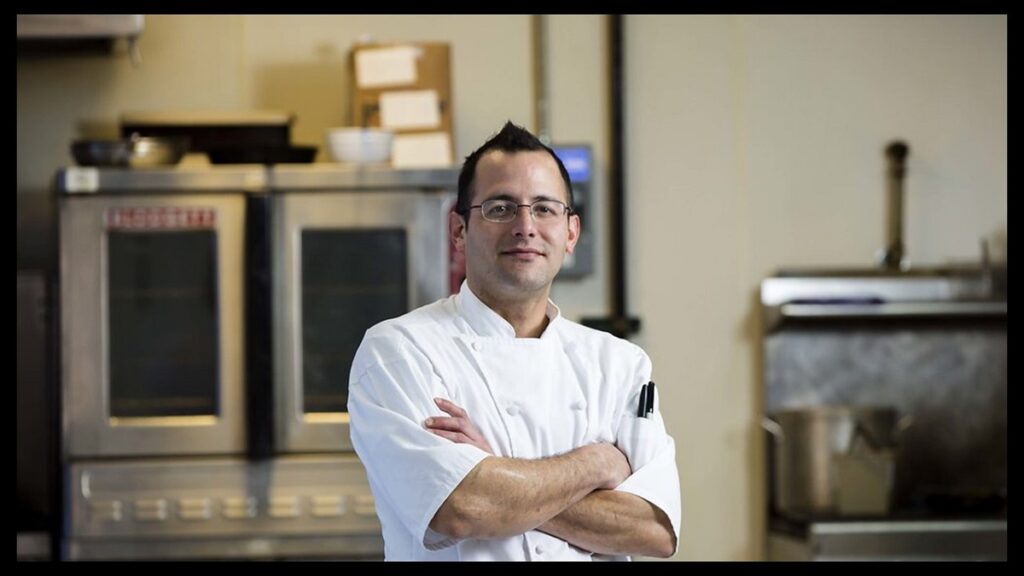
Joshua Aldarondo is the owner and head baker of Delicias Bakery in Colorado Springs. He has the technique to make all types of bread but the creative element that motivates him is all about understanding chemistry, altitude, and age-old techniques to create a beautiful taste
“I think it’s a combination of a lot of things, starting from the basic technique and the knowledge, and then you get your own technique. The bookmark basics you should get at school, but you hardly get an introduction to that.”
Aldarondo started working as a baker at the Ritz Carlton in Naples, Florida in 2007 and learned French techniques from a Master Chef there. “So that kind of spiked the passion for bread. Because when I got out of school, I didn’t know what exactly I was going to do if I was going to do bread, pastries, chocolate.”
Aldarondo eventually became the head baker there. “I think I first felt that passion, for the love for bread, to please other people there. Because I think the love for what you do is what’s going to make you take care of the bread, so the customers can have it just the way they want it.”

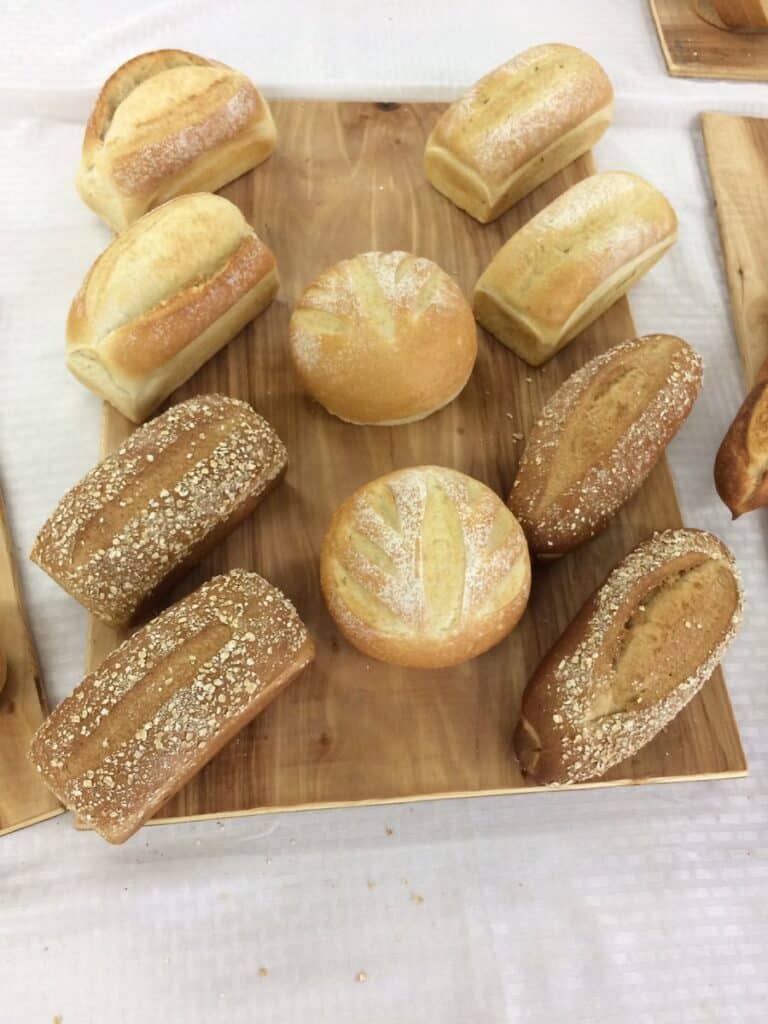
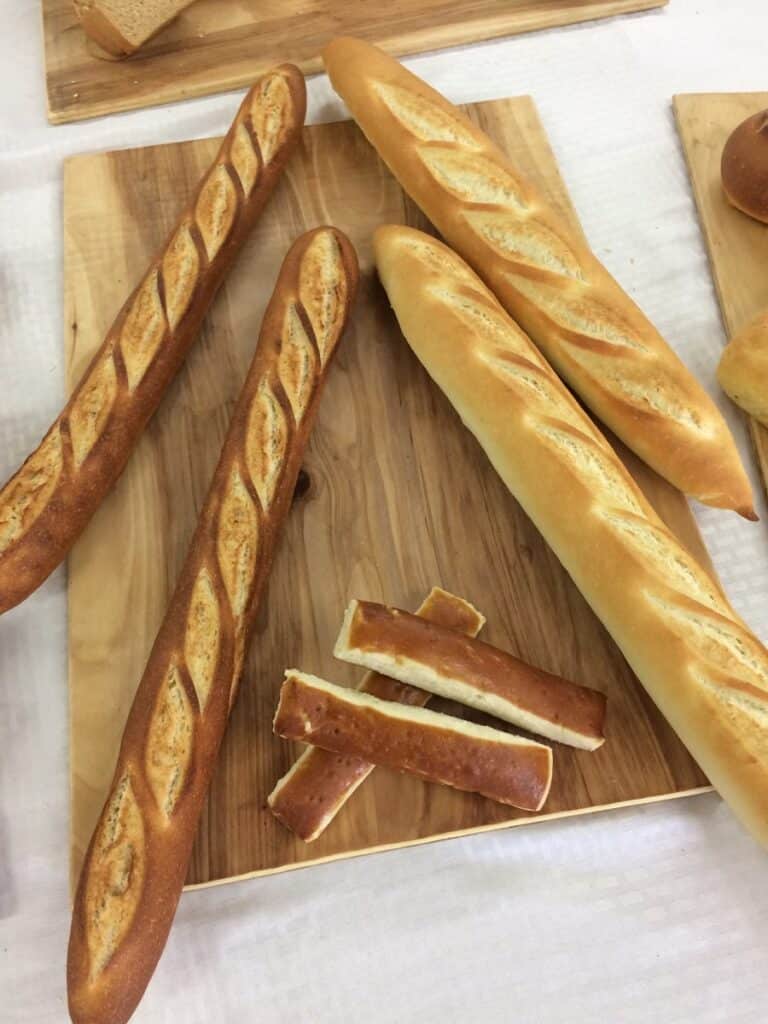
Magic of Bread at Delicias Bakery
Aldarondo says the magic of making bread is derived from the fact that there are only four main ingredients: water, flour, yeast, and salt. “And with that, you’re making dozens of different types of flavor profiles and textures.” The policy (especially when he worked at 5-star hotels including as head baker at The Broadmoor) is that the customer is always right. “We did anything to please the customer. It didn’t matter what it took or how much it cost. So there, I learned how to manipulate the recipes, how to manipulate the dough, to make it more airy, more crisp, more tender, and so on.” He brought that mindset to his own business.
An example he gives is the rye bread he makes for Colonel Mustard’s Sandwich Emporium. “I’m trying not just for the bread to taste good, but also to look good, and be practical for our customers.” In building the rye bread that Colonel Mustard uses, Aldarondo says never liked the marble rye from the big stores because “there’s no finesse, no love that you show in the bread.”
He has a different approach. Instead of just tumbling both rye doughs together to make a single rye loaf, he separates them and places them together. “That way, when they cut the sandwich and present it, you have a nice presentation,” not just of the sandwich, but the bread as well because of the definition of the layers.
Aldarondo works a lot with the acidity of the bread. Monitoring the acidity helps keep the bread from getting stale or molding, especially with the altitude and lack of moisture in the Colorado Springs area.
“I try to educate our customers on how to handle the bread properly, how to store the bread properly, so that way the bread will work for them. It cannot be ‘I got this bread, and it got this moldy in two days.’” He says bread that lasts a day is just money in the trash. Most of his customers in the restaurant industry order once a week, and if it’s a big customer, they’ll order twice.
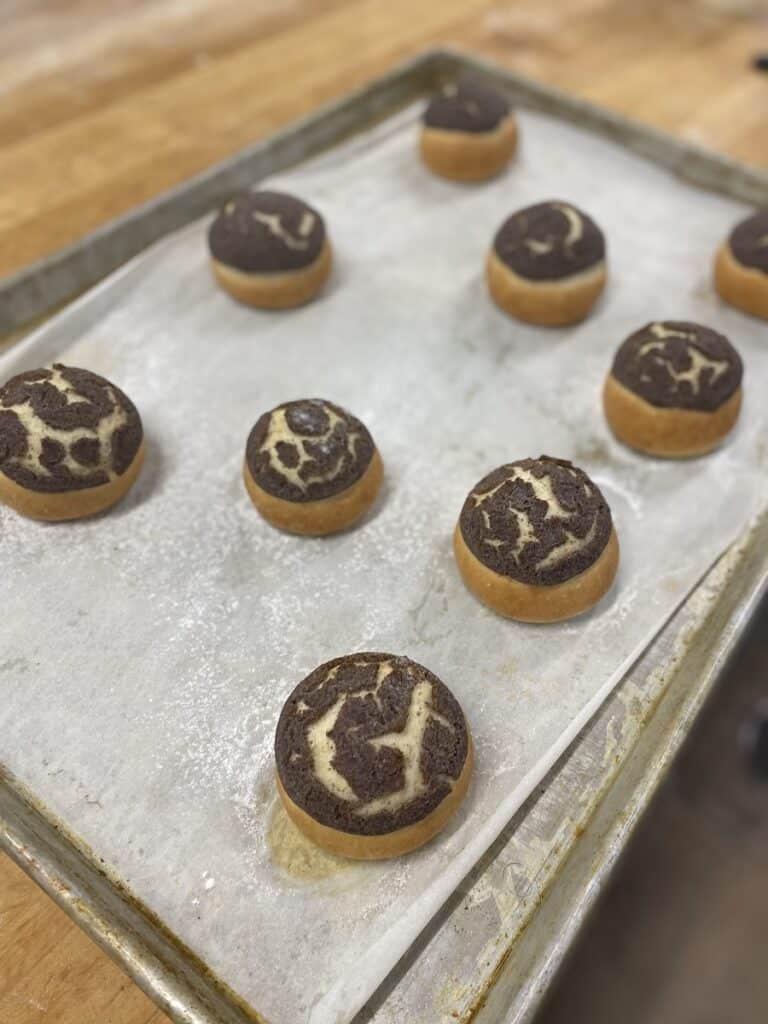
Being Creative with Tiger Bread
Sometimes beyond the baguettes, rye, honey wheat, and epi bread that he makes regularly, there are breads that push the boundary. He did some research and development work at Delicias for a rice flour company out of Japan. They reached out to the master baker community about making different breads using their local rice flour. The creations that Aldarondo made used their black rice.
One of the breads he made was a Dutch crunch bread, known as tiger bread. “What you see on top is a mixture of the rice, rice flour, some wheat, water, and oil,” Aldarondo says the bread is one of his favorites because it is nice and soft. It has cream cheese. “You get the crunchiness from the rice topping but then you get a nice, soft, tender, delicious bread at the bottom. So, you get those two contrasts of the flavor with the crunchiness of the rice and the softness of the bread. It’s a hit. Yeah, I love to eat that bread.”
The key to Baking in Colorado is Time
The importance of making bread in the Springs all comes down to time in Colorado. “We have the humidity, and then we have the altitude and the high pressure and low pressure that change during the week and change during the seasons of the year.” During, for example, the low pressure in the summer, so the bread will rise faster. Adarondo thereby uses less yeast because there is less pressure holding the bread down allowing the expansion of the gasses.
In Colorado, with the dryness, Aldarondo must put all his bread in plastic bags to maintain them. Many customers ask for a crunchy baguette with a nice crust. “Every time it comes out of the oven, it’s nice and crisp, and if I leave it out, it will stay crisp, but once we put it in a plastic bag, the moisture that is kept inside the bread migrates to the crust and makes the crust soft (inside the bag).”
Many people don’t understand that part, he says. They come and touch the bread and like it soft. “Yes, but we are in Colorado. I can put it in a paper bag for you, but it’s going to be a crouton in five hours.” The example he uses is that if a restaurant is going to be running 10, 12 hours a day, five, seven days a week, the bread should be kept in baggies. “And if you want to crisp it up, put it in the oven for one minute, a high temperature, and it will crisp back up, no problem.”
Having grown up in Puerto Rico, Aldarondo says “Puerto Rico is a merging point from so many other cultures.” One of the great aspects he learned growing up there is the knowledge of being able to adapt, “because bread is going to be bread. How you treat it and how you adapt to the different climate is crucial.”
In Puerto Rico, it is 80% – 90% humidity, most of the time so there is not too much worry about the bread drying out if it was left on the table for 50 minutes. Alchemy and atmosphere tend to make a difference in elevation and pressure. “Here in Colorado, I have to be aware of the weather and how it’s going to change in the next couple of days.”