

Grant Dewey, Executive Director of the Western Museum of Mining & Industry, understands the history and application of mining in the Colorado region from the inside out.
Before moving to El Paso County, he earned a degree in mining engineering from the Colorado School of Mines. He was also a production manager for American Strategic Metals before completing a stint in Europe where he spearheaded their carbide recycling operations.
These disciplines gave him a unique approach to leading the museum, where balancing history, recognizing technology, and understanding the pivot that needs to happen, allow him to see the next frontier. For the museum to move forward, it must stay current – whether discussing lithium mining for electric vehicles or future mining on the moon.
The first frontier of any museum is education, whether it be for the public or for dispelling misconceptions for the next generation of engineers. “I think we kind of lump together environmentalism, geology, and mining,” explains Dewey.
He says the misconception of mining is it is an old, dirty, low-tech industry. The museum, he says, plays a critical role in communicating the facts and what can be done to move forward.

Biggest Challenge of Mining
“As far as mining goes, the biggest challenge is that most of the population probably still pictures the ancient past of mining and kind of the ugly face of it.” He says, in reality, the federal laws were changed in the ’50s, ’60s, and ’70s.
“For most of us, in our lifetime, we’ve been under a much cleaner, better operation of mining. It’s regulated like many other industries to keep it safe and as clean as possible.” Dewey says today we’re seeing how relevant it’s becoming with our new economy in the hopes of running off batteries and electric vehicles.
The key now is engagement and relevance. “I noticed there’s a study out of the University of Arizona about different types of engineering. Let’s say there’s a dozen different types of engineering: mechanical, astrophysical, etc. What they found in their study was people knew the least about mining engineering.” He says once people found out about what mineral engineering is about and the global opportunities available, their interest level swung the farthest out of all the types of engineering.
“It’s really intriguing there’s still kind of this lack of understanding of how all of our natural resources get to us and how we use them in our daily lives,” Dewey continues. He explains that mining and its natural resources go into everything from Coca-Cola cans to toothpaste to makeup and even cellphones. That tends to make the connection more personal.
“And it’s just human nature, right? As soon as it becomes more personal, our interest level goes way up. We’re basically almost totally dependent on the cellphone now because we use it as a computer, a phone, a camera, and everything you can imagine. And it’s got all kinds of interesting materials and minerals in it. And absolutely, there’s tons of mining that has to be done to accomplish that.”
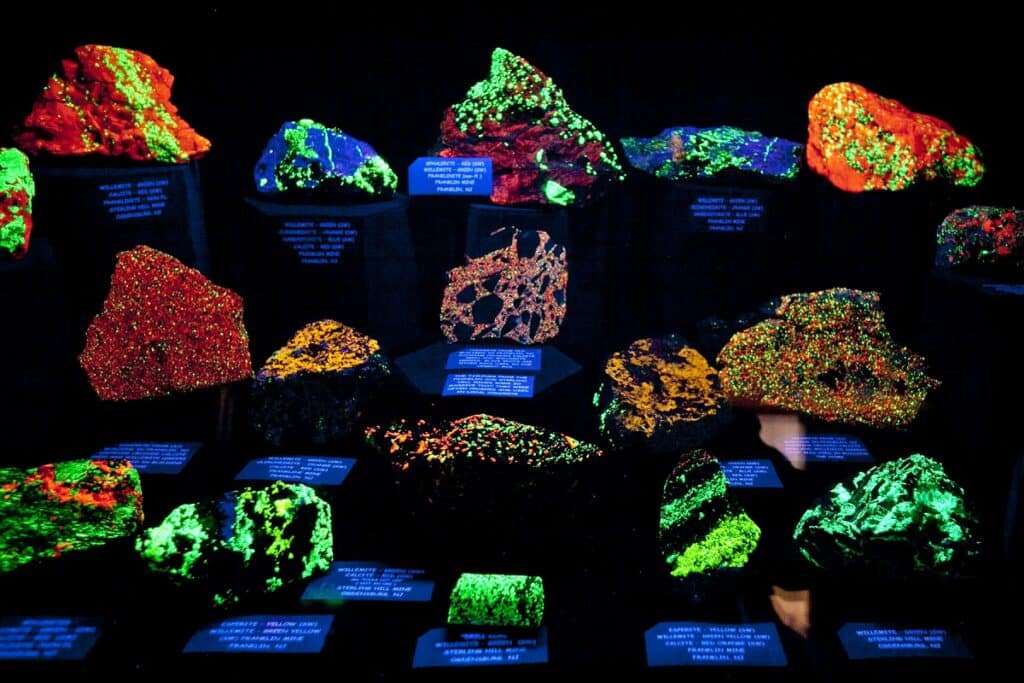
Interest in Minerals is Ironically Personal
The irony, he explains, is that we don’t even have enough mining going on now to support where society wants to grow and go, whether it’s cell phones or electric vehicles. “I hope the younger generations can figure out how to balance that aspect of ‘OK. This is what I want to have. How do we do it appropriately.’” He says a big part of the challenge is the timeline and money involved.
The key in the exhibits and workshops at WMMI is to stick to their mantra, which is “that we talk about the past, present, and future of mining.” Dewey says they start in the history of people coming to Colorado in the mid-1800s, discovering gold, and starting a whole gold rush, which really helped the state develop into what it is today.
Dewey says they discuss with students how many industries often start out in ignorance and then must figure out how to start cleaning up themselves.
“And that’s what happened in what we would call ‘the recent past.’ Most of our current students, and their parents were kind of born during the period when all those laws changed. But again, what is really surprising is they have little idea of what it’s like today in the mining industry … that it’s robotics and very data-driven and very highly technical and technological.”
Forward Motion in Education
The forward step then is talking about the future with the kids. “They know about electric vehicles and cell phones. And they’ve heard that there are some metals in there that are needed to make them.”
Dewey says most young people are surprised that mankind will eventually be mining on the moon, possibly in the next 10 to 20 years, and then possibly asteroids. “And they’re excited about that. They see some of that in the movies, but that’s going to happen in their lifetime for sure.”
From there, depending on if the student is in elementary, middle school, high school, or college, WMMI can talk at the appropriate level of content and detail to give them an introduction to the correct education path around mining, engineering, energy, and economics that is needed.
Dewey says it is also about managing and understanding expectations without overreaching as to what is possible. For example, how long does it take to extract such resources? Dewey uses lithium as an example since it is currently a hot topic. “Everybody hears about Elon Musk and people buying lithium mines. And almost all of the major car manufacturers are investing in lithium mines to produce that and other associated minerals needed [for electric vehicles].” Dewey says that these companies, going forward, know they’ve got to lock into a stable supply chain.
The reality, Dewey says, is that establishing mining those minerals in the United States specifically can take decades to develop, not because of technology but because of the bureaucratic system in place. It takes on average 16 years to go from what is called a discovery phase of a location to development and production. “Think about investing for 16 years before you get any money back. So mining is a very capital-intensive, slow-moving process unless we can really find a way to streamline our government’s approval process.”
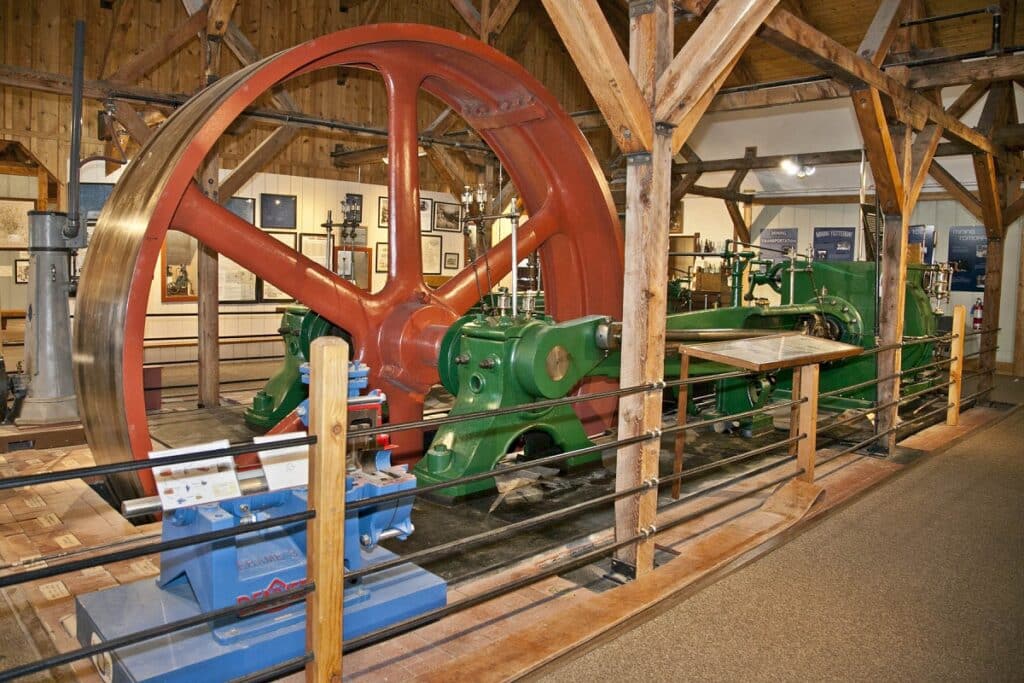
Improving the Process will Streamline the Impact
The process is reflexive as electric vehicles will help streamline the mining process as it moves forward. Think of the use of technology for haul vehicles (Caterpillar showcased a large-scale autonomous hauler vehicle that could likely go 100% electric at some point at the 2023 Consumer Electronics Show in Las Vegas). Any type of operation at a mine could be converted more toward battery- or electric-driven completely.
Dewey says they are finding as they do their research and outreach for educational programs that much of the infrastructure, especially on the scale that’s needed for this kind of EV and mining operations, does not currently exist. “There’s going to be a drive to create new infrastructure, larger scale, bigger capacity. And if we can be a little, let’s say, ignorant and say, ‘OK. It’s electric, it’s all good!’ we need to be cautious and know that the development of some of those technologies will not necessarily be clean or neat at the beginning.”
A good example he says is when people mention “rare earth metals,” such as lithium, the current ability to process them might not be very clean. “Although we do our best to manage it, we’re pretty new at it. But over time, that will get better and better, just like other processes and other industries. The public wants all these things [now], but they may not realize those are environmentally challenging areas for us to work in still.”
Managing Expectations Helps for Better Stewardship
While some schools like Colorado School of Mines and UCCS try to keep to the current verticals (which dictate how supply chains in specific industries work and evolve) as well as manage expectations. The challenge is that many of the bigger schools have cut back on what Dewey terms “earth sciences” and gone toward more environmental-based approaches to learning.
“And so we don’t have much of a balance, which is unfortunate, because some of the biggest decisions ourselves and our future generations will make will be based on that balance of [understanding and using] plate tectonics and geology on a global scale.”
Dewey believes that at WMMI if they can help educate the public, it will help these new stewards make better decisions.
“We’ll be better stewards of our resources and how to balance the world we want to live in. That means the economy, the technology, and the environment and how to make all that meld together. So, I really hope that we can work on that educational piece for the general public.”