

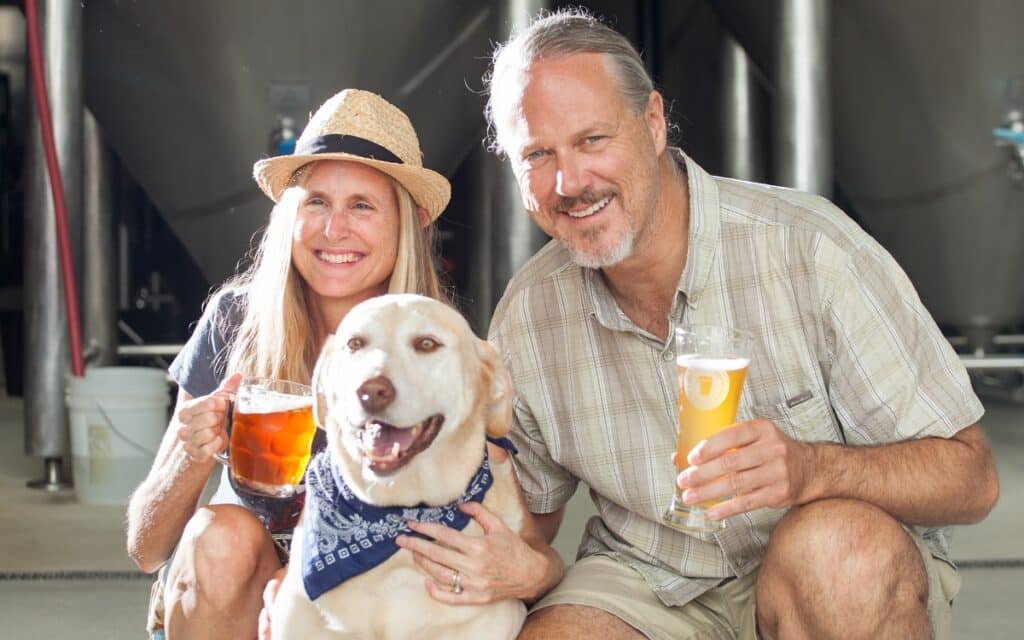
As one of the early entrants into the craft beer industry, having been established in 1994, Bristol Brewing Company – and founders Mike and Amanda Bristol – have witnessed the path of the brewing industry evolve in the state, the community build around it, and the direct approach of serving good beer in a fun setting.
When Mike and Amanda Bristol came back to Colorado after meeting and falling in love in Jacksonville, Florida, they combined their strengths in branding and engineering to create something new.
Founder Mike Bristol says when they started, he and his wife just wanted to make enough beer to make a living and do something they loved. As the community in the Springs evolved and demand grew, Bristol says that they found themselves having opportunities to see things and how they could integrate more into the community, its history, and its values. He says the opportunity to buy the Ivywild School in 2012 and renovate it stays consistent with the values that they try to embrace such as education and community building.
“It just gave us a much more visual way to do that, to kind of create that gathering place where people could come together and talk and share ideas,” Bristol says it was also fortunate that they were in the right place at the right time. If the Ivywild deal would have presented itself five years before [in 2008], he says they probably couldn’t have pulled it off. Also, if it had happened five years after, Bristol says they might have already been onto something else.
Continuing with Traditional Styles While Still Being Innovative at Bristol Brewing
Bristol says that when it comes to beer, he has always really liked traditional styles. “And that’s not very limiting because if you think of traditional styles throughout the world, there are hundreds of them if not thousands.”
He says Bristol has never been a flavor-of-the-month brewery. As the craft brewery industry has evolved, that is something, he says, new players in the game have gravitated towards. He says Bristol’s processes are innovative yet traditional.
He says, “Sometimes I go to breweries and I’m like, ‘Why would you put that in a beer?’ And the only answer I can come up with is because nobody else has done it. To which I say, ‘There’s a reason nobody else has done it!’”
Bristol says they like to look at their business in the long term, not looking at what is going to be hot in two weeks but what will have staying power in 5 or 10 years. “As we’ve been around longer, we’ve looked at hitting more that way. It’s not that we don’t like to play around with different styles … we’ve done all kinds of styles, but we generally like to kind of stick with stuff that we feel is true to our interests, our values, and our team.”
Bristol does say that now that they are bigger if one of their team would like to try something new, they are always up for new ideas. “But we still have these flagship beers that have a long history, and long-staying power.”
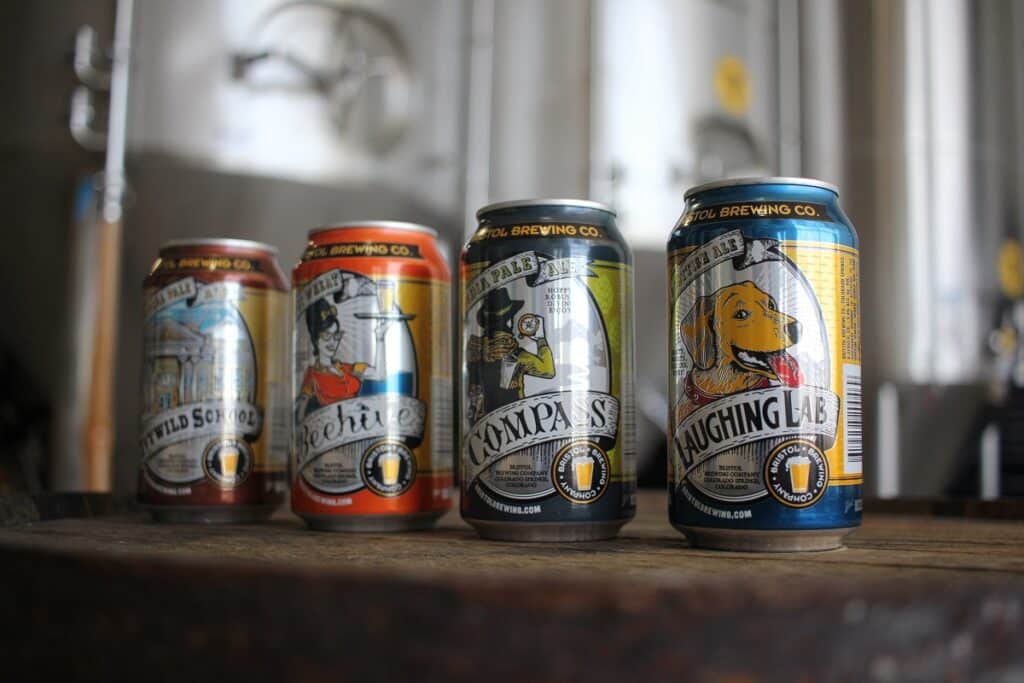
Their Laughing Lab Scottish Ale has been around for 29 years. Beehive Honey Wheat has been around for 27 years. Wicked Warlock Oatmeal Stout has been around for 27 years. “So, we’re maintaining those brands and we take a lot of pride in them.”
Bristol says, looking back, in 1994, there wasn’t a brewery in every community and far fewer multiple breweries. “When we really were looking at where we wanted to start this brewery, it was about what was the kind of market that was large enough to support what we wanted to do but not so large that we couldn’t be a big part of that community.”
Bristol himself grew up in Fort Collins. His first job out of college sent him to Jacksonville where he met his wife who was working in advertising at the time. Bristol always really wanted to come back to Colorado and brewing seemed the way to do it.
He had been home brewing in Florida and his degree in mechanical engineering gave him the problem-solving perspective to see it on a bigger scale. He thought Fort Collins was too small at the time to open their brewery there … the irony now for him is that there are close to a dozen breweries in that city now. Colorado Springs fit the bill for what they needed.
Mindset Coming Back to the Springs to Start a Brewery in 1994
“When we were in the process of coming to Colorado Springs, Phantom Canyon Brewing was also in the process of building,” Bristol says while Phantom opened six months before they did, it was great because they were a brewpub and balanced them out.
“For us, that was actually an advantage to have a restaurant that was selling craft beer and getting people educated because when we first came in, we were selling our beer to restaurants and bars. We didn’t have that restaurant of our own to sort of showcase everything. So, we had a great relationship with Tony and Anna and Eric and the guys when they started Phantom.”
Bristol says, “If you speak to a lot of commercial brewers that started in my era, I think the one book that probably set a lot of people going was Charlie Papazian’s ‘Joy of Home Brewing‘. It came out around 1992 because that’s kind of when I started getting into home brewing. And he made it approachable.”
Bristol says many of the brewers still joke about the lessons because Papazian’s line in the book was “Relax, don’t worry. Have a homebrew!” which meant “You don’t have to overcomplicate. Just follow the steps and have fun with it.” Bristol explains that when you get to a commercial level, you have to take it more seriously. “But still that book had a lot of inspiration in it.”
Bristol also reminiscences about some of his early inspirations for getting into brewing before he truly knew it was his calling. In his senior year of college at Colorado State University in 1987, finishing his engineering degree, he had to do three field trips to industry-oriented, engineering-focused businesses. His advisor allowed him to approach Boulder Beer Company (which was the first brewery in Colorado).
“I said, ‘Hey, this is what I want to do. I’m a mechanical engineer. I’m specializing in production and manufacturing systems. But I want to go visit this brewery and see how they do it.’ So, that ended up being one of my requirements to graduate. And again, I was looking at it at that point, just from a cool process point of view, because I still wasn’t totally into beer then. So, it’s just funny how all of these pieces kind of come together over time.”
“I’ve never worked as an engineer professionally.”
Bristol says he jokes with people that his degree is in mechanical engineering, “But I’ve never worked as an engineer professionally.” He laughs that he really hasn’t. “But I wouldn’t trade it for anything because, in the brewing process, there’s obviously a lot of systems and a lot of complexities.”
He says that one of the things that has really done well for them in his approach is that he is a process-oriented person. “I knew when we started that the beer had to taste the same. If you had it today and you had it next month or you had it a year from now, it needed to be the same every time.” This, he says, was ingrained from the beginning in the design of their equipment and their processes … and still is.
Bristol says there is a deeper connection in the reason they run the brewery the way they do … and that is rooted in memories. This, of course, informed their decision to move from their initial space on South Tejon Street to their current location at the Ivywild School. He says the actual beer part of the brewery, the technical aspects of it, and making sure that it meets the specifications of what they have designed is always extremely important.
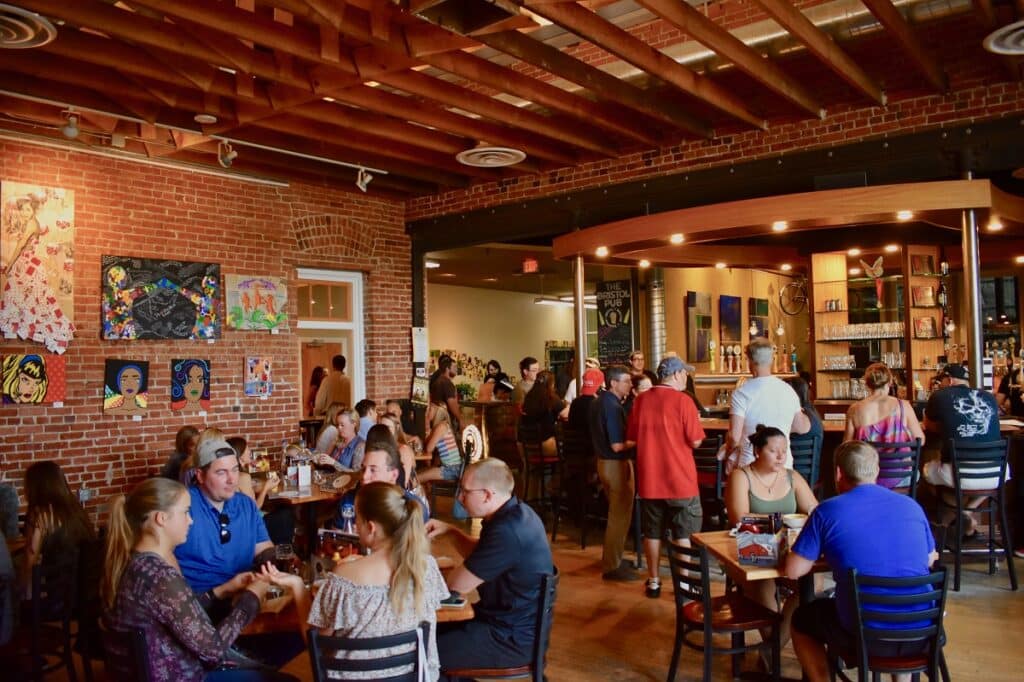
“But so much about beer is what goes on around it and who you’re with and what the experience is … and we take that pretty seriously too.” He says there must be a memorable atmosphere to go with a memorable beer. “I think a lot of brewers kind of miss that. To them sometimes it’s all just about the liquid but, to me that’s just the price of entry. If you’re going to be in the business, the liquid in the bottle or the can or the pint glass must be world-class… but the experience that you have … what the company stands for, all of those things have a huge impact on what people feel about your brand.”
Collaboration and Competition Go Together in the Community
This is important in his interactions with the community, collaborating with local businesses and venues including Jack Quinn’s Running Club, the Buffalo Lodge Bicycle Resort, and many others. However, brewing, for him, will always have both a competitive and collaborative spirit. “It’s a great industry, and there is still a lot of collaboration. But I think there is going to be a point, and maybe we’re there, I don’t know, where there are enough breweries where people are having to pick off each other.”
Bristol continues, “I think the market will take care of that. The good beer will survive. The companies that stand for something, the companies that are doing it right, will survive. And the ones that don’t, won’t.”
This revolves back, Bristol explains, in that people crave a good, unique experience, but adds, “Unique is fine, but not if it’s not good.” He says that is ingrained in branding and location. “We’ve always looked at Ivywild and the pub almost as a sort of our branding. We think it carries over. So, if someone goes and has a great experience there, great. And then, if they’re at their King Soopers next week and they’re looking in the beer aisle, and they’re like, ‘What should we buy?’ ‘Oh, there’s a Bristol IPA!’ I would like to think that hopefully the two sides sort of accentuate each other.”