


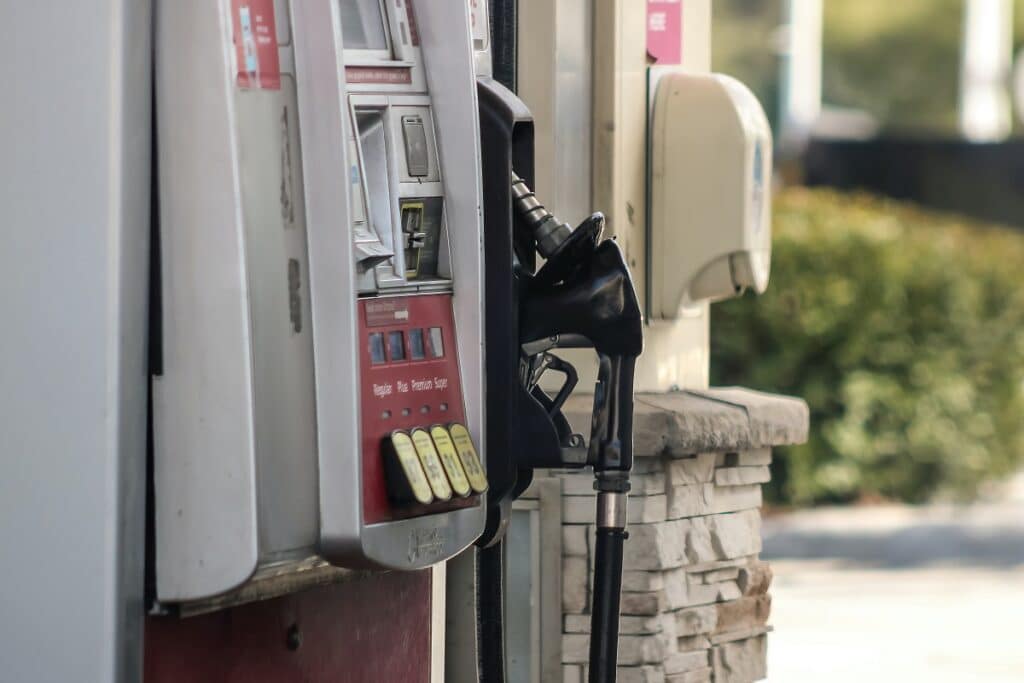
The town of Louisville, about 20 miles from Denver, wants people to buy and use electric vehicles. To drive the point home, the city council approved a heavily-amended moratorium on most new gas stations for the small suburb of 21,000. As of May 2023, the city has five gas stations, with a sixth under construction. The measure is part of a politically blue effort that started in California. The goal is to fight climate change by forcing the adoption of electric vehicles.
The Louisville measure passed on an “emergency” rationale last November. It was finalized in mid-March.
For some time, the Maverick Observer has covered two key problems with targeting gas vehicles in Colorado: 1) most people in Colorado, by the numbers, data and market response, do not want to drive EVs and 2) even if they did, Colorado’s geography, climate, size and other characteristics make them immensely impractical for most people in the state.
Louisville, Colorado Gas Station Ban Has Another Problem: Safety
Something else in this green exhibition also highlights a dangerous naivety about the wholesomeness, safety and benefits of electric vehicles.
The bill forces current gas station owners to add EV charging stations if they want to add pumps. This ironically shortsighted provision shows an immensely dangerous ignorance of growing research on lithium-ion batteries. A requirement for charging stations at a fuel stop could mean thermal runaway potential from an electric car, i.e., an electric one-ton hydrogen and chemical fire sitting only a few feet away from thousands of gallons of gasoline.
Louisville could require gas stations to add EV charging ports if the gas stations want to expand. While ecologists say electric vehicle fires are rare, those fires burn hot, and they burn long. An electric car could be a one-ton hydrogen and chemical fire within a few feet of thousands of gallons of gasoline.
Short Circuit Between Council and Citizens?
There is a puzzling persistence with alt-green activists regarding policy and forced measures. They institute pressure to buy expensive, impractical and unpopular cars.
Then there is a government ordinance forcing gas stations to host vehicles that can take thousands of gallons of water to extinguish is another heavy-handed and obtuse measure.
Plenty of Charging Stations But in One Place
Estimates on the number of charging ports in Colorado vary. Some sources are federal agencies; some only have a visual map available.
Going the Distance | Three-fourths of Colorado’s EV charging “station locations,” according to the Department of Energy, are within 80 miles of Denver or about one-fourth of the whole state’s territory.
The Alternative Fuels Data Center has ambiguous definitions for charging locations. There could be one single connection for a slow standard wall socket which means a 12-hour charge (Cite). It could also be a specific type of connector for the make of the car.
For “stations,” Alternative Fuels from the Dept of Energy lists 1,780 in the state of Colorado. Just how available are these stations statewide? Seventy-six % of them are within 80 miles of Denver. An 80-mile range from downtown Denver in any direction (as the crow flies) is 20,000 square miles. Seventy-six % of Colorado’s charging stations are packed into the deep-blue, urban 20% of its territory.

Fast Facts of EV Technology Infrastructure in Colorado and Louisville (Charge Finder | Charge Hub | Plug Share | Get Jerry | Alternative Fuels Data Center or AFDC)
- There are many “ports” but their availability to the general public or their vehicle capacity are unclear (AFDC)
- A “station location” is a more understandable metric (AFDC)
- There are numerous types of charging stations: IONITY, various speeds of charge and two different Tesla chargers, among other factors (Charge Finder)
- While the state is 104,000 square miles, three-fourths of its public charging stations sit within an 80-mile radius or 20,000 square miles near Denver (AFDC)
- There are over 900 public charging stations in Denver, Aurora and Boulder alone (Get Jerry)
- About one-third of the territory in Colorado is due east of Boone, and one map shows there are (at most) twenty public charging stations in that 30,000+ square mile area in eastern Colorado (Charge Finder).
- For far east Colorado, only five station locations are within 50 miles of Burlington (AFDC)
- Within 25 miles of the central Colorado Springs zip code 80903, there are 18 DC fast charging and 76 level 2 charging stations (AFDC)
- There are already 91 EV charging locations of some sort within five miles of Louisville’s main zip code (AFDC)

Louisville seeks to coerce EVs into common use. It’s the reason they introduced the measure. The leading proponent, Maxine Most, who sits on the city council, leveled with her constituents about switching from fossil fuels–like gasoline–for cars. She gave the popular alt-green take on the whole climate change crisis, on the crusade against greenhouse gas emissions, and on the supposed energy transition:
“And the truth is, that pain has kept us for years and decades from making those decisions because it’s hard. No matter when we make those decisions there’s going to be winners and losers. And I think it’s time for the adults, who step up to take responsibility in elected positions, to understand that we don’t have a choice anymore.“ – Maxine Most, the leading city council proponent of the proposal for gas station moratorium in Louisville, quoted in the independent newspaper Complete Colorado
Despite the ban and despite the proviso for possibly requiring charging stations, there are already eleven fast-charging stations and 91 charging stations total within five miles in and around Louisville.
Battery Fires and Electric Vehicles: Not a Red Herring or Extreme Example
Ignition, combustion, and flammability are all different things. An EV lithium-ion battery fire could involve only one of these. It could also involve all three of those states of rapid decomposition. Environmentalists will say that EV cars don’t often have battery pack fires.
Louisville’s desire to rush the city headlong into an electric vehicle transition indicates a doctrinal tendency to ignore some vital warning signs, like EV fires.
A 2022 study by AutoinsuranceEZ, a car insurance clearinghouse website, showed a study where they claimed to debunk the notion that EVs catch fire a lot. Within a few months, the industry-leading publication Car & Driver noted that the supposed study had a seriously dodgy analysis.
Nonetheless, the faulty study was cited in the New York Times (according to Car & Driver, though the probable article in question by NYT has been edited since then) and Kelly Blue Book. It’s still live content–perhaps with some edits–on AutoinsuranceEZ’s site. AutoinsuranceEZ claimed to have consulted with NHS, BTS, NTSB, and documentation on auto recalls. Still, an NTSB spokesperson told Car and Driver: “There is no NTSB database that tracks highway vehicle fires. We do not know what data AutoInsuranceEZ used for its research, but it did not come from an NTSB database.”
The appetite for good EV press is strong among alt-green individuals. Perhaps too strong. As such, things like reputable safety studies may be left in the exhaust.
Electric Vehicle Fires and Gasoline?
While the thermal and combustive physics of gasoline is complicated, it’s an overall flammable substance. A bare flame can ignite it. EV fires combust very quickly and then burn for an expansively long time. They can take thousands of gallons of water to put out. Even after appearing completely extinguished, they can catch fire again if the battery is still hot. The materials in the battery combine to present noxious, highly toxic gases. An average electric car’s battery can produce hundreds of gallons of poisonous steam or smoke when ignited.
If there was a device that, when ignited, 1) produced enormous plumes of highly toxic chemical gasses; 2) was fastened in a very hard-to-reach place on a one-ton device; 3) was extremely resistant to fire suppression materials and practices, i.e., could burn for hours; 4) was encased in a durable protective box; and 5) produced jet flames, would this be safe to put next a gas station, regardless of the infrequency of fires?
While sometimes promoting EVs, the US Postal Service has its clerks ask if a package contains lithium-ion batteries. And the spark from static electricity is enough risk to warn people to avoid cell phone use at a gas pump. There’s clearly a connection here, the threat of fire from lithium-ion batteries.
It’s a suppressed reality that electric car fires are brutal to put out and present enormous dangers to every person involved. Is it good planning that this city council in Colorado voted to install these stations for electric cars? Should they require gas stations to add EV charging to new gas stations if the gas station wishes to add pumps?
Raising the Temperature, Politically and Otherwise
EV fires are becoming harder to dismiss as so-called media hype (all 20th-century media outlets are wildly pro-EV anyway) or a libel by big oil companies against cars that harm their bottom line.
A city in Germany has declared underground parking garages a no-go for ALL EVs. Two car shipping firms–one from Japan and another out of Norway–have banned EVs from their tankers. The fires from electric cars are so persistent some Arizona fire departments are considering burying burnt-up EVs. And in parts of Europe, some first responder teams have units to submerse a torched EV in a water tank.
Maxine Most, the outspoken proponent of the bill, is now facing a recall effort. Supporters of the recall cite her mishandling of an effort to fight climate change and remarks regarding victims of the Marshall fire; she strongly considered forcing costly, environmentally-friendly building regulations on persons rebuilding their homes. It’s relevant that she again stumped for an austere ecological policy.
There is a belief that Boulder and Denver counties’ citizens are rallying toward the EV transition at full speed. But a closer look shows that many want to tap the brakes. And, based on infrastructure, the same could be said for much of Colorado. Though certain bad news about EVs is not widely known, it’s getting harder to ignore.