


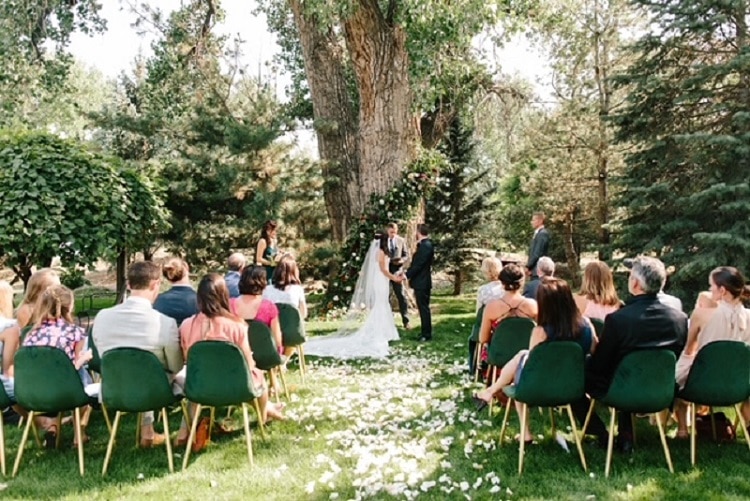
As weddings are cancelled, shrunk, or postponed, can the industry survive? Part 2 of the 2-part series researching the impact of COVID-19 restrictions and fears on Colorado’s wedding industry.
“Weddings…literally got turned off overnight,” says Brynn Swanson, owner and designer at First Look Events in Denver.
Wedding Industry Reeling
This spring, COVID-19 fears and restrictions left the wedding industry reeling. Limiting group sizes and making travel difficult to impossible, COVID-19 restrictions pushed couples to reschedule or cancel, keeping couples from their dream weddings and effectively shutting down an industry Swanson says contributes $1 billion to the Colorado economy.
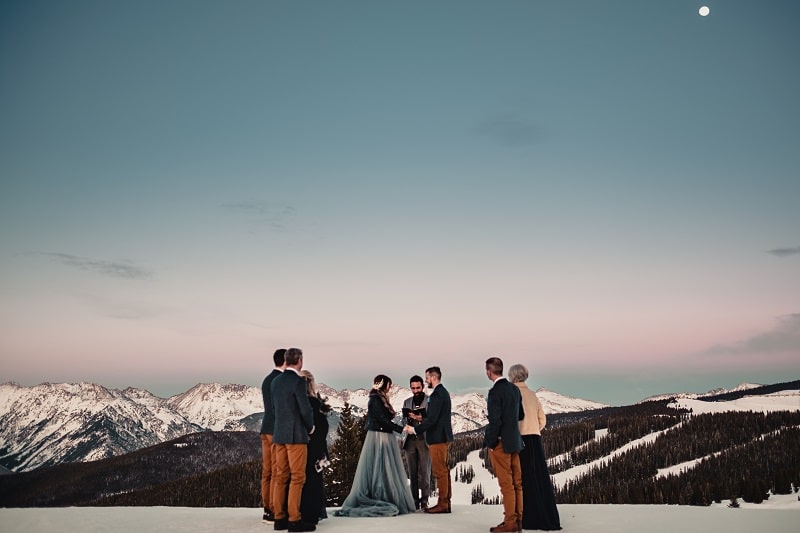
Changes in the industry were not entirely unforeseen. Michelle Talarico, co-owner of Picnic Basket Catering Collective, says that her company had started planning for a coming wave of “micro-weddings” back in 2019. Wedding officiant Phil Gallagher agrees, “There was a trend anyway in the last three years …[toward] more intimate ceremonies.”
It was a Crash
But regardless of the industry’s drift, this year’s halt to medium- and large-sized weddings was hardly a trend. It was a crash.
Some couples handled their disappointment about losing their dream wedding by opting to marry regardless of the restrictions—in sickness and in health.
“Airbnbs are the hype right now,” says Leather and Lace Photography co-photographer Shayla Marin. With group restrictions as tight as 20 or 30 guests, many brides saw no point in spending tens of thousands of dollars on a massive venue, cancelling their reserved dates and opting for intimate weddings in homes.
One couple, forced to postpone their 150-guest June wedding, called their planner, Brynn Swanson. The couple chose not to redo the year they had already spent planning, and instead put Swanson in charge of the details, saying, “Surprise us.”
Working with the bride’s mother, Swanson was given free rein to design the décor, meal and wedding celebration for a guest list of 24 people. The result was a dream: Married in a tent on a flower farm, the couple and their guests enjoyed a seven-course meal and toasts from homebound guests as far as Sweden via Zoom.
“All the little details for those 24 people felt like the most important people in the world,” says Swanson. “Definitely a COVID pivot success story.”
Silent Majority of the Wedding Industry
Though some couples chose to marry anyway, even the weddings that went ahead were so small that a massive, silent majority of the wedding industry was still left out: behind-the-scenes staff. Swanson points out that the average wedding features as many as 30 part-time workers waiting tables, serving at the bar, and setting up or taking down the event.
As weddings disappeared or shrank to just a few people, every one of those jobs vanished, and with surges in COVID-19 cases and a constantly changing landscape of restrictions, they haven’t come back.
The Colorado Event Alliance
To support these frontline industry workers, Talarico, Swanson, and others started a nonprofit called The Colorado Event Alliance. Through government advocacy and financial support, the Alliance seeks to “shine a ray of hope on the frontline workers in the Colorado event industry.”
The alliance has given away some $15,000 through 32 awards since it began in April—and is looking for both more donations and more applications for support. “We moved fast in order to support this unseen industry,” says Swanson.
While Swanson sees the alliance as continuing after the COVID-19 closure, the current focus is on survival. “We just need to have enough work to stay in business until this is over,” she says.
Even now, the strain has been too much for some large vendors and venues, and these permanently closed businesses represent only a fraction of the industry’s misery. Says Swanson of the big-name closures, “Lord only knows how many planners and one-off small businesses I haven’t heard about.”
Hope in the New Year
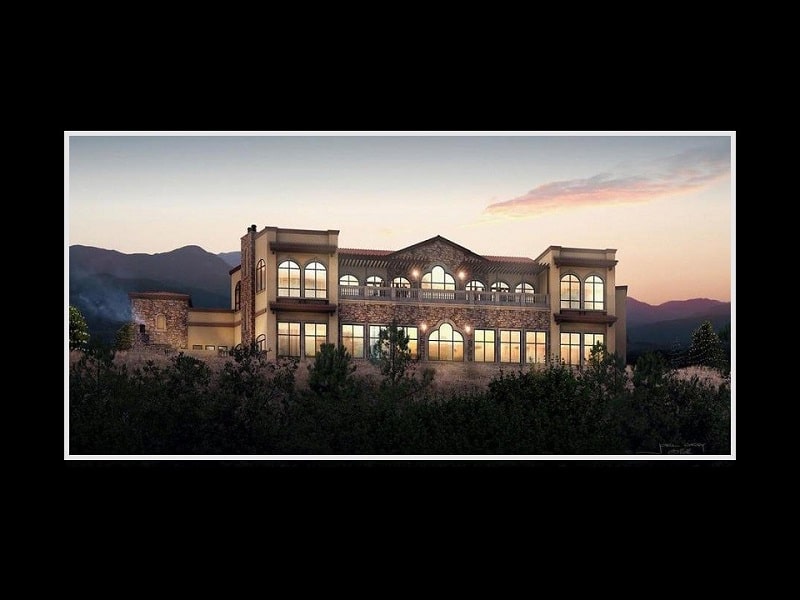
While the industry struggles to survive through 2020, many do see a light on the nuptial horizon. “Currently, next year looks great,” says Michelle Benson, Event Coordinator at Colorado Springs wedding venue The Pinery at the Hill, referring to next year’s bookings at the large venue.
Lauren Ripko, owner of Studio Q Events is hopeful that the coronavirus vaccine will restore confidence enough for next summer. “Third and fourth quarter next year we’ll be cranking…that’s my hope,” she says.
Talarico echoes the optimism, “Love still happens.”
Until then, Swanson believes that this resilient industry will stick together. “If anyone can come out of this it’s the wedding community.”








[…] do you tie the knot without the guests? Part 1 of a 2-part series researching the impact of COVID-19 restrictions on the Colorado wedding […]