


Part 1: Local Experts Discuss How Tiny Homes Can Be More Attainable Than Other Housing Options
In the past several years, living in tiny homes has become a fad across the country and even the world. Many who choose a more simplistic lifestyle want to live in a tiny home because it can be more affordable than owning a typical house.
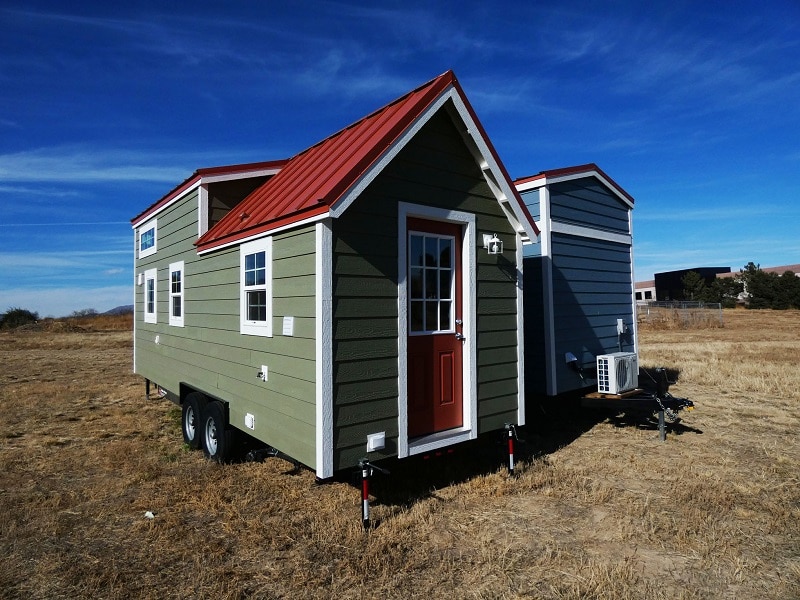
According to the 2018 International Residential Code, Appendix Q Tiny Houses, a tiny house is a “dwelling unit with a maximum of 37 square meters (400 sq ft) of floor area, excluding lofts.” (In recent years, some people have classified recreational vehicles or trailers as tiny homes, but the tiny homes discussed in this series are the ones built as residences that are right around 400 square feet.)
While more people are interested in tiny homes, new laws have made it difficult to find a place to put them. One option is to buy a piece of land to park it on. This method is feasible in many cases, but if the home is not permanently affixed to the ground, then it is considered a recreational vehicle and camping laws mandate how long someone can stay in them.
Therefore, those who wish to live in a tiny home must either purchase land for a permanent home or park in places like campgrounds and RV parks. Another option that has recently come up across the state is the idea of a tiny home village. In these villages, people buy the homes that are permanently fixed to the land and then pay lot rent to the park.
Are Tiny Homes Considered Affordable Housing?
When people think of tiny homes, they often think of it as being much cheaper than living in other forms of housing. But, according to local affordable housing experts this may or may not be the case.
According to Lee Patke, the executive director of Greccio Housing, whether living in a tiny home would be considered affordable or not depends on the circumstances. “The cost of construction is certainly affordable,” Patke said. “I think they can be a very affordable option for people who have a place to put them. Like tiny homes for mothers-in-law or somebody like that where they could be behind the home of a friend, or an adult child and they have a natural place to put them. What I don’t know is if they would be affordable if people have a tiny house and no place to put them.”
Greccio Housing provides housing by building new apartment buildings and reconstructing old buildings to use for affordable housing. Patke said since their model for providing affordable housing by making apartment complexes has worked so well, the organization has not been focused on anything else such as tiny home projects.
“We tend to develop a more traditional model rather than an out-of-the-box model like tiny homes are,” Patke explained. “That’s really a new and innovative way to produce affordable housing, but it’s not something that we have done.”
According to Steve Posey, the director of Housing and Urban Development (HUD) in Colorado Springs, tiny homes and the villages could be affordable housing it just depends on how much the total rent will be. “To be affordable with that type of product we would be looking for the rent to be right around $720 a month,” Posey said. “And that would be for someone who is earning up to $15 per hour.”
According to Posey, federal standards determine whether housing is considered affordable by looking at what portion of a person’s income is spent on rent. “The definition of affordable housing is that you don’t spend more than 30 percent of your income on your housing,” Posey said.
Builders Discuss the Growing Popularity of Tiny Homes
Austin and Tracy Baker, with Tiny Building Experts in Colorado Springs, have been building tiny homes for the last six years. The company has built homes that are both permanent structures and on trailers. The business has also partnered with the local non-profit We Fortify to build tiny homes for the Mill Street Housing Project (read more about the project in part two of this series).
The couple also belongs to several alliances nationwide that are working for new laws regarding tiny homes. The alliances wish to change the stigmas surrounding tiny-home living. One thing the Bakers have worked to do through the alliances is get uniform codes for building tiny homes and where they can be placed.
According to Tracy Baker, the pandemic has increased the demand across the nation for tiny homes. “People want tiny houses,” Baker said. “They are downsizing from bigger houses. Some people need to have a smaller footprint from a cost-of-living perspective. Some people just want to have a smaller footprint. So, you have all of these types of people whether they are disadvantaged or whether it is an affordable thing. There are a lot of different reasons why people are going tiny.”
Baker also said that many of the tiny homes they build come with better insulation than other houses making them more efficient. Some tiny houses may look expensive to buy at first, but the fact that they save utility costs over time have made them advantageous to some people.
Note: This article is part one of a three-part series examining tiny homes in the Pikes Peak Region.