

It took 18 months for COVID to find its way into my family back in early September, with an exposure occurring on the 4th and my mother’s first symptoms appearing on the 7th.
It took seven days to get my mother to the point where she was taken by ambulance to the ICU with severely low oxygen levels on September 14th.
She was admitted with a diagnosis of COVID Pneumonia, and the brief phone conversation I had with her as she was waiting to be moved into the ICU was tragically our last.
It only took another six days to end her life on September 20th.
My father, my children and I had a chance to say our goodbyes the day she passed, with the nurse offering to hold up the phone so we could say our last words to my mother as she was sedated. She slipped away several hours later; the doctors had done what they could, but the virus had done so much damage so fast, like a raging wildfire or a Category 5 hurricane.
The Cost of COVID
The loss itself is difficult to even put into words, but it was also compounded by mine, my father, and my children’s own COVID infections and quarantine. Being so alone during one of the hardest times of our life was almost surreal. We were lucky to have wonderful support from family, who grabbed prescriptions, fed animals, brought food for us all, and even brought toys for the kids to keep them busy.
We also had a Cub Scout food train keeping us well stocked with fluids and food. But it was so hard to talk to them from a distance, over the fence in the yard, or to grieve with them over the phone. I will never forget breaking the news to my uncle from about 20 feet away, and hearing and seeing the pain we were all feeling but not being able to be any closer.
The Ravages of COVID
The virus tore through our house with a force I have never felt before. My father was severely ill in a way I had never seen, and I often worried I would lose him as well. One of my children ended up in the Emergency Room with an intractable fever within 24 hours of his first symptoms. Luckily, he and my other son recovered quickly in comparison to us adults.
With my doctor’s help, I was able to receive a monoclonal antibody infusion on day six of the virus (the cutoff is seven days), thanks to two comorbid conditions that placed me in a high-risk category that was required by the government at the time. I suspect this is what kept me out of the hospital and able to care for my family. Even then, I could barely make it off the couch to keep the kids fed and everyone medicated.
My father and I went nearly two weeks on a meal or less a day as we simply lacked the appetite and energy. We struggled with severe shortness of breath and coughed for weeks; the cough still lingers a bit for me.
In fact, I still struggle with symptoms such as debilitating fatigue, weakness, memory and concentration issues, shortness of breath and occasional chest pains. When I look in the mirror, I do not even look healthy – I am pale and get random facial rashes, my hair is brittle, my eyes glassy. COVID left its mark on me, emotionally and physically.
Lessons Hard Learned
After all of that, what message do I have for people, what do I wish others knew? First, government policies are often nonsensical and arbitrary. However, choosing to be a decent and considerate person has nothing to do with government policies – one can arrive at their own conclusion that just happens to be the same (like wearing a helmet while on a motorcycle).
In this case, the ideas behind remaining at home while sick and maintaining a safe distance if you must go out really do work. Honestly, as someone dealing with more than one chronic illness, I wish this was just the norm in general, even with colds and the flu. “Toughing it out” and still going to work or other activities when not necessary is not always the best choice and can have effects that you may never see.
Another simple and considerate thing to do is to keep some at home test kits on hand (or be willing to go get tested) if you have symptoms or a known exposure. A quick check-in with people you may have exposed to the virus is the right thing to do – it does not have to be blasted on social media, but just advising them privately of an exposure may help them.
If they know those early symptoms – which seem like a mild cold or bad allergies – are likely COVID, they may be more likely to see their doctor and perhaps even get on one of the promising new antivirals (or the same monoclonal antibody infusion I received) before too much time passes. They can also work to minimize spread on their end. They may be more willing to monitor their oxygen levels, get checked out by a doctor, or start a treatment before things get bad.
If they know they are at risk for COVID-caused pneumonia, they can understand the importance of getting up and moving, no matter how miserable they may feel – it could save their life.
But if they do not have this information, they could shrug off initial symptoms as a cold or bad allergies and may not be able to access life-saving interventions until it is already too late. When it comes to the vaccine, the choice is ultimately yours, but I would encourage everyone speak with their doctor who knows them, their risks, and their levels of risk tolerance, and not to take my or anyone else’s word for it.
It pains me that this virus has become political. It never should have been. Just as a hurricane does not care where you planned your beach vacation or a wild animal can attack you no matter how kind you are to your pets at home, viruses do not check your voting records.
I do not advocate living the remainder of your life in fear or remaining in a permanent lockdown. But I do advocate a healthy respect for what this virus can do to you or someone you love. The fact that the disease is mild for many people does not mean it isn’t deadly for others – and some people may not even realize they have a higher risk.
COVID is the reason we have one less stocking hanging this holiday. COVID is the reason my children lost their grandmother, my father his wife of 40 years, and me my mother. COVID is the reason I still struggle daily with symptoms and possibly Long-Haul Syndrome.
The Takeaway
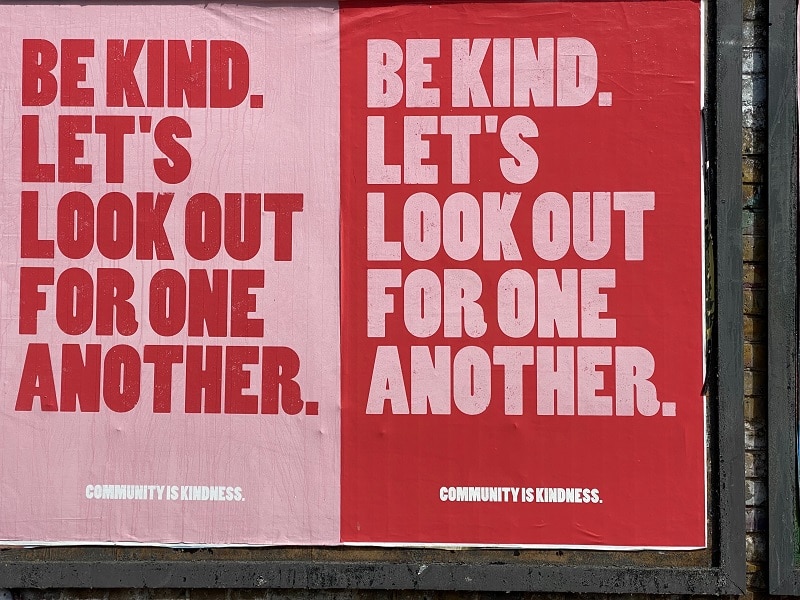
What do I wish people would take away from sharing my story? I would ask that anyone reading this take this virus seriously without living in fear, be considerate and responsible in a common-sense way, and to be kind to one another – we all need more kindness in our lives right now.
It is possible to celebrate liberty and freedom while also being a respectful citizen and neighbor to those at risk. It involves thinking for ourselves instead of automatically accepting or denying what the government says, and it involves treating people as we would wish to be treated.
It seems fitting to close out with a quote from the great Viennese psychiatrist and Holocaust survivor, Viktor Frankl, and his words on freedom and responsibility being linked together: “Freedom, however, is not the last word. Freedom is only part of the story and half of the truth. Freedom is but the negative aspect of the whole phenomenon whose positive aspect is responsibleness. In fact, freedom is in danger of degenerating into mere arbitrariness unless it is lived in terms of responsibleness. That is why I recommend that the Statue of Liberty on the East Coast be supplemented by a Statue of Responsibility on the West Coast” – Man’s Search for Meaning.