


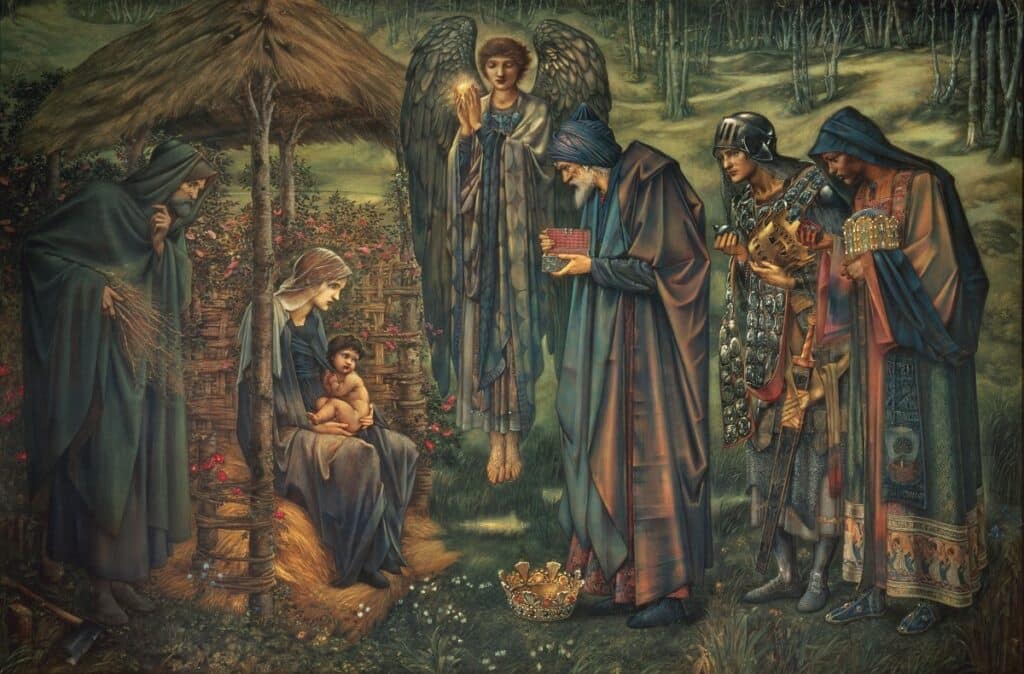
Ignore the Da Vinci Code or Similar Sensationalism if you’re interested in Theology and the True Christmas Story
Around the holidays, there are documentaries and think pieces about the first Christmas. If you want to be entertained by college professors and academics giving a symbolic interpretation of Christmas – many of them outside the mainstream of academic theology – then these programs and articles might be fun.
Those contents are one instance where shocking and countervailing beliefs sell books and get TV shows. These documentaries or feature stories have significant amounts of misleading, highly speculative, or over-interpreted religious history. Beneath this profitable conjecturing is a fundamentally cynical approach to ideas about the Bible and church history. And this influences beliefs among academics about what happened on the first Christmas.
For those interested more in the reality of the first-century accounts of a first-century historical Figure, these documentaries and infotainment about the real history of Christmas can be ignored.
“Such things promote controversial speculations rather than advancing God’s work—which is by faith.” — 1 Tim. 1:4, NIV
Christmas Story Claims
The world of theology, especially historical theology and church history, is a series of multi-story labyrinths.
The Maze of Modern Theological Studies (not in any order):
- Evaluation of artifacts
- Discovery of scrolls and manuscripts
- “Documentary hypotheses” and textual criticism of those documents
- Re-evaluation of these manuscripts
- Disagreements of experts in very specialized fields
- Evaluation of the credentialing and reputations of those making the claims
- Documentary history and physical history on this topic
- The desire to make a big splash or to upend established history
- Endlessly reading between the lines of religious texts
- Lots of unfalsifiable assertions like “no one in the first century would have thought that way” and therefore the plain reading of a religious text always has some hidden meaning
Welcome to the world of theology.
To reply, with enough context, to secondary details of the accounts in the Bible’s Christmas story would take up a book.
When it comes to Christianity, it’s enough to know the lens through which most modern popular academic theologians look; at least those making outlandish claims. Knowing this lens, a person is safe from getting sucked in by revisionist notions of Christmas, the “what ifs.”
The Lens of Popular Theological Studies
To discuss the veracity of the Christmas story, it’s important to consider what are the most popular messages about the history of Christianity and the Church. Outside of small studios, like Lion’s Gate, or expressly religious publishing houses, like Tyndale, it’s all negative. Mainstream showbiz and publishing houses enthusiastically defame and distort historical Christianity and the Church. No reasonable person denies this.
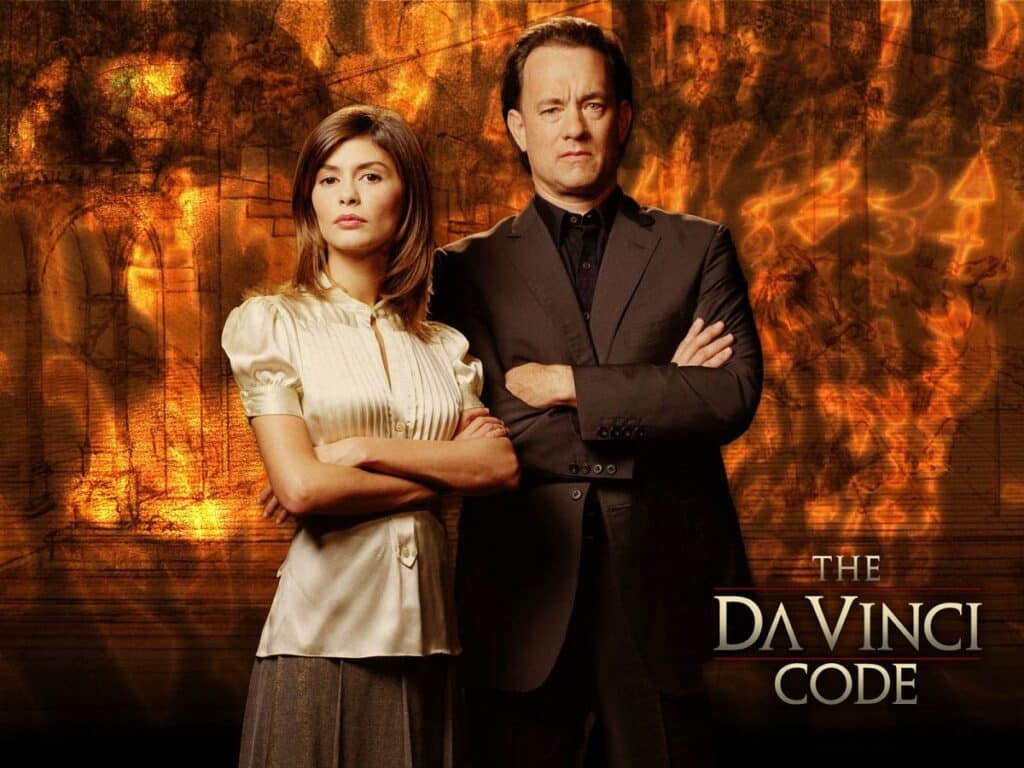
While most of America doesn’t have the time or the interest to read through a supposedly accurate book about new discoveries or perspectives in theology and church history, we all like being entertained. As such, tabloid-style work like The Da Vinci Code becomes a popular entry point in the mass media for revisionist notions about the history of Christianity.
In the introduction to the book, the author writes “Fact: . . .” before two of his historical assertions. The author clearly has an agenda: to dispute the most evidence-based historical account available of a person named Jesus of Nazareth. And Dan Brown is not only telling a story or even mostly telling a story. He is using a novel to make an academic argument.
The Da Vinci Code (2005) popularized revisionist theology with a veneer of academics. Though there were certain bare-bones facts in Dan Brown’s overwrought novel –there is a Catholic order called Opus Dei – many of the book’s claims about religion and theology have been rejected by a broad field of theologians and religious thinkers as imaginations.
Jesus never had biological children, nor did he ever travel to France.
Despite its surrealist claims, Brown’s first novel whipped up an appetite for transgressive positions about the church and church history. Like Brown’s novel, many of the “hot takes” when it comes to the historical Christmas story are a giant wall tapestry of fancifulness hanging by a fraying thread of truth. Such tapestries might get attention – selling books and making TV shows – but they’re decoration.
And much of what NPR and the like will tell you about the first Christmas – there are ugly Christmas decorations.
An Example of that Distorted Theological Lens
One such tapestry creation was by Karen King, a leading Harvard chairwoman in their seminary. In the early 2010s, she wrote and published on the idea that Jesus and Mary Magdalene were husband and wife. She based this belief on a previously-unknown manuscript that turned out to be a forgery.
King initially held her ground, then admitted to being swindled. But her early insistence came despite numerous red flags about the provenance of the papyrus and after only perfunctory attempts to verify it.
At a 2012 conference in Rome, King unveiled the business-card-sized scrap when it was still an ostensibly credible artifact. The Vatican’s newspaper, quoted in the Daily Mail, said it was an “inept forgery… with a twisted bias to match a modern ideology,” and they turned out to be correct. There wasn’t even a thread of truth to this tapestry except that the forger used a piece of ancient cloth papyrus. So maybe a literal thread.
Like that far-fetched account, a popular Christmas documentary or a chatroom atheist might make some outrageous claims about Christmas.
The truth is not so scandalous.
There’s No There with Luke and Matthew; They Were Probably Trying to Tell the Truth
When it comes to Christmas, the first chapters of these earth-changing documents, The Gospel According to Luke and the Gospel According to Matthew, get short shrift. Most of the attention they do get is quick dismissals or doubts regarding various elements of the story: wise men, the calendar date of Jesus’ birth, a census, a journey to Egypt, and so on.
Watch any documentary or read any think piece on the first Christmas, and you’ll hear it.
These automated rejections illustrate the psychology-laden approach modern popular theologians take. They annihilate the belief, out of hand, that Bible authors were trying to record information accurately. Like Dan Brown, the belief is that the text was always strategically manipulated to sound truer than it was. And, that this manipulation was done for power.
Karen King’s case is an example of this cynicism that the Gospel writers were power-minded and agenda-driven: her scrap of papyrus indicated how the church suppressed Jesus and Mary Magdalene’s supposed marriage to minimize the role of female Christians. Only that didn’t happen. With this cynicism in place, theologians denigrate the Gospel accounts themselves. The accounts are considered almost anti-historical.
If nothing in the Bible about the Christmas story can be taken as standalone accurate, then there’s nothing to discuss. However, if Luke and Matthew were trying to tell the truth, consider what they said. Consider also what they didn’t say. They didn’t say Jesus’ father was a Roman soldier.
Example of a Christmas “What If”: No, a Roman Soldier was not Jesus’ Father
One such appeal to a sensationalist, tabloid “anything’s possible” idea in the Christmas story is notably odd. It is the “possibility” that Mary, the mother of Jesus, conjugated with a Roman soldier and then gave birth. That is, she hadn’t been a virgin. It apparently originated from the anti-Christian apologetics of Celsus, a Greek thinker from the second century.
In the 1850s, German railroad builders happened to unearth some Roman military graves. One of these had the title of “Pantera,” saying the grave marked an archer from the area of “Sidon.” Sidon is in Lebanon, which neighbors Israel to the north.
Yes, that soldier supposedly could have traveled in or near where Mary lived during her child-bearing years. But the linear mileage distance between Jerusalem to the location of ancient Sidon (modern-day Sayda) was 124 miles as the crow flies.
The entirety of the evidence, beyond the gravestone of Pantera/Panthera, comes down to the words of hostile written sources.
What is True, Then?
Could something miraculous have happened 2,000 years ago in Israel? Something that is celebrated and observed by 2.2-plus billion people?
The writers of Luke and Matthew weren’t concerned with building an empire, selling books, or upending the establishment the way some academics want to today.
However, that historical Figure, born humbly that day in Israel, did turn the world upside down.