



In 2020, 1,477 Coloradans died of drug overdoses. That’s an increase of 38 percent from 2019. Final 2021 drug overdose data has yet to be released, but preliminary data shows that 2021 was worse than 2020 — the Colorado Department of Public Health and Environment estimates that over 1,800 Coloradoans died of drug overdoses in 2021.
The Colorado Health Institute reports that in 2020, 68 percent of all opioid analgesic deaths (drug use outside of prescriptions) involved fentanyl. And in just 2021, preliminary data shows that overdose deaths involving fentanyl were higher than the combined totals from 2015 to 2019, according to The Gazette.
Colorado Senators Brittany Pettersen (D-Lakewood) and Kevin Priola (R-Brighton) are teaming up with Colorado Attorney General Phillip Weiser and local law enforcement to address the problem.

What’s Leading to Increased Drug Overdoses?
Fentanyl overdoses aren’t a new issue. But the amount of overdose deaths related to fentanyl has exploded over the past few years. According to the Denver Office of the Medical Examiner, in 2017, there were 18 fentanyl-related deaths. In 2018 that number stayed steady at 17. In 2019, fentanyl-related deaths rose to 56, but that’s nothing compared to 2020 and 2021, which saw 159 and 173 fentanyl-related deaths, respectively. What’s leading to this increase?
China manufactures most fentanyl, and it’s then smuggled across the Mexico border for distribution in the US, according to The Gazette. “The fact of the matter is this poison is coming over from our borders unchecked,” 18th Judicial District Attorney John Kellner told The Denver Channel. In other words, President Biden’s essentially open border policy allows drugs to flood our communities at unprecedented rates.
Additionally, in 2019, Colorado lawmakers passed House Bill 19-1263, “Offense Level for Controlled Substance Possession,” which changed the possession of 4 grams or less in Schedule I and II controlled substances, including fentanyl, from a felony to a misdemeanor. To put this into perspective, as little as 2 milligrams of fentanyl can kill you, and there are 1,000 milligrams in 1 gram. Consequently, even if a drug dealer possesses enough fentanyl to kill around 2,000 people, police can’t arrest them unless they attempt to distribute it (distributing fentanyl is still a felony).
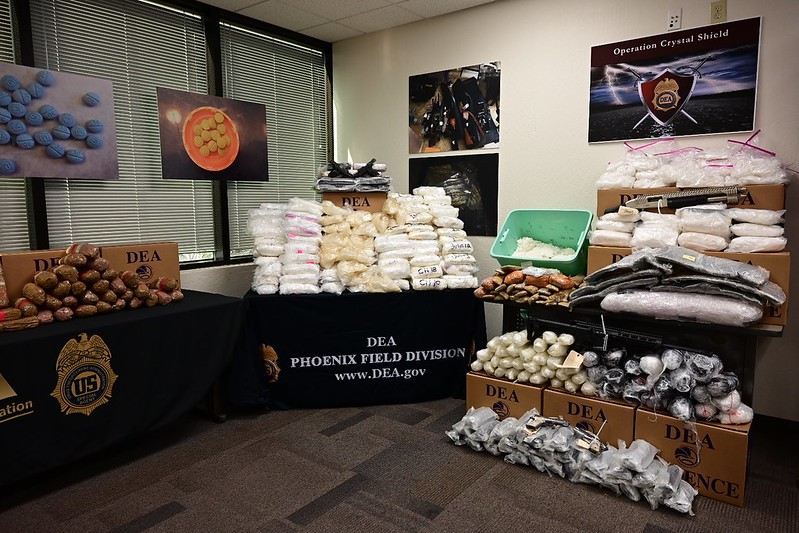
Law enforcement doesn’t have enough resources to deal with the amount of fentanyl in Colorado. In December 2021, Colorado law enforcement officials arrested 19 members of the Sinaloa Cartel and seized 110,000 pills laced with fentanyl. Approximately 40 percent of the pills seized contained lethal doses of fentanyl.
In response to this arrest, David Olesky of DEA Denver stated, “What I would say is a year ago, a large seizure might’ve been 5,000 pills. So, this is a significant [seizure], especially with the potential of 40,000 lethal doses.” Olesky also said that while 110,000 pills seized might seem like a lot, it’s nothing compared to the total amount circulating in the state.

The Solution?
As of this writing, Senators Pettersen and Priola have yet to submit their bill, so we don’t know exactly what it will entail. However, in December 2021, they stated they plan to submit their bill during the 2022 legislative session, and their bill will address the fentanyl distribution system and treatment programs.
While they haven’t given an exact amount, Pettersen and Priola say their bill will make it a felony to possess lower amounts of fentanyl. Pettersen and Priola also want to dedicate $450 million toward fighting the opioid crisis. Some of that money will go to law enforcement agencies, allowing them to investigate and prosecute drug cartels. Some will go toward increasing access to life-saving treatments for those struggling with substance abuse problems.
Pettersen stated, “[Law enforcement officers] don’t have the resources to dedicate the time to investigate these deaths because they’re happening at such a high rate. And to prosecute the people who responsible and ultimately share that information across Colorado and local municipalities – we’re going to work on a grant program to make sure that they have the resources to do just that.”
“These grant dollars will allow local, state and federal law enforcement agencies to work together to share critical information and resources to combat this crisis, and will also help raise public awareness about the dangers of fentanyl,” Pettersen also said.
Colorado’s Opioid Crisis
Drug overdose deaths in Colorado are increasing, and it’s being fueled by fentanyl. Moreover, the amount of fentanyl in Colorado’s communities is growing thanks to our open southern border, lax drug laws, and overtasked and underfunded law enforcement agencies.
Sen. Pettersen and Priola say their bill will address two out of the above three problems. The Maverick Observer follows fentanyl, and drug legislation, and will report back with updates. Stay tuned.







[…] the Maverick Observer has covered, Colorado has an illegal drug use problem. That’s true for the US as well. As such, harm reduction is gaining popularity in the media, […]