


On this episode of The Maverick Observer podcast, we’re discussing two different topics that get us worked up for different reasons. We’re diving into Electric Vehicles and our favorite books. Our host is Tim Hoiles from The Maverick Observer (blue) and Katie Spence from The Epoch Times (green).
Tim: Hello and welcome to The Maverick Observer podcast. I started a start-up news source and nonprofit in Colorado Springs in 2020. Created from deep roots and history in the media, I wanted to bring you news on politics and government shenanigans in the local area, but also a sprinkling of food, drinks, views, and books. I’m Tim Hoiles from The Maverick Observer and she’s Katie Spence from The Epoch Times.
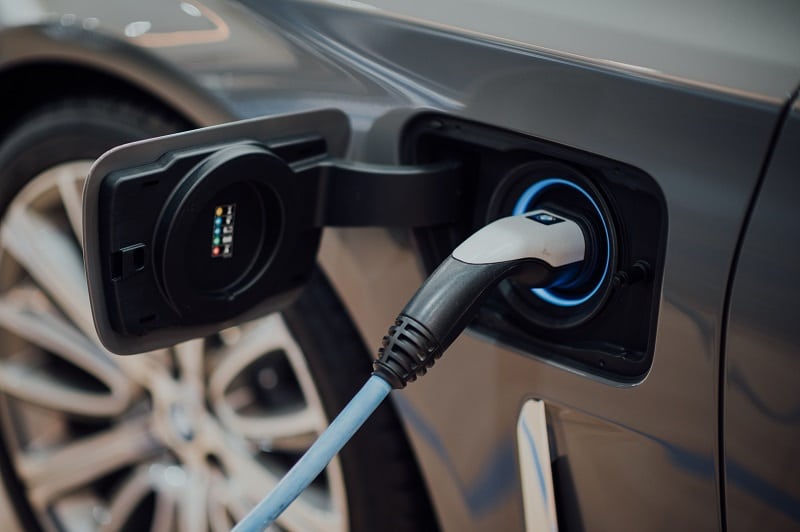
Tim: Today, we’re gonna talk about the grid for electric vehicles. There’s a lot of stuff out there today about electric vehicles and how good they are, et cetera, et cetera. And that’s a whole other subject, but the grid problem equates to is there enough electricity that can be delivered to neighborhoods in different communities in Colorado Springs, in other cities, but let’s talk Colorado Springs. I believe the answer is no. The problem with charging is that to get faster chargers, you need a tier two charger that might make it faster. It might not, but can we deliver that electricity to a neighborhood? We have some neighborhoods with old, old wiring, the wiring itself can’t handle the number of amps needed to get it to your house. We’ve heard stories about five to eight, tier two chargers in an eight-block area, and nobody else can get one. Doing research nationally, we’ve come up that there is a major, major problem with meeting deadlines to be able to charge these vehicles.
Katie: Yeah, I mean, I don’t like electric vehicles for a completely different reason than the grid. I think that the way you make a battery is not environmentally friendly. So, the grid problem on top of them not actually being environmentally friendly just adds to my hatred of electric vehicles.
Tim: You’re allowed to have that hatred. I mean, the interesting thing, there was a story that we found about people taking a trip from New Orleans to Chicago and back. I love that everybody needs to read that story.
Katie: It’s a great story.
Tim: It’s a great story. Everybody needs to read that because the lady had to be back for a waitressing job, and they pulled in like 20 minutes before. They slept in their car; they had bad chargers. I mean, have you guys ever been to a service station and gotten the 25-cent air and the air didn’t work at all? Well, guess what happens with these charger stations? Yeah. They don’t work at all.
Katie: Yeah. The guy said he was excited to be filling up his gas car. This was written like a few weeks ago when gas was $4.85 a gallon. So, it’s not like it was a year ago.
Tim: But go into the battery issues a little bit more.
Katie: Yeah. So, I mean the big thing with electric vehicles, why do we wanna go to electric vehicles is? We want to cut down on gas consumption because it produces greenhouse gas emissions, right? That’s the big reason why people are pushing electric vehicles, but what they don’t tell you about electric vehicles is that they are only zero-emission at the point of use. When they are making the battery itself, you are talking about a 10,000-to-40,000-pound carbon debt. On top of what’s produced for an electric ice vehicle, which is an internal combustion engine vehicle. So, you have to drive your electric vehicle for 50 to a hundred thousand miles and charge that on green energy before you ever make up that carbon debt from the battery. And the battery itself is made up of things like lithium, and carbon. These are things that are horrible to mine. For example, if you’re looking at cobalt, graphite or lithium, lithium in it’s pure form does not occur on earth. So you’re looking at saline brines, which right now, where they’re getting that, not in our backyard, they’re getting in, in the Andes’ mountain range. Guess what they’re doing. They are completely destroying the indigenous lands of the people who have lived there. They are using 65% of the water in that area to produce lithium for these batteries. It’s completely destroying that landscape.
Tim: Well, you know, all these ideas are wonderful, but the practicality has to be there also. That’s why. You’ve got an electric vehicle. You know, the studies I’ve read said the breakeven point is 40,000 miles before you start to deal with good things from them.
Katie: Well, that depends on what it’s charged on.
Tim: That’s true. That’s true.
Katie: Because if it’s charged on something like coal, that’s not actually going to ever reduce your carbon debt.
Tim: That’s true. That’s true. But the problem, the second part of the problem is the grid itself. You know, we have had blackouts in California, Texas, because of all the green energy that didn’t work. Let’s take Texas specifically. Yeah. You know, the windmills froze. It was people needing heat. And right now, we’ve got blackouts everywhere because it’s so frappin’ hot.
Katie: Right. Right.
Tim: And we can’t deal with that. So, this wonderful theory has to have practicality. I don’t see the practicality personally.
Katie: I agree with you on that. I’m a hundred percent on your, on your team on that one.
Tim: So anyhow, back to Colorado Springs. So, let’s say five charging stations in an eight-block area. How many cars is that? Et cetera, et cetera. The other thing that’s starting to be an issue with some of the EVs. Unfortunately, specifically, Tesla is parking them in garages.
Katie: Are you talking about the battery fires?
Tim: You know more about that than I do. So, take it away.
Katie: Yeah. I mean, I don’t actually know a whole bunch about what causes the fires. I do know that there are random fires that are occurring in people’s garages that are then catching people’s homes on fire, which is crazy. But lithium-ion batteries are known to catch fire. They are flammable. They get really hot. This is a problem.
Tim: Isn’t that what we’re told, we can’t fly on an airplane with, if you’ve got a, a computer or a camera or something like that, you’re supposed to leave it out. So now let’s go one step further in the research that I ran across, there is this new machine developed by a European company that puts out so much water because the heat from the Lithium-ion battery fire in a Tesla is so intense it takes 10 to 20 times the amount of water to put it out. Especially if it’s in a structure.
Katie: You’re not supposed to use water. You’re supposed to use a chemical to put it.
Tim: I know they’re coming up with the chemical, but right now their big solution is dousing it with as much water even though because the chemicals don’t work as well as they hope they would. It is what it is. The future will bring whatever we bring, but check with your local city utilities and see how much they can put in your neighborhood. That might be some research you should do.
Katie: It might be. I mean, if you’re looking at can, all these new homes. Put in a charger. The answer is no because you don’t have enough electricity right now. And right now, the thing is we’re also trying to move more towards a greener grid, in which they’re using more solar. They’re using more wind to try and modernize the utilities that we’re using. And these things are, unfortunately, not really, they don’t work. I mean, you have to store the battery power or you have to store this electricity in a lithium-ion battery to use off cycle. That drains it and it makes it so much more unfriendly to the environment because you’re talking about utility skill batteries in a huge area. I touched it. that’s alright.
Tim: But the other thing about that is that the wind turbine specifically, and the solar [00:08:00] panels only last for 20 to 25 years, right? They have not yet done anything with that. And recycling wind turbines I believe there’s one company that does it and they’re not being successful yet.
Katie: Well, I mean, that’s the whole problem with some of these new technologies. If you’re looking at the lithium-ion batteries that are in electric cars right now. And people say, well, you can recycle it and reuse it. That’s the argument. Unfortunately, it’s just not true. Recycling lithium-ion batteries is not cost-effective. And even when they are recycled, they go into slag and mortar that in case you’re wondering is construction. They put it into concrete. It is not actually reused because the problem with all of these batteries is that when you recycle lithium, you have to use chemicals to do it. And that degrades the actual makeup of the lithium. So, it’s not as effective. It doesn’t last, it doesn’t recharge the same way. It doesn’t behave the same way.
Tim: So, we think there are a lot of questions, whether it’s the grid, whether it’s the batteries, please. Go do your own research. Talk to people that own electric vehicles. It might be a great idea for a car around town but is it one that you can take across the country, call your city utilities and ask them, how is it gonna be when we have 10,000 homes in Colorado Springs on its level two charger? We are readers with an appetite for both fiction and nonfiction. We look for proper research and attribution in our nonfiction books, especially in books that deal with scientific issues.
Katie: The two books we are lighting today are about food and family. All right. So, we’re talking about favorite books. One of my all-time, favorite books is called Fatherless, and this is a book written by Dr. James Dobson of Focus on the Family and Kurt Bruner. It is one of my favorite series. It is a three-part series and it’s long, but it is so worth it. So, it was written in 2013. And like I said, it’s about family and really kind of what happens. It’s a dystopian look at what could happen in the future based on policies that are currently being implemented.
Tim: Can you give me a specific reason? Why it’s your favorite book?
Katie: Well, it’s my favorite book because it’s a fiction book. Why, if you look at it was written in 2013, it looked at the policies that were being implemented in government. Like making it, so fathers are not as important to families or make, be taking God outta schools or making it so elderly are not as appreciated in society or children are not valued in society. And then it takes that and it kind of looks at what could happen 20, 30 years in the future. And it gives you this really bleak look of what happens to humanity. So, it’s fiction, but it’s based on a plausible theory.
Tim: But it’s gotta have some redeeming well…
Katie: Right because the end of the series is really redeeming. But you gotta get there.
Tim: Okay. Well, so you gotta read all three books in order.
Katie: Yes you do. Okay so the first one is Fatherless there’s Childless, and then there’s Godless. But right now, we’re talking about Fatherless, which is the first book in the series and it’s, so it starts out to set this up. It is a man who has a mother and he’s kind of degenerate in society. This society has devolved to where now you have children who are kind of made in a tube. They’re made perfect. Then they’re put into a woman. She can have the perfect baby. Love babies are kind of seen as no, this is not okay. You don’t have a perfect baby anymore. The elderly are encouraged to transition, which is suicide. And then fathers are not considered a vital aspect of a family.
Tim: That’s a very interesting take.
Katie: It is very interesting. Again, this was written in 2013. If you look at what’s happening today, you’re like, wait a minute. What’s going on here?
Tim: Which of the three books is your favorite?
Katie: I think my favorite of the three books is probably Godless. It really sums up everything that’s happening. If you’re taking fathers out of a family, then you’re taking the value of children out of a family. And then God is seen as this being that doesn’t exist and if you believe in him, you are kind of a degenerate in society because you have these morals that you’re trying to impose on. Other people that’s not okay. Right. What does that sound like?
Tim: Today?
Katie: Yeah, exactly. So Godless kind of brings everything into focus, brings it all together, but there’s a really great. Point to the book where you’re looking at this can change. Like they say, in the book. What about bringing fathers back in? What about making children an integral part of a family? Not just, this is my perfect child. Look at how great they are. Bringing in God, religion, and morals. Help you have a purpose in life?
Tim: Well, one of the things that I think about when you say a perfect child is that, and I’ll try to maintain my cool here, but there are kids that are medically challenged or physically challenged that I guarantee you, I learn more from than some of (quote) the perfect kids.
Katie: Right? Absolutely.
Tim: And when we try to say we’re gonna have all perfect kids, you know, the only way you appreciate the good things in life is that you’re exposed to some of the really bad things in life.
Katie: So that’s part of the book. One of the main characters is a congressman and he and his wife have had a child naturally, they have not had the perfect child and this child is born with disabilities, but this child is amazing. And so, this child is kind of followed throughout this story, and how this child has an impact on the family and how the congressman fights for certain laws and regulations to be passed. But society in this book is looking down on this child is like, why would you give birth to this child that’s not going to benefit society? That’s not gonna benefit you as a family? Why would you bring a drain on society into the world?
Tim: Well, when I was growing up as a kid, we had a family behind us that my parents knew very well, who had a son that stuttered and had some other issues. Yeah. But they taught him to sing songs and he didn’t stutter anymore.
Katie: Oh, that’s amazing.
Tim: It is. And, and yet he had to be taken care of his whole life because he couldn’t do other things. Mm-hmm, but that didn’t make him less of a person. Right. It made him a unique individual.
Katie: Right. And that is I feel like one of the things we need to look at, because you’re talking about an experience that you had as a child. And there are so many kids out there today who struggle with learning disabilities or mental disabilities, whatever it is, physical deformities that doesn’t make them less. These things don’t make you less, but there is an idea in society that if you want to get rid of your child in the womb because they have Down syndrome, you can do that. So how far does that go? And that’s kind of what the book talks about.
Tim: It sounds like a really interesting book. And again, I wanna overemphasize that without the bad things that happen in life, you’ll never truly appreciate the good things.
Katie: Yeah.
Tim: Well, my book is a very unique and interesting book about food. My wife and I really don’t consider ourselves foodies because we don’t go to restaurants that are fancy and take pictures and send them to all our things.
Katie: You don’t Instagram. Why don’t you?
Tim: We don’t. And no, we don’t. But the bottom line is we’ve been exposed to a lot of different types of food. Mm-hmm, however, I did not know this book even existed. I stumbled across it reading the Parade Magazine in a Sunday paper. And it’s called gastro Obscura, and Obscura means obscure here’s from the second page of the book. I’ve gotta read this and an important note to readers. “Not everything in gastro Obscura should be eaten. Some of the foods in this book are wonderful to learn about but do harm to partake in. As for the rest, we encourage you to try them.” Well, that blew me away, cuz it was the second page of the book before you got to anything.
Katie: Right, isn’t the idea of food you can eat it?
Tim: Well, um, let’s take one example, the impossible slime fish. Now there is this thing that lives on the bottom of the ocean. That looks sort of like an eel, but it’s really more like a worm and how it protects itself. It puts out five gallons of slime when it’s disturbed. Okay. In certain Asian cultures, that’s a very unique and sought-after item to eat slime.
Katie: The slime. Oh, right.
Tim: So, they literally take it and keep it in barrels and learn how to harvest it. And anyhow, that’s between…
Katie: Eat boogers why would you do that?
Tim: Because it’s a unique flavor and a unique consistency, you know, we try everything don’t we?
Katie: No, we don’t. We don’t.
Tim: See, we don’t either. We shouldn’t do that.
Katie: We shouldn’t do this.
Tim: Well, see, so then let’s go to the second one, fermented shark. Now I have had a couple of helpings of bad shark because they serve shark for Marlon and other fishes in some restaurant when shark starts to go bad, it gets a pneumonia taste. Well, this is dried shark. You’re telling me it tastes like in one of the Scandinavian countries and it is ammonia to the hilt because they ferment it sort of like. Forever before they eat it
Katie: and they do this on purpose?
Tim: On purpose.
Katie: And so, they’re saying these are foods you should eat
Tim: Those two – yes. But the one that saved me was Bech…Becherovka. It’s digestive, it’s sort of like a light-colored. What’s the German one that you, you know, everybody doesn’t like it because it’s got all the herbs? Jagermeister. It’s a clear Jagermeister.
Katie: Okay.
Tim: So, there are some, so you know, things in the book that I really like, because I guess you might call me occasionally an alcoholic when I see a new one, because I wanna try it but the bottom line is they have these kiosks in the country and you can actually buy it on the street. Okay. Which I thought was a neat idea. Yeah, I don’t think it’d go over well in the United States.
Katie: Probably not, but Germans, I feel like they’re better at handling their liquor. Don’t they store?
Tim: This is, I think it’s either Polish or Romanian, but the bottom line. Yeah, but the bottom line is one thing I did find out. You can store it in the freezer and drink it ice cold, like vodka. Yes okay. Oh, are you a vodka drinker?
Katie: Yes, of course.
Tim: But anyhow, this book goes through all the countries, all the different ethnicities and I mean, it is a coup d’ etat of food, but every person I’ve sent it to that is quote, unquote, a foodie. They call me up and say, I gotta read the whole book. I don’t wanna put it down now. They didn’t say I want to eat everything. no, because I don’t think they ever will.
Katie: You lost me in slime.
Tim: Yeah, I know, get slime. I was reading things cuz I read at night with my wife in bed and I would start laughing and she would turn to me and say, read it to me. And I read the slime one to her and she said, “don’t ever read me anything out of that book again.” But anyhow. Yeah, it’s an interesting book. You should take a chance and gander at it and it’s fun but weird.
Katie: I might have to pick it up, but I’ll tell you what, that’s gross.
Tim: Our call to action this week is to research electric vehicles on your own. It’s not just one click on the internet to Wikipedia. That doesn’t cut it.
Katie: If the way these vehicles are manufactured doesn’t give you pause and you feel they are better for the environment in the long run. Good luck in your next vehicle purchase.
Tim: We are going to keep our eye on EVs and how Colorado Springs handles the increased demand for charging stations and the effect on the Colorado Springs utility grid.
Sources:
https://www.goodreads.com/series/107765-fatherless

For more local voices, check out Studio 809 Podcasts.