


Policies Contributing to Aggressive Environmentalism are Impacting Quality of Life in Colorado and Leading to a Changing Economic Landscape.
“Most people associate human impacts with a time after the Industrial Revolution, but paleo-scientists have a deeper perspective. With it, researchers like us can see that wherever and whenever humans lived, we must abandon the idea of ‘pristine nature,’ untouched by any human imprint.” Originally published in The Conversation as How Early Humans Shaped the World with Fire – by Jessica Thompson, David K. Wright and Sarah Ivory.
In places like Northern Scandinavia, Uganda and Ecuador, ideas promoting a lifestyle fully integrated with nature, nature as-is (or as-was), are causing economic suffering for residents. These ideas promote the predominantly Western-Romantic notion that nature is an ideal. Unmarred by anything but the most minimal human interference, virginal nature is to be preserved at nearly all costs.
Some costs are theoretical or are simple inconveniences, but some are not. Some costs are financial subtractions from citizens in terms of resources, jobs (or better jobs) and money.
A similar effort to develop an abstract natural design is taking place in Colorado. This aggressive ambition in the Centennial State also has costs for the citizens closest to it.

Fair-Weather Policies for Aggressive Environmentalism?
The governor’s administration has now told the EPA that legal action is on the table. Polis is trying to prevent the agency from enforcing the seasonal sale of costlier, eco-friendlier gasoline in the Denver area. Early in his term, the governor reversed the long-held back-and-forth between Denver and DC that negotiated workable solutions to air quality problems in Colorado.
Why make a preemptive pledge as the governor did? Partly because reducing the use of fossil fuels is a pillar of modern environmentalism. Increased price, less consumption. Environmentalism is the main plank in his party’s platform. Though the governor has locked horns with his own party over climate, he knew he needed to offer them something. The symbolic removal of the waiver over ozone quality could have been a token to environmentalists who have a strong, even historical presence in Colorado.
Effectively allowing gas prices to go up is axiomatically unpopular for any American politician. But environmentalism is not. Colorado environmentalism appears to have a hand in state politics. And state politics has a strong hand in citizens’ money.
Environmentalism Non-Profits; Following the Non-Money
Modern environmentalism’s goals are stubbornly inseparable from economics. Petroleum, for example, is a key to modern, industrialized life but also a big target of most environmentalists.
Most full-time environmentalism operates in the non-profit sphere. Yet, the links from non-profit to political action are tangled. Many are supposed to be non-political, though this is rarely the case. Why does Colorado Sierra Club’s home page have a pop-up with a link for registering to vote?
All the same, the number of environmental groups, non-profit or otherwise, in Colorado is substantial.
The Earth Focus Group lists over 90 environmentalist groups in Colorado.
ProPublica, which has a search engine for non-profits, has instructive results as well regarding environmentalist and animal groups.
Environmental Non-Profits and Influence
Certain keywords and patterns show up when looking through the category of “Environment and Animal” non-profits in the state of Colorado. And these suggest a political tributary in the environmentalist river in the state.
Some groups in the ProPublica list are labeled with the sub-category “Research Institutes and/or Public Policy Analysis,” meaning they can write and publish their research on the effects of laws. The telegraphing towards politics, though diagonal, is there.
Environmental Policy in Colorado; Digging into Non-Profits (from ProPublica unless otherwise linked or mentioned):
- Colorado has 1,833 non-profits dealing with “Environment and Animals”
- 29 groups are “Research Institutes and/or Public Policy Analysis”– most could easily be called “think tanks”
- 100+ are “Advocacy/Alliance” organizations
- 66 are “Wildlife Preservation, Protection”
- 100+ are “Fund Raising and/or Fund Distribution”
- Blue political concentrations: 100+ are in Boulder; 17 are in Aspen; 14 are in Steamboat Springs
- Red political diffusion: listed locations show four are in Fort Morgan, ten are in Montrose, three are in Sterling, Craig has two, Wray has two, Grand Junction and Limon have one each
- Most of the “Environment and Animal” non-profits in red areas are rescue pet shelters
So What?
Colorado’s blue and politically powerful locations have a lot of environmentalist presence.
The groups with advocacy, protection, and preservation designations; have political proximations. And they like to speak, publish and advocate.
Publications and advocacy towards reducing human use of natural resources are a large part of environmental advocacy.
All that factored into the financial ecosystem, as it were, shows environmentalism has a big say in Colorado’s economics.
Home and Property Ownership
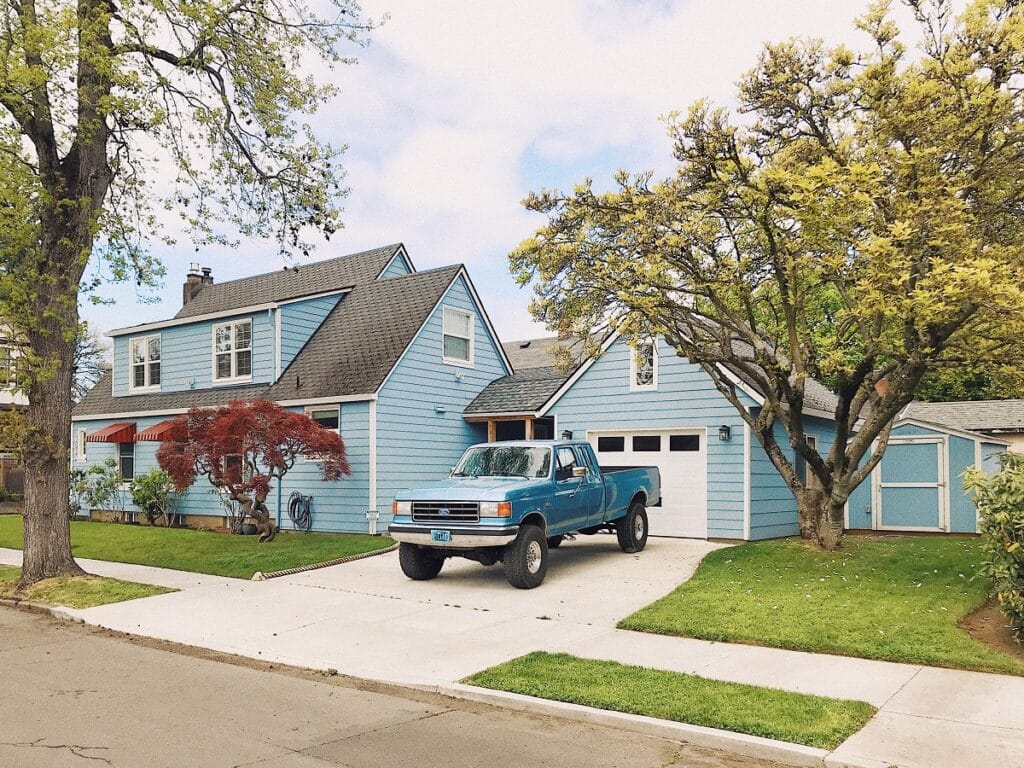
Home and property ownership are a big part of the American dream. These financial accomplishments also suggest independence. Petroleum and fossil fuels are still vital in the operation of industrialized society. And drilling for them requires property but also creates many jobs.
Two recent big pushes from ecology groups and other environmentalists are affecting these institutions of American economics within Colorado.
These are 1) efforts to preserve big game wildlife migrations and 2) a proposal to change energy sourcing for new home construction.
Animals Personified?
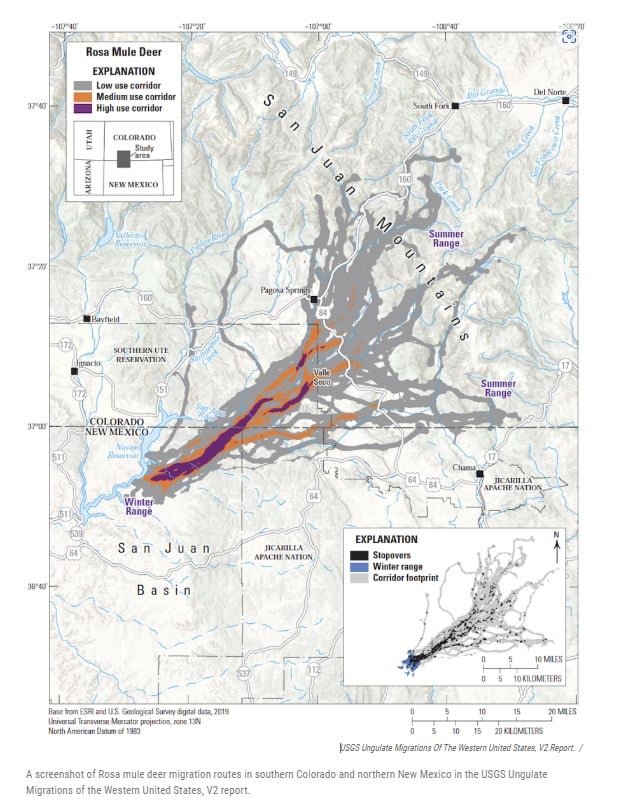
University of Wyoming professor Matthew Kaufmann told New Mexico Public Radio: “Across many of the habitats of the Western US ungulates, like deer and elk, need to migrate seasonally to make a good living.” The US Geological Survey wildlife biologist followed with, “the West is also growing quite rapidly, and all these things that growth brings make it more difficult for ungulates to make their migrations.”
This statement from the environmentalist Westerner underlines the philosophical assumptions behind cost-benefit analysis: the peoples’ development and advancement are the problems to solve. Further, the health of lower vertebrates is essential: those animals need to make a “living.” Using that term is likely supposed to sound like a folksy colloquialism to say deer need to eat, or is it?
The article also problematizes two other big signs of human flourishing in the American West: roads and cars. Kauffman suggests concentrating on building roads and bridges around the ungulates’ migration needs since vehicle collisions with the big game have risen. But the issue here as it relates to individual finances in the West and specifically Colorado is landownership, by humans, of parts of these migration routes.
Big Game Land, Preservationism, and Hunting
The left-wing think tank Center for American Progress noted that, over two years, one-fourth of oil and gas leases in Colorado were in big game protected/priority areas. The Trump Bureau of Land Management gave these leases from 2017 to 2019.
Earlier federal pushes, in 2018, had pledged to foster eco-friendly and wildlife-friendly actions in Western states. Again, oil and gas extraction are framed as the problem as they get in the way of elk, mule deer, and pronghorn.
Recreation Jobs, Oil, and Gas Jobs
There is a now common argument in environmentalism about tourism and recreation on preserved forests or plains. These activities are proffered as sources of income and jobs. For Colorado and this article, that means hunting big game on protected lands. A 2018 report on economic output from wildlife recreation says Colorado had 3500 hunting jobs totaling $152 mil for 2016. And that was in hunting alone.
Yet, wherever they are found, oil and gas produce money for the territories over that ground. The ground is not portable or exportable, but the oil is both.
Calculating the salary for those 3500 jobs from $151.8 mil, the mean average for hunting employment in Colorado in 2016 was $43,359 per year.
Salaryexpert.com had the average middle-salaried Colorado oil-field worker making $49,000–4% higher than the industry average national wage.
Meanwhile, Intuit reports that according to tax returns from over 3,000 Colorado Oil Field Workers, more than half made over $43,000 per year. While that indicates some salaries are lower than the big game hunting average, it also shows that there are many oil jobs in Colorado. Oil workers, counting only those who filed with mint.com, numbered almost as many as every hunting job in the whole state of Colorado just a few years previous.
The philosophy bears out here. Colorado environmentalists present human activity, like gas and oil extraction, and land use as political determinations and preservationism as default common sense.
If used to heat a Coloradan’s private home, that gas and oil are also being politically discussed.
Home and House Economics
California recently banned the lease-style agreements that allowed home developers or citizens to pay off a new gas line over time. The huge cost now needs to be paid upfront. The goals are clear, according to Matt Vespa, Senior Attorney for the extremist group Earthjustice: “California’s vote today to end gas line subsidies should spur a trend in other states looking into the obvious benefits of all-electric housing.” The Golden State is apparently shoving all its chips into the center of the table for renewable energy to pick up the slack.
Environmentalists in Colorado heard the message. Even before California passed the measure in mid-September, certain towns in Colorado were thinking along these lines. In August, Crested Butte banned outright any natural gas for structures to be built on 60 open lots.
Colorado’s environmentalists say this measure by Colorado Public Utilities Commission would put the cost of new gas lines onto the housing developers. Jacob Smith, Executive Director of Colorado Communities for Climate Action said as much to CBS Colorado. But Powering Colorado, a Weld-county-based agricultural and pro-petroleum group, claims it shoves the full cost onto the consumer.
The question is then: would a home building firm eat the cost or not?
Using Natural Resources for Human Goods
The professors published in The Conversation were studying ancient humans’ involvement and cultivation of the environment. Those academics know that people have always modified the world around them. That’s the case in Colorado as elsewhere. In the case of that study by those professors, the earliest humans used controlled fires to tend and keep their part of the planet while getting what they needed to live.
The objective quality-of-life measures for modern humans are mainly health and income. Those things are taken from natural surroundings.
For Coloradans, there are many who want input on how those things are taken. Are environmentalists, in their efforts, trying to be correct in a practical sense, or effective in a political sense?