

Examining the Emissions, Environmental Political Influence, and Colorado’s Dialogue with DC Policymakers; This after Polis’ 180 on an EPA Penalty for Central-Eastern Part of the State
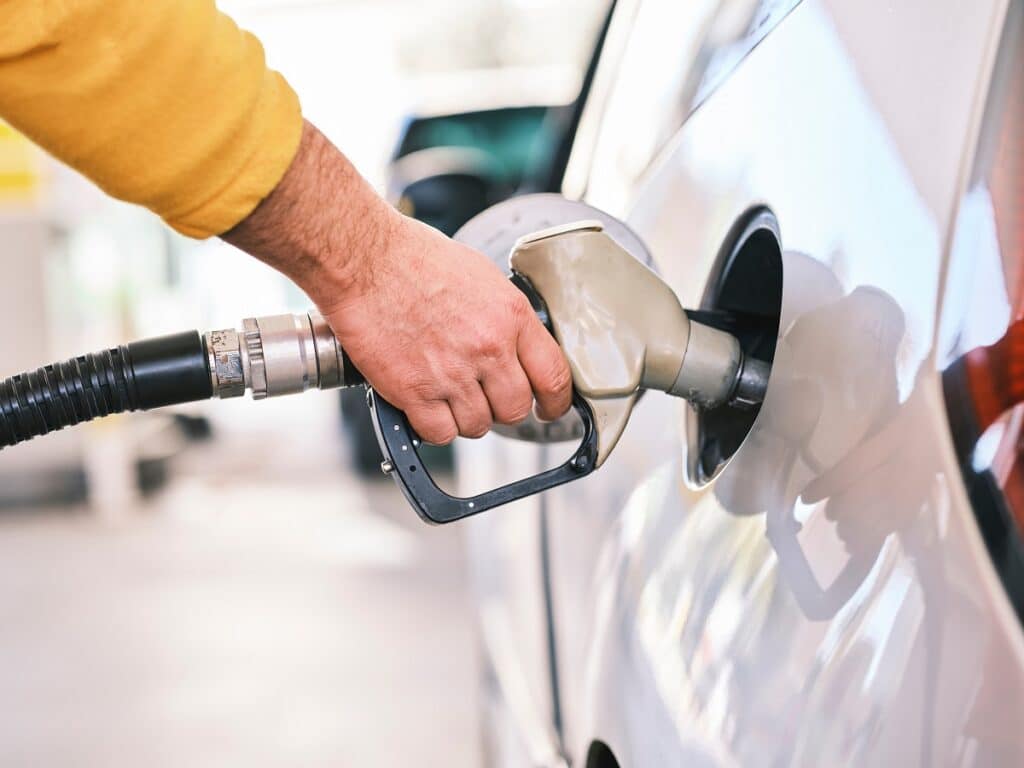
The political zeitgeist frequently invokes “kitchen table issues.” The price of gasoline in a car-loving nation and a car-dependent state is one such issue.
With that penalty deadline approaching and the federally required “California blend” gas sales looming for 2024, Polis is asking the EPA for more time and flexibility in meeting expected air quality standards for the eastern part of the state. The governor’s earlier eagerness to shove Colorado into a national leadership role on environmental issues may, despite reelection, have severe political costs for himself and financial costs for Coloradans.
Since federal regulations seek to mitigate adverse health effects that can result from high ozone levels on the ground, clean air violations are taken seriously. EPA penalties for failure to meet certain air quality guidelines, including the ozone standard, can mean the mandated sale of more expensive, eco-friendlier gasoline that supposedly will make for lower surface ozone levels. The particular gasoline would be required for purchase during the summer months in nine counties (or parts of them) in central and eastern Colorado.
Governor Trying to Red Light his Earlier Decision
Polis is pushing for a halt in EPA enforcement just three years after he quashed a letter to that federal agency by former governor Hickenlooper in favor of more time to clear the air.
A hinge point in the issue is an ozone standard for ground-level air. The substance’s threshold concerns a few parts per billion (ppb) of molecules of the pollutant (per other molecules of air). The Denver Metro Front Range area, which includes Larimer and Weld counties (or parts of them) apparently has too many.
How Clean is Clean and Who Decides?
The term for failing to meet clean air standards is “nonattainment.” The EPA has five designations for this.
National Ambient Air Quality Standard (NAAQS) Designations for Non-Compliance
- Marginal
- Moderate
- Serious
- Severe
- Extreme
However, goalposts for clean air and other green policy can be politically driven. The aggressive environmentalist policy is a standard voting base position for the American Democratic party in 2022 – Polis’ party. Why would Jared Polis disrupt Colorado’s record of overall negotiated cooperation with the EPA? Why would the governor ask for harsher treatment of his own state regarding the Clean Air Act?
He did not have to ask the federal government to effectively enforce penalties on Colorado, some of which could make driving a car more expensive. But he did that soon after he was elected.
Stopped at the Light, Now Putting it in Reverse
As of Sept. 1, the Colorado Regional Air Quality Commission is submitting a pollution-reduction plan to hold off the “serious” nonattainment level the state is facing.
Polis sent a letter to RAQC detailing his case that the switch to reformulated gas would have a minuscule effect on lowering ozone. He offered the Colorado Department of Public Health and Environment computer modeling to bolster that claim.
The governor, parts of whose letter were found in Colorado media, railed against the EPA decision and its “decades-old one-size-fits-all rule [which] does not provide states with the latitude to make data-driven decisions on what works best for improving air quality in an economically effective manner.”
Additionally, Polis’ Press Secretary Conor Cahill is quoted in the Denver Gazette that Polis is eager to save Coloradans money on critical items. And that as such, all options are on the table to avoid EPA penalties and to keep gas prices low.
Colorado Had a Waiver – but Green Politics are a Powerful Consideration
Again, Polis rescinded the previous governor Hickenlooper’s written request to the environmental protection agency asking for more time to meet the National Ambient Air Quality Standard in the Denver Metro/Front Range area.
At the time Polis was widely quoted saying, “We believe that the interests of our citizens are best served by moving aggressively forward and without delay in our efforts to reduce ground-level ozone concentrations in the Denver Metro/North Front Range nonattainment area.”
Requesting the removal of a waiver sounded like a win-win in a state with a government eager to make a wholesale sprint toward electric vehicles anyway. The Sierra Club Colorado spent over a half-million dollars to get Polis in the governor’s seat: The governor’s symbolic move could have been a token to the base that got him there.
And no one is opposed to clean air (or so the reasoning would have been given).
But again, this was a break in the norm. For a long time, Colorado’s air quality snags and efforts to clean them up meant they were cut some slack. Hickenlooper had asked for that slack, and he got it. That slack appears to have been the norm.
Background: Colorado’s Half-Century Negotiations Over an Air Standard
In taking back the letter, Polis zigged on Colorado’s ozone requirements instead of zagging. When he did, he dislodged the decades-long, overall cooperative zigzag between the EPA and Colorado on air pollution.
A long-recognized reason for this wiggle room afforded to the state was the migrating smog from California wildfires; obviously something outside Colorado’s control. One Centennial State-government source, cited by the Denver Chamber of Commerce in a letter to the EPA, claimed that only about one-third of the state’s ozone “is from in-state, human-caused emissions.”
Short History of Ozone, Air Pollution Dialogue between Colorado and the Federal Government (From History of Ozone in Colorado by CDPHE):
- EPA set the ambient air quality standard in 1971.
- Colorado first failed to meet these standards in the Denver Metro area in 1978.
- The state, starting in 1983, periodically submitted to the feds various plans for lowering ozone and other air pollutants for consideration.
- Colorado tottered between compliance and non-compliance for decades, continually revising and resubmitting plans, occasionally getting a lesser “nonattainment” ruling from the EPA or getting the threat of such a designation.
- Over the decades, DC, for their part, jockeyed with the national standard (for how much ozone or other substances were allowed, how that was tested, how long the testing window was, and so on).
That is how it stood until 2019.
Prices of Gas and Politics
A designation of “serious” air quality problems comes with hassles that filter down to the consumer and everyday citizen. Colorado now faces two penalty deadlines from the EPA. The “serious” nonattainment deadline that could mean costlier gas is set for 2024.
The mandated admixture gasoline is more expensive than standard unleaded. Even the very pro-green Colorado Public Radio stated this: “Is reformulated gasoline more expensive? Yes.”
Dollars and Cents Increase Estimates for Oxygenated Gas if 2024 Penalty Happens:
- +36 cents per gallon: federal data analyzed by Colorado Public Radio
- +50 cents to $1: Denver Chamber of Commerce
- +20 to +30 cents — may go down after startup costs: AAA Colorado cited in Axios
- up to +60 cents: the 27-year high in price differences from Energy institute of America data
By the time of publication, the EPA may have already given its determination of “serious” nonattainment. If so, the prospect of middle-class citizens flocking across county lines for cheaper, non-oxygenated gas is real. Additionally, the cascading effect of pricier petroleum could undercut local economies with the Denver Chamber of Commerce claiming there could be an aggregate $1 billion price tag for Colorado to make the switch.
Global oil markets and other factors often affect gas prices; it’s not simply politics. But in this case, the governor took direct action, and connecting the dots between his political move and prices at the pump– if the EPA drops the hammer–will be clearer. Governor Polis indeed has a tightrope, an avoidable one, to walk. Aspirational policies, like ambitious environmentalism, could soon clash with weekly decisions directly affecting a large part of the state’s population. And possibly their votes in the long term.