



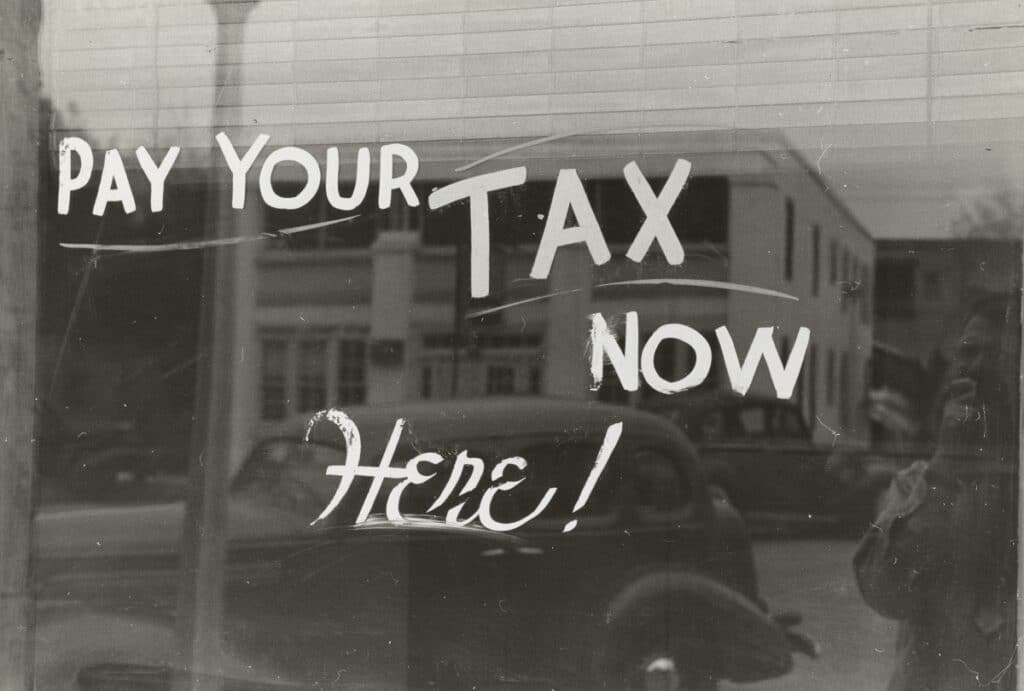
“The hardest thing in the world to understand is income taxes.” ~ Albert Einstein
Last August, the Biden administration proposed the Inflation Reduction Act, turbocharging the Internal Revenue Service with additional funding of $80 billion for 87,000 more federal agents — half of them designated for enforcement. The new hires will work towards ensuring more Americans pay their federal taxes.
In January, Republicans responded to Biden’s IRA with HR25, better known as the Fair Tax proposal. Rep. Buddy Carter of Georgia, a Republican, introduced the Fair Tax to the House of Representatives where it likely won’t pass. The Fair Tax was first introduced to Congress in 1999 and has since been endorsed by both Republican and Libertarian presidential candidates.
For many Coloradans, the question is whether the Fair Tax would help or hurt them. There’s no easy answer because a national sales tax has never been tried before in the United States.
What Would the Fair Tax Do?
Rep. Carter’s Fair Tax proposal aims to simplify the existing tax system by eliminating the IRS, federal income tax, corporate income tax, payroll taxes, and estate taxes, with a single, inclusive tax rate of 23% on retail goods and services. An inclusive tax rate means the tax is based on the total price of a purchase though most analysts of the Fair Tax agree the real tax rate will be closer to 30%, and 40% once state and local taxes are also applied.
According to FairTax.org, the proposed national sales tax “treats everyone equally” and creates the funding necessary for the federal government to operate. Giving Americans more opportunities to maximize their paychecks by eliminating federal taxes is a feature of the Fair Tax.
By eliminating the IRS and its nearly $14 billion annual budget, the Fair Tax is an attractive replacement for the gargantuan federal tax code that costs Americans 6.5 billion hours per year in federal tax compliance. Additionally, the Fair Tax replaces the IRS with two federal agencies, a Sales Tax Bureau, and an Excise Tax Bureau, ensuring efficient collection of federal taxes.
According to FairTax.org’s website, there will be a “prepaid, monthly rebate (prebate) for every registered household to cover the consumption tax spent on necessities up to the federal poverty level.” The monthly prebates will help financially struggling individuals and households.
FairTax.org also has an interactive calculator that helps people understand their tax liabilities under a Fair Tax.
Regressive and progressive taxes are two different types of taxation based on the principle of who bears the tax burden. The existing federal tax infrastructure and code is based on a progressive tax and the Fair Tax proposes to replace it with a regressive tax. Regressive taxes are designed so that the tax rate decreases as the amount subject to taxation increases. An example of a regressive tax is a flat tax where everyone pays the same rate, regardless of their income. This type of tax system tends to place a greater burden on lower-income individuals and households because they have a smaller pool of income to pay the same amount of tax as those with higher incomes. Progressive taxes, on the other hand, are taxes where the tax rate increases as the amount subject to taxation increases. In other words, a larger percentage of the total income is paid as tax as the income increases. Progressive taxes are said to reduce income inequality by placing a larger tax burden on those who can afford to pay more.
Criticisms of the Fair Tax
Critics state the Fair Tax is a regressive tax and will be an added burden for consumers, particularly individuals and households with lower incomes. As inflation drives up the prices of goods, individuals and households with lower incomes will be forced to pay more in taxes.
Critics also contend the Fair Tax is unfair since it gives the wealthiest Americans tax breaks.
Fair Tax proponents claim the tax will help fund Social Security and other social programs along with the federal government, but critics worry it may not adequately provide the necessary funds to keep the federal government operating. The Fair Tax will grow the overall federal tax base from 155 million to 250 million taxpayers; there are concerns the Fair Tax’s monthly prebates may create a larger class of individuals and households reliant upon the federal government for financial assistance.
In response to the Fair Tax, some state governments may issue higher tax rates and place a greater emphasis on tax compliance, particularly when federal revenues fall or are needed.

Fair Tax Hype?
In the 1980s, a national consumption tax was proposed by the political economist Lester C. Thurow who was described as “the Left’s favorite economist”. The notion of a national, consumption-based sales tax is hardly a new development and crosses political lines.
The Fair Tax is an old idea that’s been introduced in the US Congress each year since 1999.
In the House, the Fair Tax has been introduced nearly every year since 1999; the Senate had a yearly legislative introduction to the Fair Tax during the years 2003-2014 with the most recent one in 2017.
It may seem Rep. Carter and House Republicans pitched the Fair Tax out of sheer spite of the Biden administration’s so-called Inflation Reduction Act but history shows this is the wrong view. Legislation proposing the Fair Tax has been introduced in Congress for more than two decades and the recent hyperbolic comments by Democrat leaders about this year’s annual Fair Tax proposal are causing much public fanfare and controversy.
The 16th Amendment to the United States Constitution ratified in 1913, gives the federal government the power to impose an income tax. The amendment reads: “The Congress shall have the power to lay and collect taxes on incomes, from whatever source derived, without apportionment among the several States, and without regard to any census or enumeration.” Before the 16th Amendment, the federal government relied on tariffs and excise taxes to generate revenue. The amendment gave the government a new source of revenue, which has since become a cornerstone of the federal tax system. The amendment made it possible for the government to impose a federal income tax, which is now a key component of the U.S. tax system and provides the majority of the government’s revenue. The 16th Amendment also addressed concerns about the apportionment of taxes, which had been a contentious issue in the early years of the U.S. government. The amendment allows the government to impose taxes without regard to population, which provides more flexibility in tax policy.
Perhaps that is the real value of the Fair Tax. Since the 16th Amendment has to be repealed before the Fair Tax can take effect, it’s probably little more than a conversation starter. But now is the time for a much-needed discussion about how the federal government is funded and what can be done to help more Americans achieve financial prosperity.







Some things ignored: 1. the removal of embedded business taxes in goods and services that will lower most prices; 2. the dynamic effect of $2 trillion in U.S. business capital returning to the economy; 3. the effect of tax free income, investments and savings. The tax base you used of 250 million consumers is low. The actual tax base is closer to 365,000,000. Try reading more of the research at FAIRtax.org/research-library.
The quote of the tax base of 250 million consumers is directly from the FairTax.org FAQ. Removal of embedded taxes is one possible outcome of the Fair Tax but may be negated by tax and fee increases at state and local levels. As regarding the “effect of tax free income, investments and savings” yes, that is a possibility under the Fair Tax if it worked as advertised.
Thanks.
Randy is right on. The embedded tax from the current tax code for most goods and services has been computed to be around 22%. Consequently, the FairTax only adds 1% in new taxes. Also, there is absolutely no requirement that the 16th amendment be repealed although it would make a lot of people fill better to know that down the road there won’t be both a sales tax and an income tax. There is nothing now keeping the government from imposing a sales tax on top of the income tax. In fact, that has been proposed but called a Value Added Tax (VAT), another hidden tax, while the FairTax cannot be hidden and everyone would know if Congress increased it.