



As I previously detailed in “The Green Dream: Zero-Emission Vehicles Big Lie,” one of Governor Polis’ goals for Colorado is a dramatic reduction in Green House Gas (GHG) emissions. To accomplish this goal, Polis released his “Roadmap to 100% Renewable Energy by 2040 and Bold Climate Action” report, which outlines what steps the his administration is taking to reach 100% Renewable energy by 2040 and reduce GHG emissions by 80 percent by 2030.
The above report found that emissions from transportation are “the single largest source of statewide GHG pollution as of 2020, with passenger vehicles the largest contributor within the transportation sector.”
Polis is pushing for the mass adoption of electric vehicles to combat this finding. However, mass adoption of electric cars won’t get Colorado to the goal of reducing transportation-related emissions by 12.7 million metric tons by 2030. So, to help further reduce emissions, the Colorado Department of Transportation (CDOT) approved a “nation-leading rule” that upends transportation project approvals — and could impact how you get from place to place in Colorado.

GHG Emissions Come First
Along with CDOT, five metropolitan planning organizations (MPOs) approve and allocate local, state and federal funding for transportation projects. Under the new rule, which goes into effect in this month, MPOs and CDOT must estimate the GHG emissions of each transportation project through travel demand modeling and the Environmental Protection Agency Motor Vehicle Emission Simulator (MOVES).
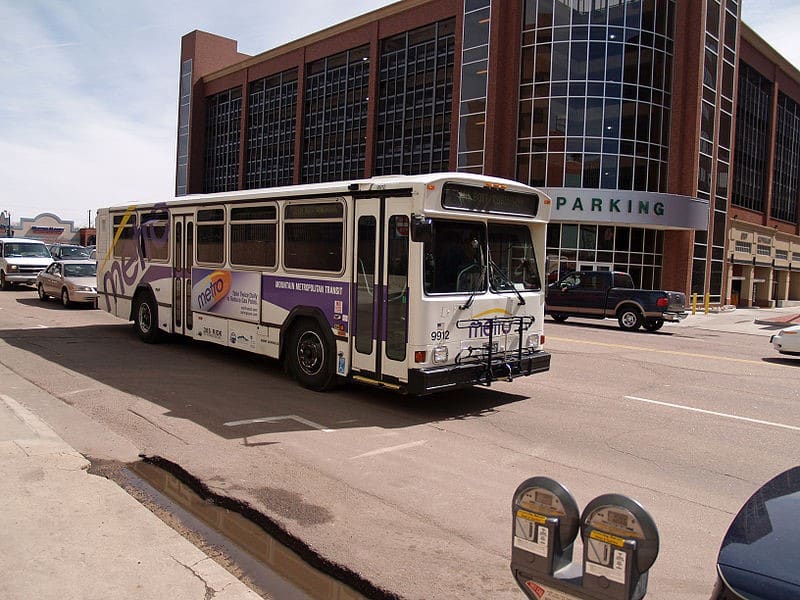
If the transportation project won’t reduce GHG emissions, or worse, leads to increased GHG emissions, CDOT and the MPO can require the implementation of mitigation measures like adding busses, supporting zoning decisions that favor multi-use facilities, putting in bike lanes, etc., or restrict funding for the project. This rule change is expected to reallocate $6.7 billion by 2050 toward bicycle infrastructure, public transit and other environmentally friendly transportation initiatives.
In other words, if a regional planning agency wants to widen a section of the highway, or put in a new road, CDOT and the MPO in charge of that county might find through MOVES that the project will increase single passenger vehicles in that area. Thus, CDOT and the MPO can require measures that offset and reduce GHG emissions, like putting in a high occupancy vehicle (HOV) or bicycle lane. If the GHG mitigation measures still don’t reduce GHG emissions enough, the commission can deny or restrict funding for the project.
Likewise, if a regional planning agency wants to put in a public transit system or improve pedestrian facilities like crosswalks and sidewalks, CDOT and the MPO could prioritize the project’s funding because the project will likely reduce GHG emissions.
To track how much fossil fuel is burned, CDOT plans to track vehicle miles traveled (VMT). As a result, state officials hope the new rules will incentivize local governments to prioritize denser housing and commercial developments.
The Pros and Cons
As I previously wrote, Colorado is experiencing a warming trend that’s been devastating for farmers and ranchers. All Coloradoans are experienced summers filled with smoke-filled skies due to increasingly destructive fires. According to a report commissioned by the American Petroleum Institute (API) titled, “Sources, Abundance, and Fate of Gaseous Atmospheric Pollutants,” fossil fuel combustion leads to significant increases in CO2 — CO2 is one of the main GHGs in Earth’s atmosphere, and all GHGs absorb and then remit heat.
Justin Letwon, the Colorado Association of Wheat growers’ vice president and a fourth-generation farmer at Lewton Farms, stated to 9News, “It’s been bone dry. When it’s dry, you don’t have options. You can’t do anything when it’s dry. I equate it to a family member having cancer. You watch your crops dry a little every day, and there’s not a thing you can do about it to save them.”
Reducing GHG emissions in Colorado is an admirable and worthy goal. Reducing warming and “aridification” is essential to helping the farmers and ranchers and reducing the severity of forest fires.
Conversely, the rule change prioritizes urban mass-transit projects, possibly negatively impacting non-urban projects. As Weld County Commissioner Scott James pointed out to Colorado Politics, mass-transit systems in rural areas don’t make much sense. At the same time, Colorado is seeing massive growth and the need for more roadways.
Rural roads and communities could miss out on transportation project funding because the new rules prioritize transportation projects that reduce GHG emissions over single passenger vehicle projects.
What to Watch
Gov. Polis wants to reduce GHG emissions by 80 percent by 2030. Prioritizing transportation projects based on their projected GHG emissions is one of the ways he hopes to get there.
But there are possible pros and cons with CDOT’s new rules, and a lot will depend on how CDOT and the MPOs go about implementing the requirements. Will the new requirements lead to reduced transportation emissions? Or will it lead to rural communities missing out on much-needed funding? Only time will tell, which is why The Maverick Observer is following this. We will update you as this story evolves.







Great overview!
Seems our state government is really driving forth their political agenda on a number of fronts, for sure.
Our El Paso County and local city officials should be commended for doing their best in urging the state not impose their new rules – limiting widening of what they define as significant projects to the satisfaction of whatever subjective standards they choose to impose.
It’ll be really interesting to watch what happens when the “hammer drops” on the first private developer funded “significant project” subject to GHG Carbon offset requirements.
Heck, instead of building new housing and widening our roads to reduce congestion in Colorado, maybe we should invest in a new “secondary market” of buying/selling solar farms – or do we go [literally] chasing windmills ?!?!?