


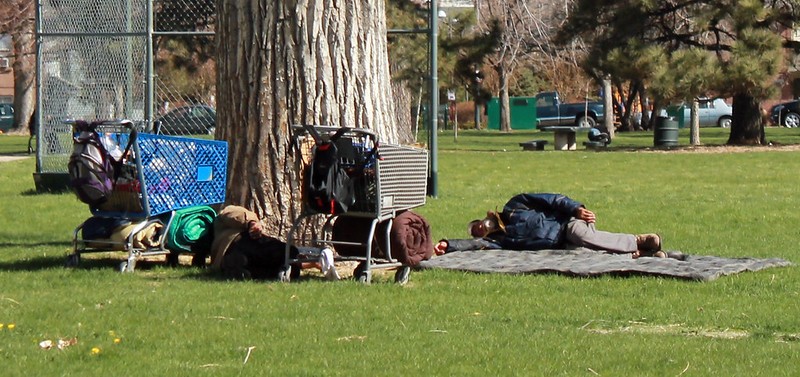
At any given time in Colorado, there are around 9,619 men, women and children experiencing homelessness, according to the U.S. Department of Housing and Urban Development (HUD). Most of these people have shelter, but approximately 2,188 are unsheltered, meaning they’re sleeping in a place not designed for such — think under a bridge, a park bench, etc. Obviously, this is a problem for our homeless population.
To help combat this issue, Colorado lawmakers introduced and passed Senate Bill 21-242, which among other things, helps nonprofits and local governments purchase underutilized hotels and motels and turn them into shelters. Sounds great, right? Well, like most things, the new law isn’t perfect.
Colorado’s Homeless Population
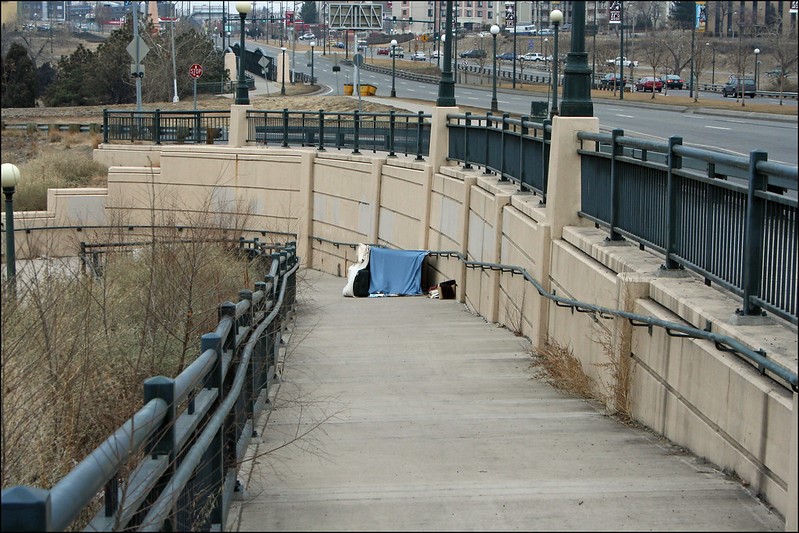
In Colorado, the term “homelessness” can mean many things, but the underlying definition is someone who lacks a regular, fixed shelter designed for human occupancy.
Every two years, for just one night, HUD requires each state to send dozens of volunteers into the streets to count the sheltered and unsheltered population for what’s called a Point-In-Time (PIT) report (during the off-years, only the sheltered population is counted). The results of these counts help determine funding levels for housing and programs for the homeless. However, COVID-19 canceled 2021’s count, so the numbers listed above are from 2019.
The final count, however, is an underrepresentation of homelessness because of the nature of the PIT and the transient nature of the homeless population.
Regardless, these numbers help give us an idea of the need in Colorado. And the need is great. According to Security.org, Colorado has the 11th highest rate of homelessness.
The good news is that in Colorado, several organizations are looking to help those in need, and it’s these organizations that SB 242 benefits.
The Pros
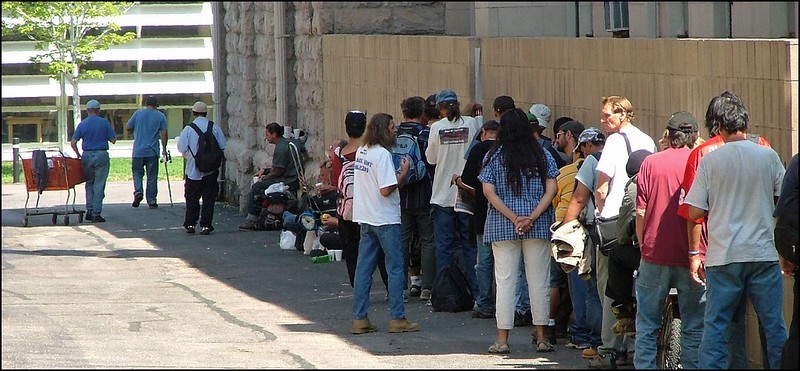
Specifically, SB 242 allows Colorado’s Division of Housing (DOH) to provide rental assistance for those in need and transfers $15 million from the state’s general fund to the housing development grant fund. These funds can be used to supply grants or loans to nonprofit, and local government organizations, for the “rental, acquisition, or renovations of underutilized hotels, underutilized motels, and other underutilized properties to provide noncongregate sheltering or affordable housing for people experiencing homelessness.”
In other words, when a nonprofit or local government organization wants to buy or rent a property that’s rundown or not making much money (the bill targets properties with revenues under $5 million), then the state of Colorado can give that organization a loan or a grant to help offset the cost of the affordable housing project.
Keep in mind that for-profit entities aren’t eligible for these funds. And, any qualified entity must complete a rigorous and competitive application process (not all who apply receive funds). Further, these funds don’t cover the entirety of the project’s cost, and many factors determine the total funding level. These include, but aren’t limited to:
- The total cost of the project
- What is being built or renovated (housing, counseling center, etc.)
- How many affordable units the project will provide upon completion
Finally, while there are exceptions, Colorado typically caps these types of grants or loans at $1 million, and the majority of loans and grants are significantly less than this.
The Cons
As stated above, SB 242 transfers money into the housing development grant fund. It also provides funds to hire four additional Department of Local Affairs (DOLA) staff members to oversee the program. This proved to be a sticking point for Republicans, with Sen. Barbara Kirkmeyer stating, “I’d like to know why DOLA can’t absorb this and do this program and why we’re now growing government,” according to Colorado Newsline.
DOLA’s legislative liaison, Bruce Eisenhower, replied that the additional staff was necessary to help with updating zoning for repurposed hotels and motels. However, this answer didn’t satisfy many Republicans who still saw it as a waste of funds.
Additionally, Kirkmeyer pointed out that SB 242 creates yet another grant and rental assistance program — DOH already has at least nine rental assistance programs — and another wasn’t needed, in her opinion.
During committee, both Kirkmeyer and Sen. Larry Liston indicated that it was their belief these funds wouldn’t be evenly divided between different parts of the state and would instead go mainly toward the Denver metro area, according to ColoradoPolitics.
Will it help the homelessness issue?
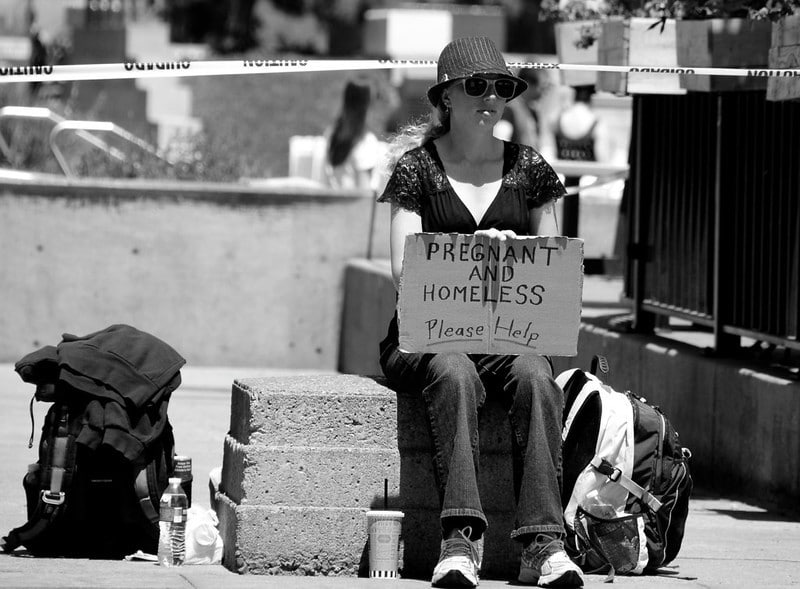
Homelessness is a problem in Colorado. SB 21-242 addresses this issue by providing funds for nonprofits and local government agencies to repurpose derelict hotels and motels and turn them into shelters and affordable housing.
Of course, this leaves us with the question of will the government use these new funds frugally? Or will SB 242 result in more waste and government bureaucracy? Because SB 242 is a new law, only time will tell. Luckily, SB 242 also requires DOLA to track and report how these funds are spent as part of its annual report, so this is something The Maverick Observer will track and report back on.