

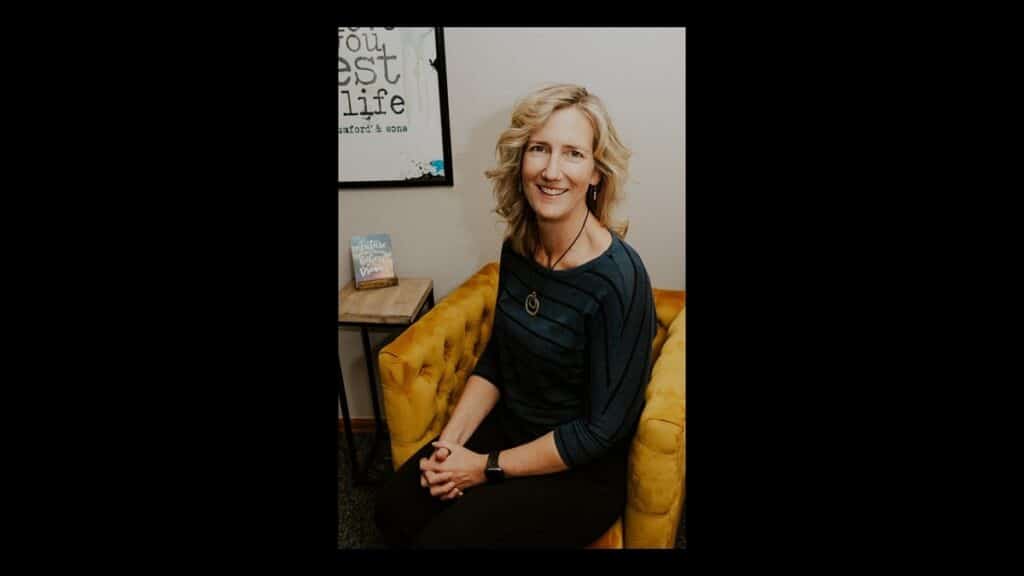
Spearheading a concept as broad as homelessness requires a presence of mind, body, and focus. Beth Hall Roalstad, Chief Executive Officer of Homeward Pikes Peak, a Colorado Springs nonprofit which provides housing and recovery services for the chronically homeless. Their programs include support and education groups, substance abuse and addiction treatment, and job-searching assistance. Solving the problem though is anything but a cookie-cutter process.
Roalstad explains that homelessness in Colorado Springs is like homelessness across the country in every community of all sizes. Homelessness itself, she says, is a convergence of challenges with mental health access, substance abuse, and addictions, the inability to hold down a job, and the high cost of living. “So, when these five factors come together, they create the conditions of housing instability, [where] homelessness comes a catastrophic loss of housing.” Roalstad also thinks that homelessness is a result of the destruction of personal relationships and family because mental illness and addictions are so difficult for individuals to manage and for families and friends to be a part of. As a result, she explains, relationships and trust become fractured. Unfortunately, she adds, addictions can also drive criminal behaviors like theft as well. “When you don’t have a safety net of friends and family anymore, people end up homeless. And it makes me so sad that people’s despair and hopelessness can lead them to destructive behaviors like addictions which ruin their chances of having positive friends and family.”
Roalstad adds that one in five Americans has a diagnosed mental health condition. About one in eight have a diagnosed addiction. These addictions can be many things, whether it be to substances and alcohol, or to spending or gambling, or sex. “There’s a lot of things that people get addicted to [to] numb their pain and to feel something. So that’s a pretty high percentage.” The correlation that is, she believes, in American culture specifically, there is a high tolerance for some escapism which is a form of self-medicating through a weekly nightcap or happy hour. “There’s a lot of social acceptability to that. And people are uncomfortable in pushing back when they’re seeing someone go down the path of maybe indulging too much.”
Homeward Pikes Peak is Addressing Homelessness in the Springs – More Help is Needed
Roalstad sees a lot of movement forward in addressing the issue in Colorado Springs, but more help is needed. She doesn’t want to paint too broad of a picture but Colorado Springs, she believes, has an abnormal gap in affordable housing stock. While El Paso County lost out, she says, prior to 2018, in receiving low-income tax credits, there is now some very old construction that has become low-income housing. Roalstad explains that in the 50s and 60s, builders developed southeast Colorado Springs (specifically in the 80909 zone) around the growth of the airport and the Peterson Air Force Base “And they were abandoned, or they were just not continued to be invested in as the community grew to the north and east and the population migrated and influx.” The construction that happened in the Springs in the last 20 years, she explains, has been more heavily market-rate and high-end housing and not enough for the lower socioeconomic groups. “And now, we are stuck. We’re missing like 20,000 units of housing.”
“you can’t turn this battleship fast enough to address that gap in housing.”
While strides are being made, she says “you can’t turn this battleship fast enough to address that gap in housing.” The thinking, she adds, is that there need to be 1,000 new units of affordable housing every year to make a dent. The community, she says, has responded to that, but that could take 20 years to accomplish. “And then there’s still capitalism. There’s still homelessness being created every day despite our best efforts. So we have a big way to go.” She says that the Springs still has some of the highest suicide rates in the nation for youth and adults, despite its proximity to the outdoors and natural spaces (which might improve mental health). She also says the suicide rates involve mostly white individuals. “Our drug addiction rates are a little higher here in El Paso County, but it’s not a big difference to compare ourselves to other communities.”
Roalstad says they do get family members calling to inquire about housing solutions and treatment options for their loved ones but most times it is often way too late. She says there is a fear of asking for help for anything. “Americans do not like to ask for help. Rugged individualism is a concept that we’re taught in the fifth grade with manifest destiny. And it’s the spirit of America to just do it yourself, and asking for help is a sign of weakness. Unfortunately, that is a pathology in today’s society because you and I are not living independently. We all live interdependently.”
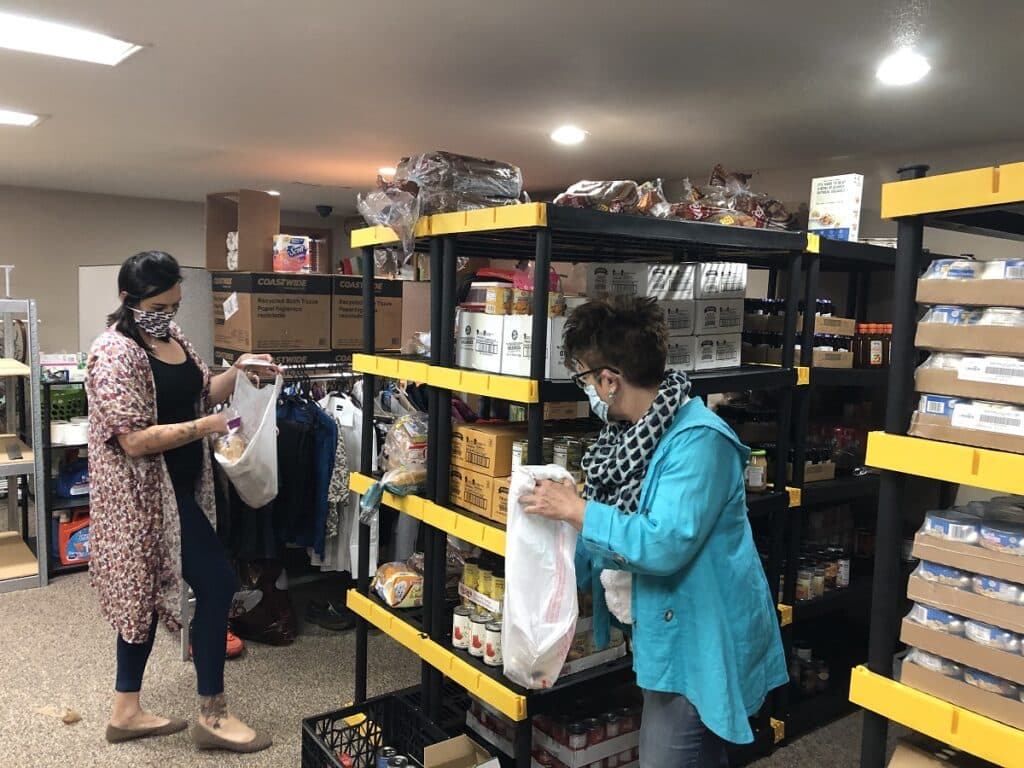
Asking for Help ‘is not a sign of weakness‘
She says it is not a sign of weakness if a person is stuck with a problem and needs to talk to someone. It’s not a sign of weakness if a person is depressed about bad grades in school or a friend who was mean to them or if a boy (or girl) doesn’t give them a second look. “If we can learn how to ask for help and process through our emotions, then we won’t turn to stimulants or excitements to numb us to that pain of feeling slightly depressed.” She says that these things build, and when people don’t have healthy coping skills, they don’t know how to move forward. “So, I think that this is such a multi-layered issue, and it contributes to, really, poverty; poverty of mindset, poverty of assets and resources, and then it robs people of a future where they can bring forward their most vibrant and beautiful self.”
The situation is dire in many ways, but there are also success stories to highlight. Roalstad points to a client who is now stable. Roalstad met this woman when she went for a ride along with the police back in 2017. This woman was homeless, and literally sleeping under the Bijou bridge. Roalstad did the ride-along, two days before Thanksgiving. Being with Homeward, Roalstad had asked if she could do the ride along with the homeless outreach team. “And so, we were doing our patrol. And we came up upon this group of people assembling their belongings. It was early in the morning. They had finished sleeping and they were trying to collect their things.”
Roalstad says the accompanying police officer said to her, “Hey, this woman up here really needs help. She’s been on the streets for years. Can you go talk to her?” Roalstad gave the woman her business card and told her about their services at Homeward (housing assistance, job placement, treatment counseling). The lady, a meth addict, was strung out. “She was not really interested. She kind of just said, ‘Oh, thank you. Yeah, yeah.’” The police officer told Roalstad that the woman and her sister were kicked out of their home as teenagers and they had been surviving outside on the city streets for years doing drugs, and probable sex for survival, which, she explains, meant trading sex for places to sleep, food, shelter, and safety. For about 10 years both these women lived on the streets. The lady’s relationship with her sister wasn’t a healthy relationship either. “They were combative at times.”
Fast forward, Roalstad explains, eight or nine months later, this woman had actually just given birth to a child. She had come to a community organization asking for assistance and was desperate to find a place, a home or a program where she could move into because her baby was in NICU. However, she couldn’t be with her child unless she found a place to live. “Thankfully, we had an outreach worker available to talk with this woman. That outreach worker brought her to our office [at Homeward]. She was open to drug treatment and had actually quit drugs during her pregnancy, which was remarkable that she could quit after years of using. And she began intensive clinical treatment for her addiction.”
Homeward then found a different community partner to put the woman up in a hotel on the agreement that she would come to the Homeward office for daily outpatient treatment. “Within about two months, we found her an apartment and got her enrolled in one of our housing programs.” The child had been returned to her because she got into the hotel and had daily treatment. There was also DHS involvement to monitor the health of the family. “And now this woman has been sober and parenting successfully for the last four years,” Roalstad says the woman still gets psychiatric treatment and sees a counselor. She is overcoming significant trauma and abuse and addictions.
Roalstad says when she looks at the woman today as compared to the woman she met in 2017, “It’s like it’s a new person. She’s healthy. She’s got color to her cheeks. She has roundness. She has flesh. She’s no longer an emaciated drug addict. It’s amazing. And she is doing the hard work. We might have helped her by giving her things like an apartment and counseling. But she’s doing the hard work. She’s doing all that she can to be a healthy person and to be a good mother. She may not ever be someone who can hold on to a full-time job because of the trauma that she experienced for well over 15 years from her childhood and then as a young adult. But she’s no longer a drain on the community.”
Looking Towards Positivity and Self-Care
These kinds of positive results sustain Roalstad but for her own self-care, she is an avid hiker and biker who competes in triathlons and pushes herself for her own goals, both mental and physical. She has hiked Mt. Kilimanjaro in Japan among others, and that focus shows her what is possible.
“It’s so necessary because this work is so hard. There are over 4000 homeless individuals right now, and that’s the easy ones to count. And I think there are probably another 4000 people who are on the brink.” Roalstad says if she gets caught up in the length of time it takes to house a single family or an individual because of the lack of housing options out there, she could get really depressed.
“So, I have to remember our successes. And I need to be watching for the little, small victories because it sustains me in this work.”