


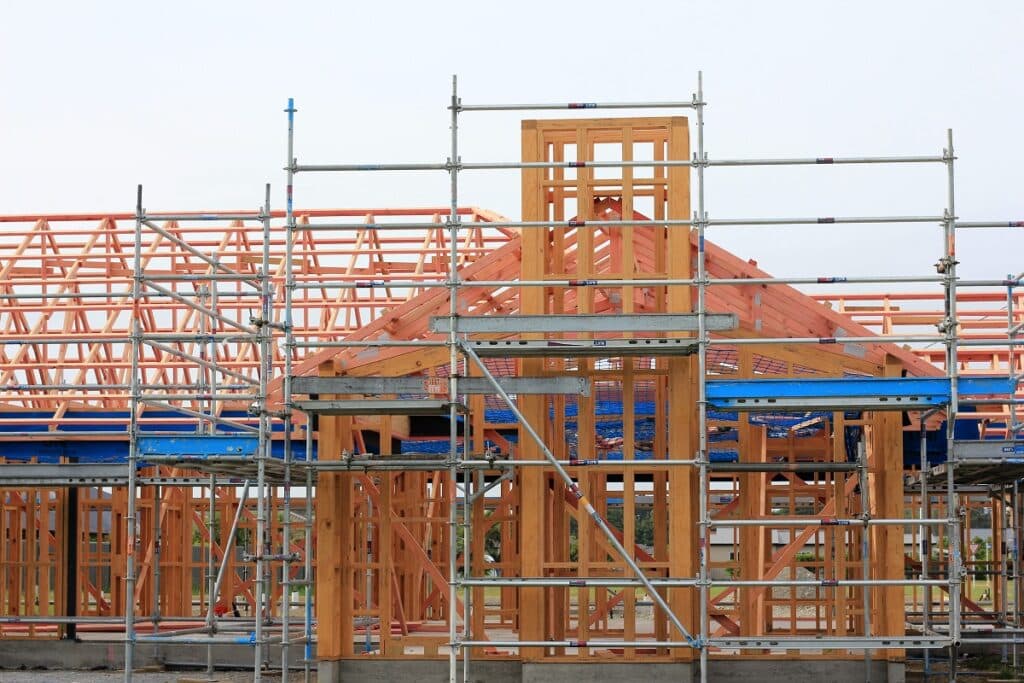
There are two true things about the Pikes Peak Region right now. One, it is a popular place to live, with Colorado Springs consistently ranking in the top 10 “Best Places to Live” – even though it recently slipped from second to ninth. Two, housing is an issue here, especially housing costs and availability. For some, the answer lies in increasing the number and size of developments.
It seems that in some parts of town, every open lot has houses, apartments, or townhomes going up. This is especially true in the east and northeast regions of the Springs, along Marksheffel Road, Constitution Avenue, and Woodmen Road.
However, as the city grows, developments are expanding into the more rural areas of the region, a move that brings about its own set of issues.
Housing Costs and Availability
These developments are coming left and right these days. An expansion for the Sterling Ranch development was recently approved and will include 761 single-family homes as well as schools and parks, all located in southern Black Forest.
Another 500-home expansion to the Reagan Ranch subdivision of Banning Lewis Ranch was also approved this month and will be located on the southeast corner of Marksheffel Road and Highway 94. And these are just the most recent updates over the last few weeks.
Other developments have been around longer but remain in the early stages. This includes Flying Horse East near Schriever AFB, approximately 8 miles east of Colorado Springs, a decidedly rural area. This development has not released any updates for a while but plans to include 30,000 residential units as well as 500 acres reserved for commercial buildings, parks, schools, and a golf course and 5-star resort. This development is still in the “initial planning phase of land evaluation” per their last update but could prove to be a major subdivision if everything comes together.
A development that is already in the initial building phase exists a bit further east, just outside of Ellicott (approximately 16 miles east of Colorado Springs). Mayberry is a new community expecting to bring in over 2,500 residents that include plans for multiple commercial lots as well as an RV storage and wash center, parks and trails, and a new 32-acre pedestrian-friendly “Town Center” that will include businesses and offices. Ground broke in 2021 and houses are going up quickly. This development is geared toward RVers, with large garages (up to 5 cars) and small lots.
What About Infrastructure?
Seeing these developments popping up in rural and semi-rural areas raises many concerns, ranging from infrastructure-based to environmental. One of the biggest concerns involves water. Project approval requires long-term plans – 100-year and 300-year depending on different factors – being submitted and reviewed (see the county’s Electronic Development Application Review Program to view some of the submissions).
While reassuring to know these applications have been reviewed with the future in mind, it is difficult to overlook the severity of the drought the last few years; and the overall lack of moisture, especially out east, makes one wonder how sustainable tens of thousands of new residences, plus businesses, parks, schools, golf courses and the like will be.
When one considers such a massive increase in new residents to these areas, even the traffic alone raises some questions. Serious crashes seem to be happening more often along the long, two-lane stretches of highway out east (see this post from the El County Sheriff’s Office to get an idea of one of the largest traffic concerns out east of the Springs), and the Woodmen Road/Black Forest area has been seeing increasing traffic in general over the last few years. Adding tens of thousands of residents (and commuters) to communities in these locations seems like it will only increase congestion, and road wear, and may increase the number of severe accidents.
However, such an influx of residents, commuters, and traffic, in general, may also bring about some attention to the needed updates to these roads, along with better traffic management and more consistent road maintenance and improvements.
How Will Rural Emergency and Other Services be Impacted?
First responders are another concern. Some of these developments fall under the response area of volunteer or mixed volunteer/paid fire departments, some of whom already have quite a bit of area to cover, especially out east. Adding thousands of new residences, residents and businesses will put increasing pressure on these departments and could affect response times and/or result in increased costs to taxpayers.
Similarly, most of these developments fall within the jurisdiction of the El Paso County Sheriff’s Office, and adding large new communities in rural areas could affect their services to the surrounding areas. If manpower allows, it is possible that more deputies could be deployed to these areas during their shifts, which could potentially benefit the surrounding rural communities. However, increased activity and calls for service in these new developments may also increase response times in other, more rural areas.
Once again, the larger tax base and increased need for emergency services may ultimately benefit rural communities since they could allow fire departments to increase their workforce as well as new equipment or even additional stations over time. The increased need for law enforcement services in these areas may also necessitate hiring more deputies and increasing the personnel in the sheriff’s office.
Other public services will also be affected. Schools, such as Ellicott Schools, could be looking at a massive increase in students over the next few years, and they need to ensure they have the structure in place to handle this. This includes physical space/buildings, more staff, and transportation.
Local businesses also must prepare for the increased demand, which may increase their own employee and supplier needs and operating costs. They will be facing growing competition as more stores, restaurants, and other businesses are built to meet increasing demand and a larger customer base.
Many of these developments plan to offer commercial lots, and new businesses will bring with them convenience, job opportunities, and money. Improvements to local schools – or in the case of Sterling Ranch, new schools altogether – will also benefit children in these communities. The installation of high-speed internet, which has been slower to reach rural areas, will positively impact schools and businesses (as well as local residents). New business opportunities may arise as some communities are hoping to bring more entertainment choices into these rural areas. Mayberry’s website specifically mentions bringing in live music and food trucks, for example.
What About the Rural “Feel”?
A more minor, but still important, effect of developments is their impact on the environment via wildlife displacement, views, and noise and light levels. Displaced wildlife could cause an increase in negative interactions between livestock, pets, and residents and local wildlife such as coyotes, foxes, badgers, and rattlesnakes.
In addition, some ranchers and livestock owners may have increased concerns regarding trespassing, as described in this article about the Sterling Ranch expansion. Another factor is that herds of antelope or deer grazing closer to (and crossing) roads can result in more traffic accidents.
Many people move to rural areas due to a love of the peace and quiet they bring, and they enjoy the ability to go out and clearly see the stars at night that are invisible in more urban areas or to see the mountains or the sunrise without also seeing fields full of houses. As these developments are built, the increase in residences and businesses, not to mention road noise from traffic, affects all of the above.
There is no easy answer to this issue. Building more houses, especially suburb-style, will impact the rural ambiance of the area, and will affect noise, light pollution, views, and wildlife. While environmental impact studies have been submitted and everything seems to have been approved, there will undoubtedly be change.
However, some developments hope to minimize or offset this change to a degree. For example, Eastern El Paso County could use more parks and trails, and these developments are promising to build some, which will benefit residents of all ages. Also, residents can continue to advocate for preserving some open spaces, such as Corral Bluffs, for future development.
Cautiously Optimistic
As long as the Pikes Peak region has so much to offer, expansion will continue. Colorado Springs is going to grow wherever it can, and especially to the east and northeast where there is the most room for expansion. The developers have high hopes for their communities, and the county has approved their plans and decided that these developments meet the required standards. These new neighborhoods are bringing with them some conveniences, and hopefully some infrastructure improvements and invigoration to the rural areas.
It seems the most concern arises when these developments feel rushed and as if they are trying to replicate town or the suburbs out in these rural locations where so many people love the “away from it all feel” and rural living – and may have moved away from town to avoid these types of developments, to begin with. There is a place in this ongoing expansion for thoughtful, well-planned-out developments that fit in with the rural feel of the surrounding communities (i.e., larger lots, water conservation, low environmental impact, etc.). Only time will tell how it will all work out.