



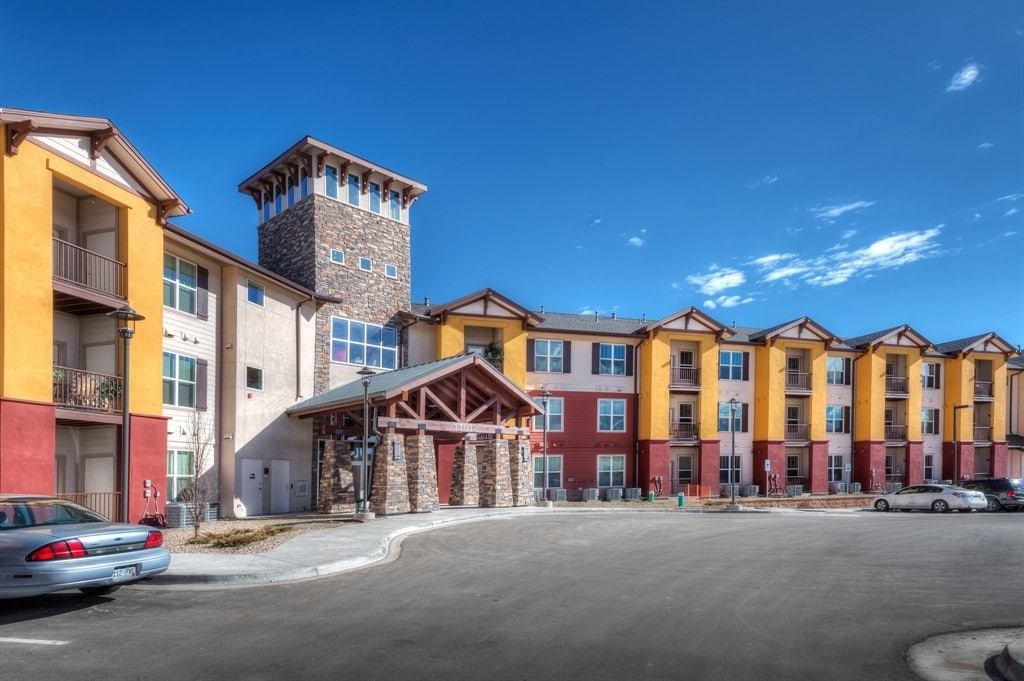
It’s no secret that Colorado’s seen a considerable influx of people over the past 10 years. Indeed, according to the most recent U.S. Census, Colorado gained 744,518 new residents between 2010 and 2020. That’s an increase of 14.8 percent and they all need affordable housing.
More pointedly, this increase caused home prices in Colorado to skyrocket, leading to housing prices that are higher than the national average. This often prices out would-be first-time homebuyers and lower-income families.
To help address these issues and increase the supply of affordable housing in Colorado, lawmakers introduced and passed House Bill 21-1117, “Local Government Authority Promote Affordable Housing Units,” and House Bill 21-1271, “Department of Local Affairs Innovative Affordable Housing Strategies.” Will these new bills help when it comes to affordable housing, or will they deter investors and builders?
A Brief Overview of the Bills
HB 1117, which specifically applies to new construction and redevelopment, gives local governments jurisdiction over what rules and regulations it wants to adopt for land development within their boundaries, as long as the new regulation’s purpose is to promote affordable housing.
It also gives local governments the authority to require a builder to include affordable housing (also known as rent control). If the builder doesn’t want to include this, HB 1117 requires that the local government give the builder alternatives to requiring affordable housing in the project.
This means that local governments can rework zoning laws (allowing for greater density or reducing requirements) and implement new rules and regulations that they think will lead to more affordable housing. Further, if a builder or land developer wants to construct or redevelop housing units, local governments — like Denver and Colorado Springs Planning and Development — can dictate that the project include affordable housing units.
If the builder doesn’t want to include affordable housing, the city could impose an alternative, like paying a fee (this is only an example — each city can dictate its own alternatives as the bill doesn’t specify what alternatives must be provided).
HB 1271 creates three programs within the Division of Local Affairs (DOLA) to promote innovative solutions to the development of affordable housing. It does this by setting aside grant money for local governments that adopt three or more policy and regulatory tools that encourage affordable housing development. For those local governments that need assistance developing affordable housing policies, the bill includes grant money for consultants and technical assistance. The total amount of grant money available due to HB 1271 is $13 million.
In other words, HB 1271 encourages local governments to remove regulatory barriers to affordable housing development by offering incentives in the form of grants. For those local governments that need assistance figuring out how best to increase affordable housing, it provides grants to help pay for professional guidance.
The Good
Colorado’s legislators passed HB 1117 and HB 1271 to help increase the availability of affordable housing in Colorado. So, to get a feel for how these bills might help, The Maverick Observer reached out to Steve Posey, Colorado Springs’ Affordable Housing Community Development Division Manager.
When asked about the impact HB 1117 will have on land development in Colorado Springs, Posey stated, “The City of Colorado Springs Community Development Division partners with affordable housing developers to provide financing for affordable multi-family developments. These projects are typically funded with housing tax credits, which bring with them guaranteed affordability periods of 15-25 years.”
Posey’s answer indicates that Colorado Springs is committed to increasing affordable housing developments, and HB 117 will help further these goals.
When asked how HB 1117 will impact Colorado Springs, Posey said that Colorado Springs’ mayor “challenged the community to build or preserve 1,000 units of affordable housing each year”.
To that end, and as of this writing, Colorado Springs is rewriting and modernizing its land development code, and adopting incentives for affordable housing production. One of those incentives, Posey told us, was a reduction in the parking requirement for multi-family affordable housing developments.
When asked what other ordinances Colorado Springs might adopt to encourage affordable housing, Posey said that that was up to the City Council members.
Moving on to HB 1271, The Maverick Observer asked Posey how the grants established under HB 1271 differ from the existing grant programs within DOLA. Posey replied, “The new grant programs DOLA is offering will be beneficial to rural communities and to other communities around the state that are looking for models of best practices that will help them develop incentives to build or preserve affordable housing.”
The above seems to point to both bills benefitting Colorado, but there are a few possible negatives to consider.
The Bad
The Colorado Apartment Association opposed HB 1117. They backed up their stance by pointing out that inclusionary housing ordinances (requiring developers to set aside a percentage of affordable housing units) often result in restricted development and raised prices.
Indeed, a study by the Urban Institute points out that when private developers are required to include “below-market housing,” there’s usually significantly more “red tape” for developers to navigate, and often less reward, and therefore, incentive.
The Urban Institute reports, “By requiring developers to sell or rent a percentage of their units at below-market level, [Inclusionary Zoning] policies may drive up costs for market-rate units or reduce the production of new units.”
The study looked at California’s IZ laws and their effects on development and found that the policies led to fewer units built, increased cost to market-rate homes, and a reduction in construction of new homes.
Colorado Rep. Kevin Van Winkle, who opposed HB 1117 on the same grounds as above, also pointed to a 2019 report by Stanford University, which states, “Landlords treated by rent control reduce rental housing supplies by 15% by selling to owner-occupants and redeveloping buildings. Thus, while rent control prevents displacement of incumbent renters in the short run, the lost rental housing supply likely drove up market rents in the long run, ultimately undermining the goals of the law,” reports the Gazette.
A study by the University of Colorado Boulder, Leeds School of Business, resulted in the same findings as the Stanford study.
When The Maverick Observer asked Posey if rent control might discourage builders and investors, he sidestepped the question. But, when asked if rent control negatively impacts property value, he said, “In Colorado Springs, there is no evidence to suggest that low-income housing tax credit projects have had a negative impact on property values.”

The Results
HB 1271 establishes additional grant programs that may be especially beneficial to rural communities. It could also lead to government waste if these programs aren’t appropriately utilized. Still, HB 1271 seems like good news for Colorado’s affordable housing initiative.
HB 1117 is more of a mixed bag. It’s important to note that the above studies point out that some of the adverse effects from IZ policies are due to the types of ordinances each City adopts. HB 1117 doesn’t limit the percentage of affordable housing units a city can require of a builder and leaves ordinances up to local control. As such, HB 1117 may have different impacts on different parts of the state.
In Colorado Springs, for example, Posey pointed to the fact that the city is home-ruled, meaning our elected officials can, and will, implement legislation that they think suits the city’s needs.
Thus, Colorado Springs could choose to implement more incentives like reworking zoning and allowing for greater density in both apartments and single-family neighborhoods. These incentives could offset the reduction in lost revenue due to below-market prices.
Denver or Boulder could require builders to include affordable housing if they want to get a building permit and not include enough incentives to offset the lost revenue. It’s up to each city’s discretion.
Consequently, The Maverick Observer is keeping tabs on this and will report back as new building rules and regulations are released.







[…] Colorado has taken recently. When you add up all the recently passed taxes and fees and add in new progressive housing policies, it’s easy to see that Colorado is embracing a new progressive […]
[…] is already experiencing a housing crisis, and it’s particularly bad when it comes to affordable housing. According to George Borjas, […]
[…] that add up to $2.1 billion in new taxes and fees and progressive housing bills that could end up hurting Colorado’s housing prices. These new laws not only make it more expensive to live in Colorado but could also end up hurting […]
[…] been looking for ways to pass laws in an attempt to fix the affordable housing problem. In 2021, The Maverick Observer published an article asking if progressive bills that passed two years ago would help or hurt […]