



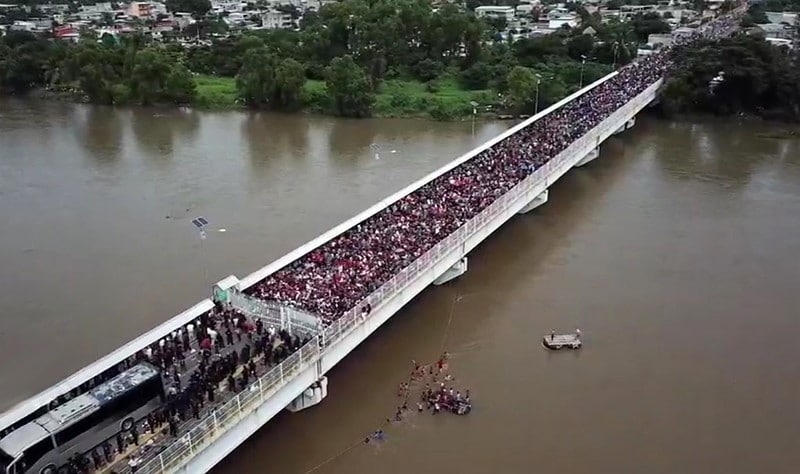
In March 2021, Customs and Border Protection confronted over 170,000 people attempting illegal immigration at the southern border. That’s up 173 percent since last year and a 71 percent increase from February 2021.
Moreover, this increase is the result of President Biden’s recent implicit and explicit stance on border security and immigration – shutting down immigration enforcement, mass amnesty, and stopping construction of the border wall.
But does this increase in immigration constitute a “crisis,” and if yes, how does it impact Colorado?

Drugs, Drugs, and More Drugs
On March 2, 2021, the DEA released its 2020 National Drug Threat Assessment (NDTA), which states, “Mexican Transnational Criminal Organizations (TCOs) remain the greatest criminal drug threat in the United States.” The NDTA then states that thanks to TCOs, the prevalence of drugs in the U.S. “is worsening both in volume and reach, with traffickers selling increasing amounts outside of traditional markets.”
In other words, the U.S. drug epidemic is increasing, and it’s being fueled by cartels smuggling in drugs from Mexico.
Indeed, in 2020 1,223 people in Colorado died from a drug overdose. That’s up 20 percent from the year prior. And it’s not just Colorado that’s seeing this increase. From July 2019 to July 2020, 83,000 people died from drug-related overdoses, according to the U.S. Centers for Disease Control and Prevention. That’s up from 70,000 for the year prior. But why is this information especially poignant for Colorado?

Access to Everywhere
According to the Colorado Office of Economic Development and International Trade, Colorado is an “ideal hub for interstate and international commerce,” and a “central link in a global network.” This is thanks to the fact that Colorado is centrally located between Mexico and Canada, is a major national crossroad for highways I-70, I-25, and I-76, and is home to Denver International Airport, the second-largest airport in the world by total area.
Simply put, Colorado is an ideal location for accessing the rest of the world in whatever manner you need. It’s this ease of access that also makes it attractive as a hub for traffickers. As Rep. Ken Buck states, “In my conversations with the [DEA], I’ve learned that Denver is a hub for heroin trafficking in the Rocky Mountain region. And many of the foot soldiers in this operation come to the United States illegally.”
As evidence of this, in February 2021, the DEA in connection with local law enforcement busted a major international drug trafficking network. Sixty-four people were charged with transporting significant quantities of drugs from Mexico into Colorado and then dispersing these drugs.
Further, the United States Sentencing Commission reports that in Colorado, drug trafficking is one of the leading causes of crime, and it is increasing:
- In 2017, 436 people were convicted of committing a crime in Colorado. Of that, 91 people, or 21 percent, were convicted of drug trafficking.
- In 2018, 525 people were convicted of a crime. Of that, 142, or 27 percent were convicted of drug trafficking.
- In 2019 – the latest report available for Colorado – 529 people were convicted of a crime. Of that, 156, or 30 percent, were convicted of drug trafficking. In contrast, the next two highest types of crime in Colorado for 2019 were immigration with 111 people convicted, and firearms with 84 people convicted.
It’s Not Just Drugs or Illegal Immigration
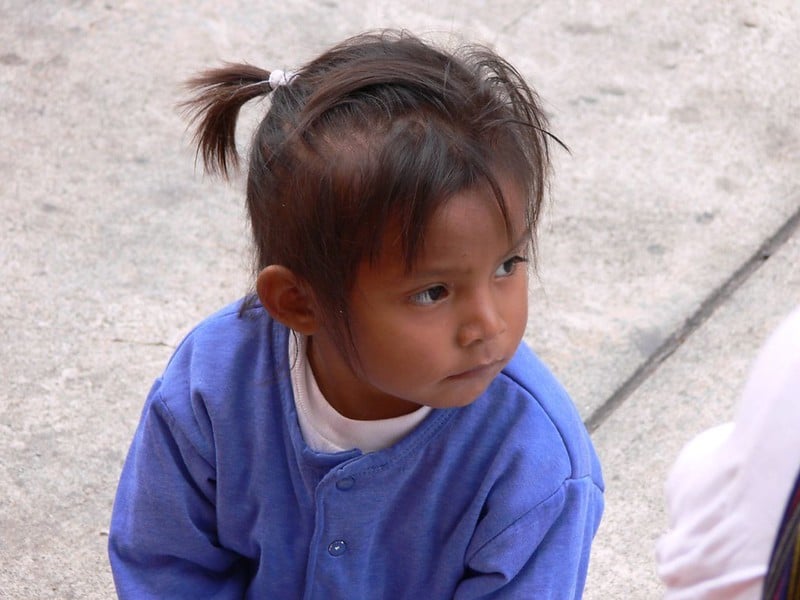
Unfortunately, it’s not just drugs that are flowing across the border. In March 2021, 19,000 children traveled alone across the Mexican border. That’s the largest number in recorded history. And while some of those children will be reunited with family, others will become the victims of human trafficking.
The reason this is especially problematic for unaccompanied children is that there are several factors that lead to someone being trafficked, two of which apply specifically to this group: being in a vulnerable situation, and not having immigration paperwork. Indeed, when the Colorado Department of Human Services screened youth and children for risk factors related to human trafficking, it found 40 percent identified as Latino. That’s especially significant when you consider the U.S Census Bureau lists the Colorado Hispanic or Latino population at only 22 percent.
Furthermore, while unaccompanied children are at a higher risk of falling victim to traffickers, any person in a vulnerable situation can find him or herself being trafficked. In its latest report, the National Human Trafficking Hotline found that in 2019, there were 347 known human trafficking victims in Colorado. Again, this is the “known” Colorado number. The actual number of human trafficking victims in Colorado is substantially higher, as is the national number.
What this Means
Not everyone who comes to the U.S. is part of a drug cartel or will fall victim to human trafficking. However, drugs and human trafficking are a problem in Colorado, and both are being fueled by TCOs taking advantage of our porous border.
The Trump administration acknowledged this problem and was working to fix it. But, thanks to the Biden administration’s recent immigration stance, the progress that was made has halted and reversed. For Colorado, this means we will likely see a significant increase in both drug and human trafficking over the next few years.







[…] I recently wrote, President Biden is failing the American people, and those in Colorado in particular, by failing to continue President Trump’s pledge to […]
[…] ending MPP. More importantly, that order, along with Biden’s implicit and explicit stance on border security and immigration, led to an explosion in illegal crossings at the border — in Fiscal Year (FY) 2020, during […]