



Every year, communities across the country prepare for an unpredictable flu season. We think about what could make it less debilitating, contagious, or potentially deadly for all. But what about those masks we all seem to have thanks to COVID-19?
It turns out that they may be able to mitigate this season’s flu virus and even protect us from hazardous wildfire smoke.
Fighting the Flu
Throughout influenza season, we are reminded to suppress the contagion by washing our hands or shielding our coughs and sneezes with our arms. But is there more that could be done?
Research published by PLOS Pathogens found that surgical masks worn by patients in a medical setting reduced the airborne transmission of the flu virus by 70%.
Additionally, a systemic review was published by Cambridge University Press in which a large number of studies were examined for medical mask efficacy, including an experiment specifically designed to test the effectiveness of masks in preventing airborne transmission of the flu. Volunteers were asked to cough on petri dishes, and the results showed that the virus that causes influenza could not be found on the dishes when the volunteers wore surgical and N95 masks.
While study results found that masks should be able to reduce transmission in controlled settings, there is less evidence on whether masks are as effective in natural settings. More research and resources are needed for large community studies to provide the most accurate evidence of the effectiveness of face masks in preventing the spread of flu.
If you’re feeling ill but must go out in public, the bottom line is that wearing a properly fitting medical mask can help slow the spread of other airborne viruses beyond just COVID-19. When the flu season is in full force, prevention is one of the best ways of keeping yourself healthy, and a face mask may provide extra insulation from illness.
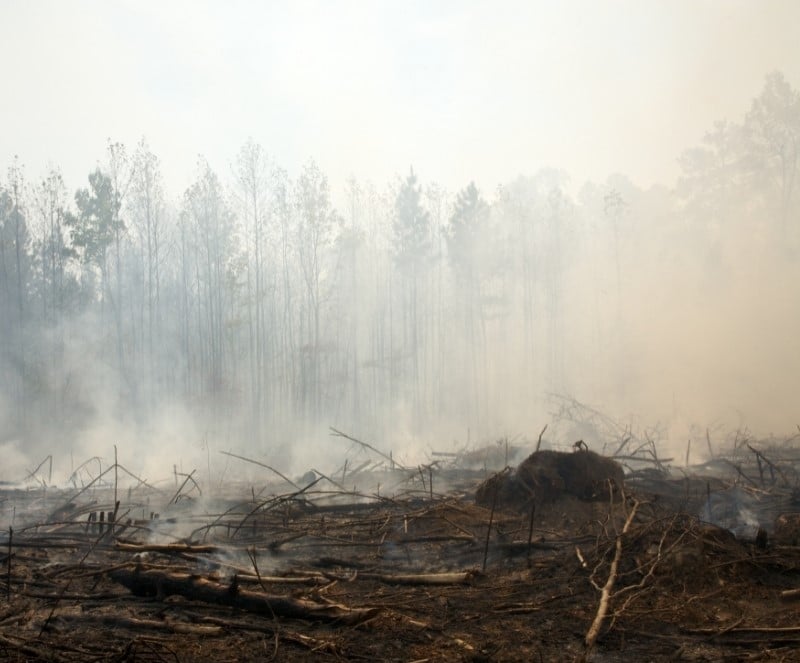
Mitigating Wildfire Smoke
With the rapidly changing face of COVID-19, it’s easy to forget that we need to protect ourselves not only from the virus but also from wildfire smoke ravaging much of the western United States.
By this point, we’ve all become familiar with masks. But medical masks have another way of keeping you well. They filter out particles of smoke that can irritate your entire respiratory system and exacerbate the effects of chronic lung and heart diseases. According to the CDC, wildfire smoke can even make you more susceptible to COVID-19.
This means that a properly fitting face mask may protect you from the contagious Delta variant and the hazardous chemicals in wildfire smoke at the same time. Masks, when worn correctly, could potentially offer some protection by filtering out the larger particles in the smoke. But a word of caution: According to the EPA, masks do not protect you from the harmful gases in the smoke, so nobody should think that smoke won’t harm them at all just because they’re wearing a mask.
As Benjamin Franklin wisely said, “An ounce of prevention is worth a pound of cure,” so it helps to have a few N95 or P100 masks ready. And just as important as having the masks is learning how to wear them correctly.
If you must be outside during smoky conditions, a mask can help mitigate the effects making it safer to be in the elements, but make sure to check out the EPA’s Air Quality Guide for Particle Pollution to protect yourself before heading outdoors.
The Type of Masks Matters
Even though wearing a face mask can help protect you from wildfire smoke, cloth masks are not recommended since they do not catch the minute smoke fragments that can jeopardize your health. An N95 respirator is regarded as the best choice for face masks because it filters out at least 95% of toxic particles. The CDC’s website advises that N95 and KN95 masks offer the strongest protection from wildfire smoke.
The CDC’s website advises that N95 and KN95 respirators offer the strongest protection from wildfire smoke. Th site also notes that it is essential to find KN95 masks that meet the criteria equivalent to those put in place by CDC’s National Institute for Occupational Safety and Health for all respirators.
No matter what your stance is on COVID-19, don’t toss those masks yet, because there is a large amount of evidence that they can slow the spread of the flu virus or other airborne ailments, helping us take better care of our health and each other. Just make sure to wear N95 and KN95 respirators if wildfire smoke blows into town.