


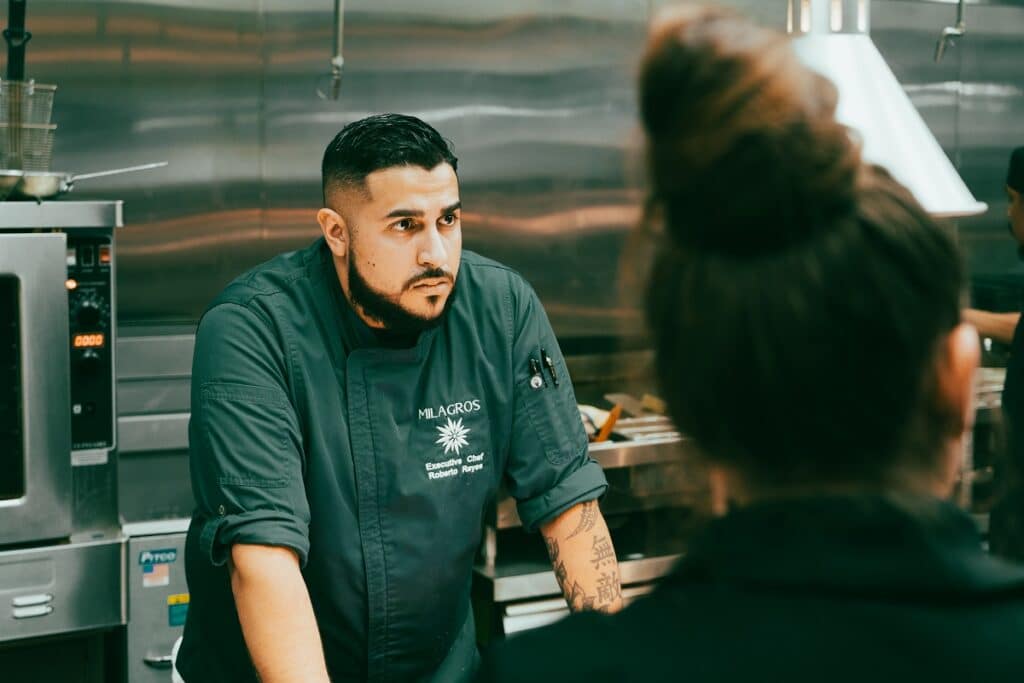
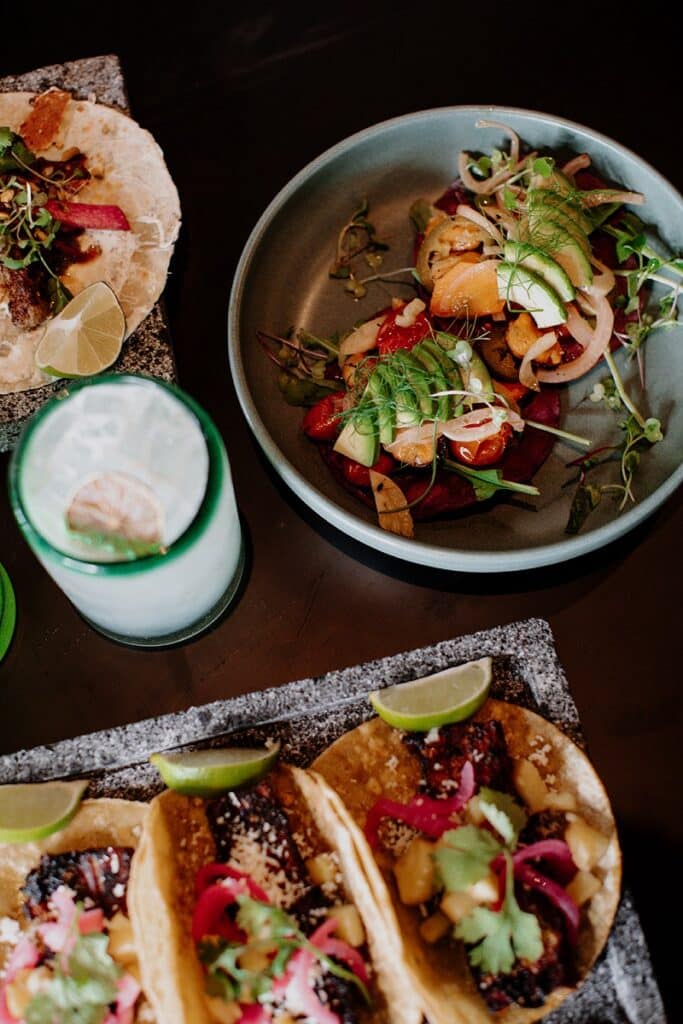
Elevating Mexican cuisine with a sense of fusion is a paramount experience for Milagros Cocina Mexicana co-owner Eric Morales. In collaboration with their executive chef Roberto Reyes, the intention in many of their dishes and their setting is to invoke a sense of style with new possibilities.
“I think the main thing that we wanted to achieve at Milagros was to just bring a different level of a Mexican restaurant to the city of Colorado Springs,” Morales says. He explains that he and his family have a background in the more traditional-style restaurants that are in the area. But in terms of new restaurants and their modernization of them, Morales and his dad (also a co-owner) wanted to create something elevated, something higher end, and upscale and more of an experience. “I’ve lived in a lot of big cities, and I think it’s just something that I wanted to bring to the Springs.”
Morales lived most of his life in Seattle, which he describes as a big hub for food. “There’s a lot of seafood there, so the freshness and the fact that we’re right by the ocean over there. I mean, the fact that they could get a salmon from that morning and serve it for dinner service that night in a ceviche that you would eat in Cancun – that’s the access that you have in those types of states.”
What, he says, they are trying to achieve with Milagros is “What’s the freshest thing we could bring in? What can our chefs do to create a ceviche where it makes you feel like you’re on the beach in Cancun or Puerto Vallarta?”
Creating Options at Milagros Cocina Mexicana
Morales says one of the coolest things on the menu to start with at Milagros is just the options they have for ceviches. “We have a shrimp ceviche that we do with an avocado salsa, which is traditional.” He says people are used to just seeing a traditional ceviche where it’s just lime juice and salt, but an avocado salsa is more traditional on the coast of Mexico.
They also have a scallop ceviche, which is more of a creation of their chef fusing Asian and Mexican-style cuisines with yuzu and ginger. There is also a red snapper ceviche that has some Peruvian flair with the addition of aji amarillo chili. And their salmon ceviche is more of their chef’s twist on a traditional salmon ceviche except that he marinates all the salmon in a dojo paste.
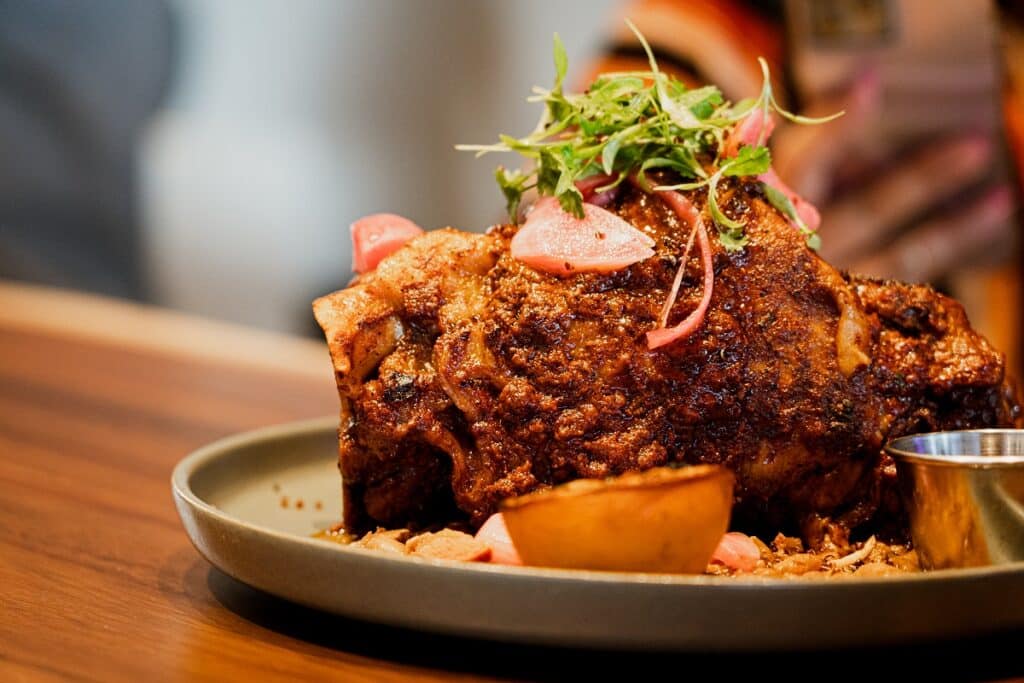
Morales says one of the most popular dishes that they serve now, which wasn’t known as much in the area, is their cochinita pivil – a really big pork shank. They braise it in achiote paste and orange juice and then wrap it in banana leaves for five hours as it cooks. When it comes out, they lay it on frijoles charros and brush it with a little bit more of the orange marinade. After that, they add some pickled red onions, micro cilantro, pickled grapes and some fried quinoa on the side along with a habanero jam that the chef makes.
They also take it a bit further. “The Pulpo las Brasas is fantastic. That’s a dish that our chef created completely from scratch.” Reyes experimented for a few weeks trying to combine sauces and he finally brought them together. “The octopus itself [in the dish]– the chef has his secret way of cooking it in a certain oil and stuff – he won’t really tell anyone what it is. But he cooks it for about five hours, so it really gets super tender.”
After that, Reyes throws it onto the grill and then pairs it with some potatoes that he braises for four hours in just oil. “So, what he does is that he basically confits them.” After that, Reyes puts a cilantro-harissa dressing on it, which is a burnt onion aioli then adds a guajillo emulsion to finish it.
Sauces Made From Scratch
Morales explains that every sauce on the menu is created from scratch. He says a lot of people might have the misconception that it’s all canned but from the moment the chips and salsa arrive, it is made in-house. “From the moment we get here in the morning, we’re roasting tomatoes as the base of most of our sauces.” He says for the mole sauce alone, Chef Reyes puts in more than 25 ingredients and it’s a process that takes him nearly four hours.
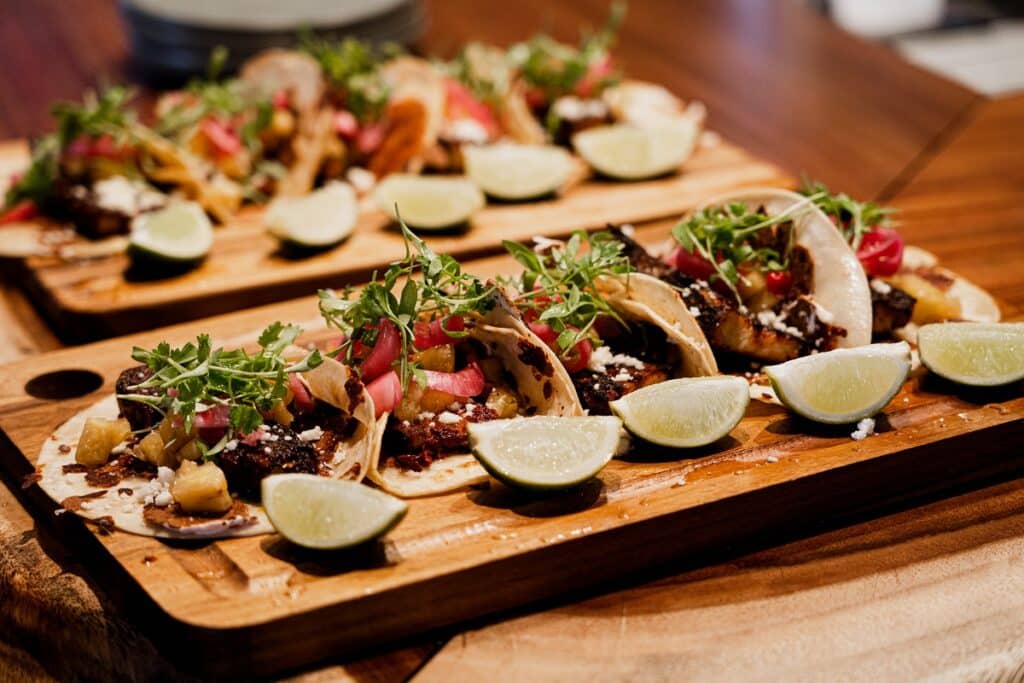
Milagros brings the artisan process and their own special flair to more traditional-style dishes. “What we try to do with the carne asada is make it more of a steak so it’s a little bit thicker. So instead of the traditional super thin cuts, we give it a thicker cut.”
Morales also says the bacon-wrapped shrimp is another traditional item they tweaked. “What we did was just let the chef take our original recipe and do his own twist on it.” It is served as an appetizer and gets smothered in Reyes’ own chipotle sauce.
With enchiladas, as another example, Morales explains that in Mexico when enchiladas are served, most of the time, it is simply three enchiladas with rice and beans separately on the side. “What we try to do for our menu is you have your choice of mole, poblano, enchiladas or chipotle along with three enchiladas. And then if you want rice and beans, we give it to you on the side. But the whole point is that you eat them, just like you would in Mexico.”
A Mix on the Dessert Approach
This approach extends to desserts as well. “What I’ve noticed with a lot of Mexican restaurants here is most restaurants you’ll find the same thing. You’ll find sopapillas, churros or flan.” What they wanted to do at Milagros is elevate the desserts. One they are proud of is a crème brûlée de mamey that Reyes introduced. “Mamey is a Mexican fruit that is not really found here. It’s very rare. Chef has to order a pulp because that’s how rare it is in that we can’t get the whole fruit itself.” From that, Chef Reyes makes a crème brûlée.
What Morales does want people to kind of understand is that it’s not a traditional crème brûlée. “I think people kind of get misconstrued on that. They expect your typical crème brûlée, egg-based and stuff like that, but it’s just as good, and I think it’s a little bit better. It’s a lot lighter because it is fruit-based. It’s kind of not super sweet, but it’s right in between. Honestly, it’s kind of like papaya-like.” Morales says the chef also adds a little bit of lavender and fresh strawberry in the mix, and then he tops it off with some grated Abuelita chocolate on top. “So, you get a really, really authentic taste of Mexican chocolate right at the end.”
Elevating Food in the Springs
Morales is heartened by the fact that there are a lot of more high-level chefs coming to the Springs area. “People are taking more risks in terms of trying something new. And I think if more people did that, I think that it just helps out the city even more.” Morales explains that he thinks the Springs “is a very low-key food hub, but that doesn’t mean we couldn’t turn into one of the biggest ones one day.”
He points to their chef as well as local celebrity chef Brother Luck as well as things they’re doing at The Broadmoor as examples of this new thinking. “I just think there’s so much potential. And if people like our chef and Brother Luck can pioneer that movement in terms of putting Colorado Springs more on the map [that would be great].”
Morales does think the scene is going in the perfect direction. “I think people are wanting it. I think people have been waiting for something like this because, like I said, Colorado Springs has just kind of been that perfect city to kind of come and create something and try something new.” He says that while there are still a lot of chains in the city, “I think people kind of just want something of their own. People really want to push local stuff, and people really appreciate it when we say we’re family-owned. They really take that into account, and it really means something to them.”