

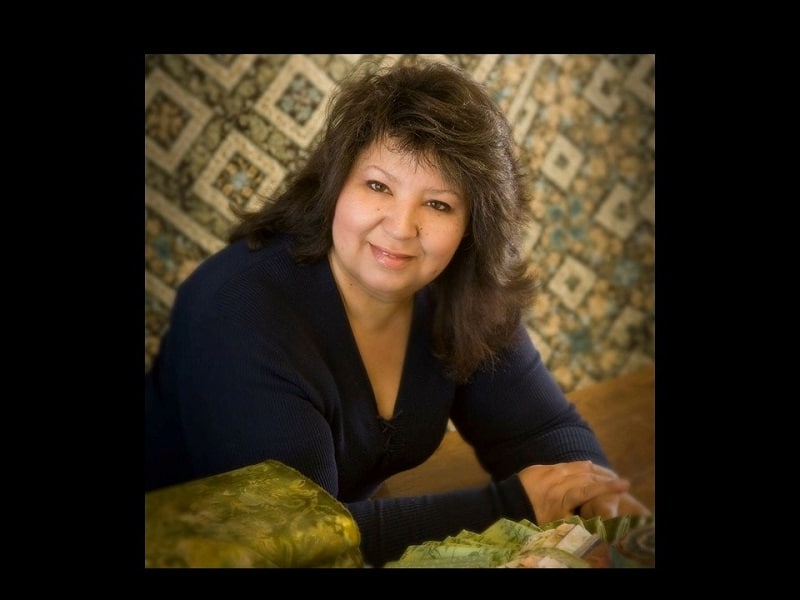
Making quilts can be a matter of will, individuality, and a sense of focus. Nani Kaai, the owner of Na-La’s Quilt Shoppe in Fountain, Colorado was drawn by the sense of design and geometry.
“First of all, I flunked sewing in school. I don’t like sewing clothing at all. So, I never thought I’d be in this business.” Kaai used to live in Alaska and one February when it was about 25 below, she was watching a program on PBS and made a quilt. Quilting for her is so much different than sewing clothing. “The quilting part of it is more geometry and angles and measurements. And I kind of fell in love with that.”
Two Quilts Started a Creative Journey at Na-La’s Quilt Shoppe
She made two quilts for her nieces, who at that time (2001) were newborns. At the same time, her sister in Colorado, the mother of said nieces, also got interested in quilting. “We always joked that wouldn’t it be fun one day to just have a little quilt shop where we can just quilt all day long? Well, that’s a whole lot more work than it sounds like.”
Kaai’s sister is a long-arm quilter (she provides finishing touches on the work) while Kaai herself is more of a machine-based piece quilter (creating intricate designs within the fabrics). “I have a background in packaging and business and inventory and stuff like that so that was my drive. Long-arming was her passion, so it made sense to do it together. I was basically running the store and it just kind of worked out for the first few years, and then we split because she needed to pursue her passion. I was torn because at that point, in my opinion, we were too far into this for me to give up and go back. It was like, ‘We’re right there. We’re right at that almost five-year mark where you can say you’ve been a success.’”

Designing a New Passion
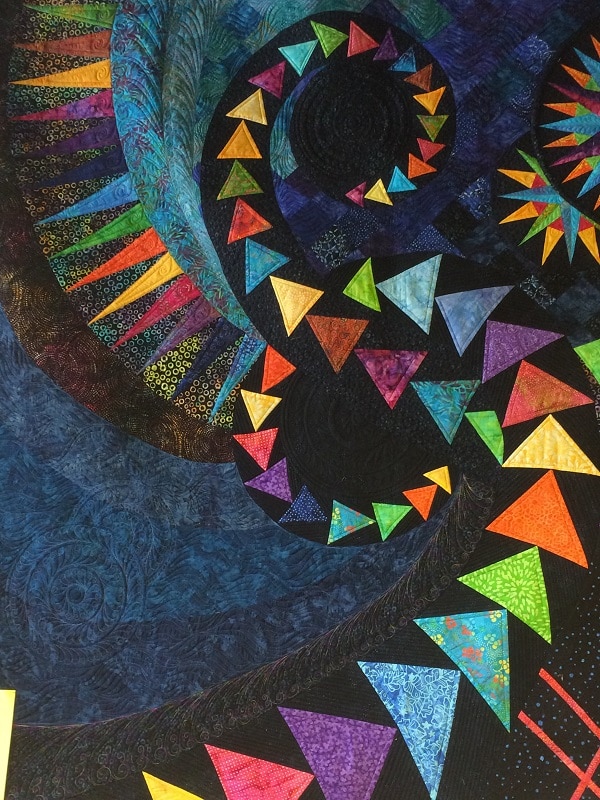
Kaai decided to continue on her own. Kaai says she’s always been good at math in that she likes angles and dimensions. “I like designing. Yes, I have the store. Yes, I run it. But I write a lot of my own patterns. And I do a lot of my own design.”
For Kaai, there are different challenges of design in the art of quilting. “First of all, anybody can put any kind of fabric together, sew it together, and make a quilt. And that’s design. But the second half of that, which is the harder part, is to actually write the pattern so that other people can make the same product.”
This takes a lot of math because there are seam allowances when you’re quilting, which is different than making clothing.
“Everything has to fit together.” She explains that there are different kinds of quilt making. “There’s a straight line. Basically, you’re just sewing pieces together. There’s paper piecing, which is a little more angular and direct, where you’re actually drawing on paper, and you’re adhering fabric to a paper format, and then piecing it all together.”
Kaai also has been moving forward with creating her own patterns. She says she comes up with her best ideas at about 3:30 in the morning. “Then it morphs and changes.” The process starts with her drawing the design out on graph paper and then she keeps adjusting it until she gets to the final product. She then must write the pattern that instructs how to make each element of that design be put into a kit that people can buy.
Designing for a Larger Audience
“I’m just a baby beginner in getting my patterns out there. Most of my patterns, I make them up, I have a sample, I make a kit for it, and I sell it in my store.” She recently hooked up with a pattern distributor company and they’ve collaborated on a few patterns. She’ll be designing under their name and hopes this will help more of her patterns find an international audience
She tries to bring this experience and perspective full circle in running the shop and interacting with customers as well as the local quilting community. If there is a brand-new quilter and they find a shop that they like initially, their first response might be, “Oh, I’m only going to shop at your store.” And I tell them all the time, “Uh-uh. You can’t do that.”
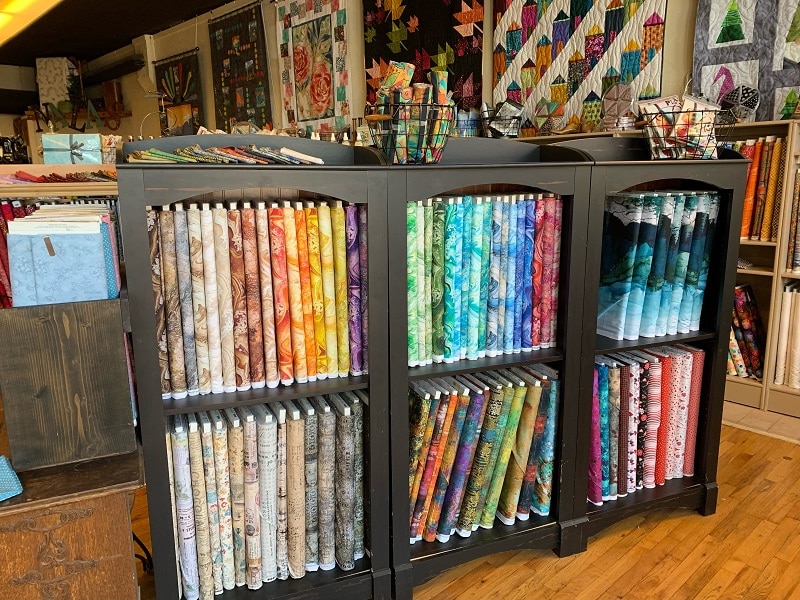
Kaai explains that every quilt shop has its own personality. “You’re not going to find traditional fabrics in my store because I don’t do traditional. I do a little more modern, a little more heavy, saturated color. I don’t do reproductions or old-fashioned fabrics. I don’t do Civil War type stuff or primitive type stuff.”


Joining the Colorado Springs Quilting Community
As a community, especially within Colorado Springs, Kaai says all the quilt and fabric shop owners know what each shop specializes in. “So here at Na-La’s, if we don’t have what they need, we will try to send them where we think they can find it or even call that store and say, ‘Hey, do you have this? I’m sending somebody up there. ’We’re kind of a tight-knit community
Kaai says her store is known as the bright store. “I tend to like really bright, bold colors, heavy saturation, and color intensity. A lot of my fabrics might have a modern, grungy street look – it’s not all bunnies. And my baby quilts, I’m very picky about what I pull in for children’s fabric.” She also tries to stay neutral, “I don’t do anything religious.”


Bright Store with Unique Fabrics
The most common comment she gets from customers who come is, “You have fabric that is like something that nobody else has.” And I laugh because we all see the same vendors. We all see the same fabric. It’s just a matter of taste.”
Kaai advises anyone who is looking to open a quilt store to stock what they like. “If you buy what you like, you will make samples and you will sell it. If you buy what you don’t like, it’s going to sit on your shelf forever.”
She says one store may be good at the darker, primitive-looking colors, and another store might be bright neon colors. “There’s a place for all of that fabric, and if a shop owner sticks with what they like, then they will be successful.”