


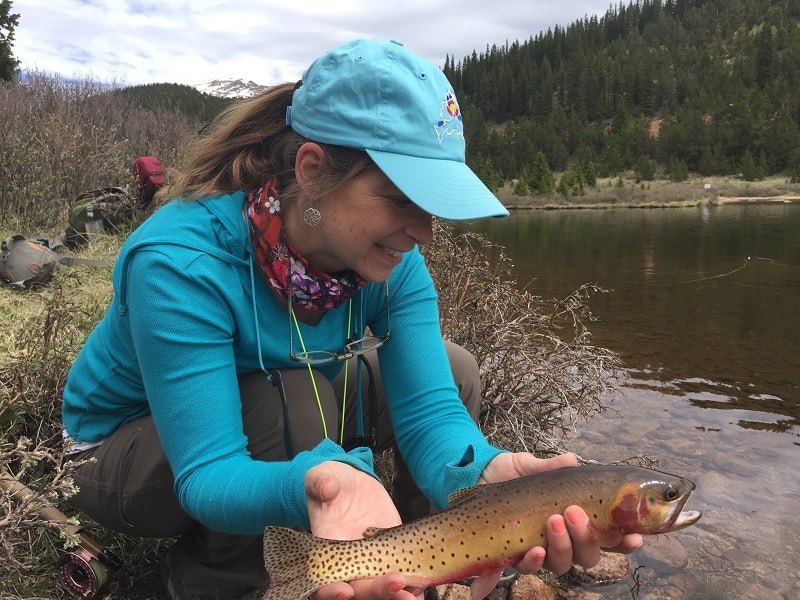
Forming a coalition from different areas of the same industry like outdoor recreation is easier said than done. Everyone from climbers to fishermen to hunters has their own needs. Add in the different business approaches of guides, retailers, and nonprofits and it can create an interesting conundrum of seeing eye-to-eye. But one aspect rings true in every sector of outdoor recreation. Everyone has a passion to protect outdoor resources, especially in the Pike’s Peak region. Becky Leinweber, who co-owns Angler’s Covey in Colorado Springs with her husband David, is executive director of the Pike’s Peak Outdoor Recreation Alliance [PPORA] and tries to bring all these voices together.
“In our grassroots start, we saw a need. My husband and I own an outdoor business, and through that, we were recognizing that we’re really small fish in a big pond and our voice didn’t carry very far. We felt like we should maybe find some others that are in the same space, that rely on the same resources we do,” Leinweber said.
She figured doing that would create a bigger voice and a bigger impact. They began to bring together not just outdoor businesses, “but nonprofits, the stewardship folks, the conservation folks, the trail building folks, and the land managers.” PPORA was envisioned as and continues the push as a non-profit coalition of smaller local outdoor businesses with the same values of conservation and protection while still moving forward the importance of tourism and enjoyment of the area.
Leinweber says this kind of protection and advocacy with a coalition such as this goes back to the area’s reliance on public lands. “We need the conservation partners, the stewardship partners, and the land managers [with us] because they are the decision-makers. They are the ones that really have a big role to play in our outdoor businesses and in what’s allowed for users.” All these facets of the industry, she reiterates, are interconnected.
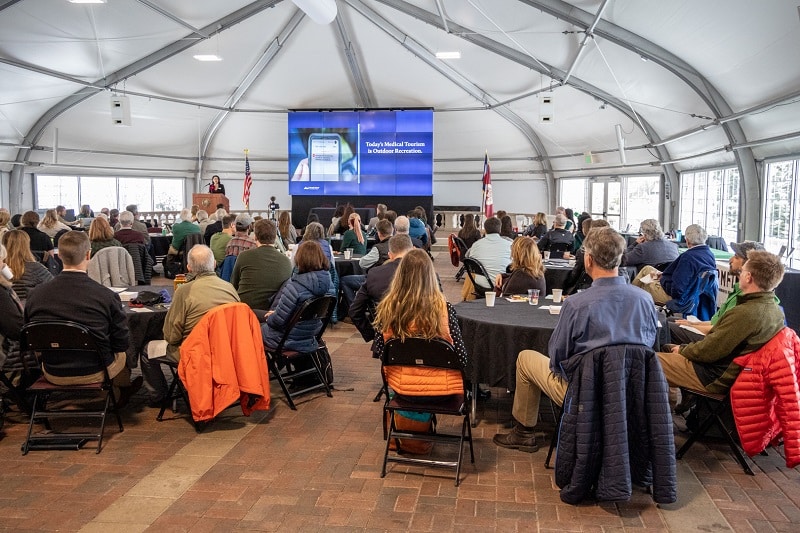
Protection and Advocacy with a Purpose at PPORA
Leinweber explains that there is a lot happening in the outdoor industry in the region. “Even before the pandemic, we were seeing a lot of growth with people recreating in our local area. And we, as an organization, were kind of getting behind that, trying to work on some planning [to help scale that].”
Colorado, as a state, Leinweber explains, launched a new program called the Colorado Outdoor Regional Partnership Initiative. PPORA was selected as one of seven regional partners across the state of Colorado in 2021 to be included. Five of those selected were working on planning for conservation and recreation, and two of those were coalition building (PPORA was the latter). It gave PPORA a little bit more credibility, impetus, funding and focus to move forward on the challenges that they were already seeing.
Those challenges included a much greater volume of users in the region within the natural spaces, the parks, and the trails. “But we’re also seeing more user conflicts. And we were seeing less great experiences. When you’re bumper-to-bumper on a trail or hiking a 14er, it’s not quite the same experience [when there are a bunch of people].”
Another challenge was outdoor ethics and how to treat the environment and protect it which has been changing in recent generations.
Leinweber also sees the outdoor recreation space as an industry that, just in the past five or six years, is really coming into its own. “We’re starting to be recognized as an industry that has substance, that is significant, and I give a lot of that credit to the Outdoor Industry Association [who also puts on the Outdoor Retailer Show] for first trying to do some calculating of numbers and figuring out what our economic impact is.”
The OIA started calculating the numbers, “And when you can show those, your elected officials go, ‘Oh, OK, we need to take note.’ And I think that really helps us with the advocacy that we do for our public lands and our public waterways. These natural spaces [are this industry’s] infrastructure.”
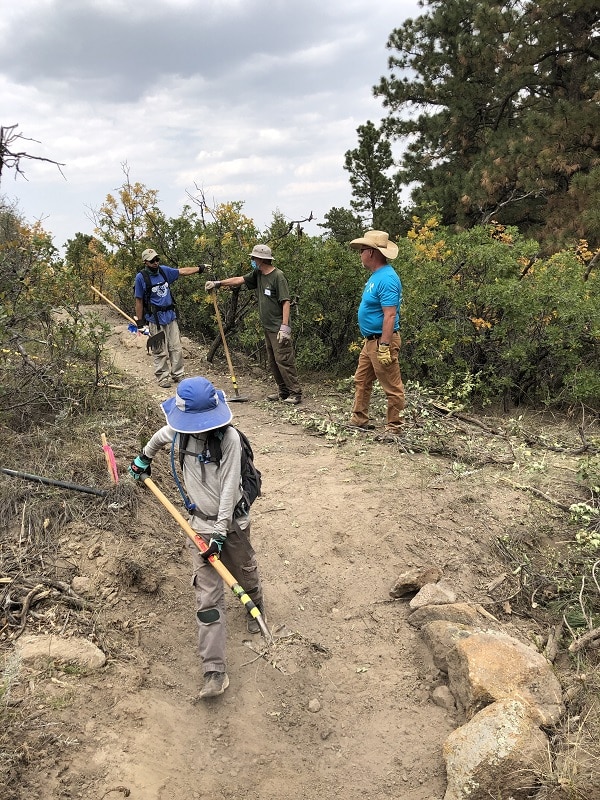
Planning and Working Together with Urgency
Leinweber knows people don’t necessarily think of it that way, but “as an outdoor business, you have to have places to send people. If you’re a guide and outfitter, you have to have places to provide those trips too. If you’re a maker or a manufacturer of outdoor goods, you have to have places that people can go to enjoy. So, the advocacy piece of it really is key.”
She says the outdoor recreation industry, historically, especially in the Pike’s Peak region, has been siloed. “We all worked in our own little lanes. I mean, you look at that with user groups: the climbing community, they hang out together. The anglers and hunters are kind of lumped into the sportsman group. Then there is the motorized community, those that enjoy ATVs, motorcycles, etc. ”
Through her stewardship of PPORA, Leinweber found, “It doesn’t work very well when we’re only looking through our own lens when we all have to share these spaces. And user behavior affects all of us. It just made sense for us to kind of work together in this big melting pot. It’s not always easy. We all still kind of have our own perspectives, but when we can find that common ground, it really helps to move our efforts forward.”
Since they began PPORA in 2016, Leinweber says there has been an organic shaping of the organization. She says there have been moments when she’s had to sit down with individuals and representatives in one-on-one or one-on-two conversations where there is a significantly different stance on something between two parties.
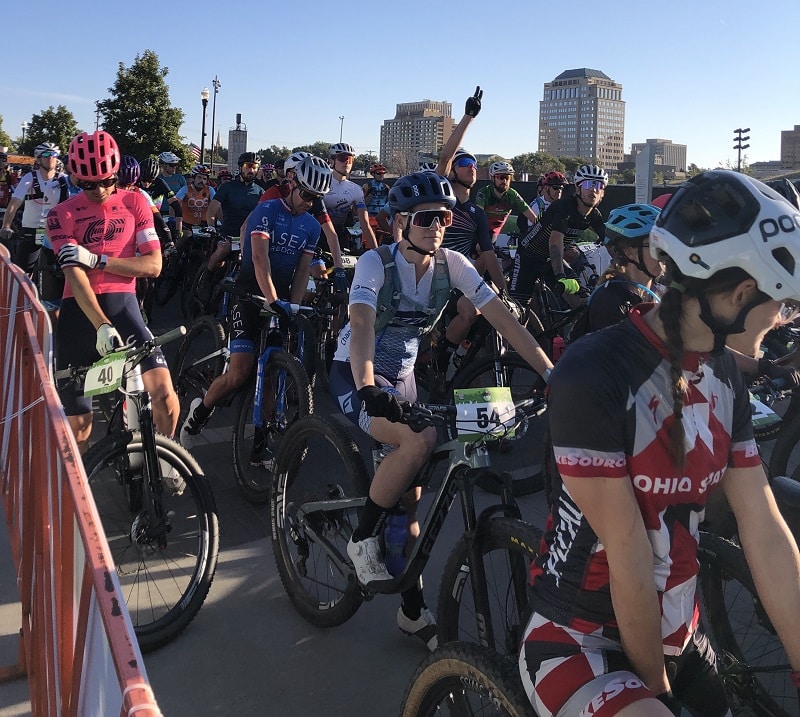
There was one situation with the mountain biking community and the motorized community, and it was all about the use of a trail. She says they sat down and listened to each other. “I think that’s the main thing: instead of just putting forward our own ‘Here’s what we want,’ just try to really listen and find some common ground.” In this instance, it was around the Pikes Peak APEX Mountain bike, a four-stage race, which happens every September.
Bringing Voices and Resources Together
By bringing all those voices together through the PPORA, the different camps were able to talk, hear the issues and work on those points outside of the race. Now APEX is entering its third race this fall, with the motorized community significantly involved. “They run sweeps. They run before. They help make it safe and communicate what’s going on.”
A balance has been found but it is these meetings of the minds that will help to preserve what the area has to give. Leinweber admits that it doesn’t always happen that way. She laughs that sometimes “it’s just sticky and sometimes we just have to agree to disagree, but I really think it starts with our values.”
But in terms of ramping up planning and improving access as the organization grows and users increase, Leinweber says there is just a greater urgency now. The timeline to help manage the increasing growth of consumers is something she continually talks about with land managers. She says that they all agree that there needs to be different management models, perhaps new organizational resources, and also finding better ways to get users to where they need to go, whether through new roads or new trails, etc.
Leinweber says the pandemic “just ramped up the fact that it’s not a matter of when new people will be arriving or when users will increase. It was more like, ‘Oh, it just happened.’ It was like overnight things exploded in growth. Now there is an urgency and we have to keep up with it – and I think when you’ve got a crisis situation or urgency like that, it does highlight what’s really important.”





[…] Nordic Center is also part of the PPORA (Pikes Peak Outdoor Recreation Alliance). “There are very few places along the Front Range, besides the Colorado Springs/Monument area, […]