



Colorado is no stranger to mass shootings. And after every shooting, there are always the questions of: “Why did this happen?” and “How can we prevent this from happening in the future?”
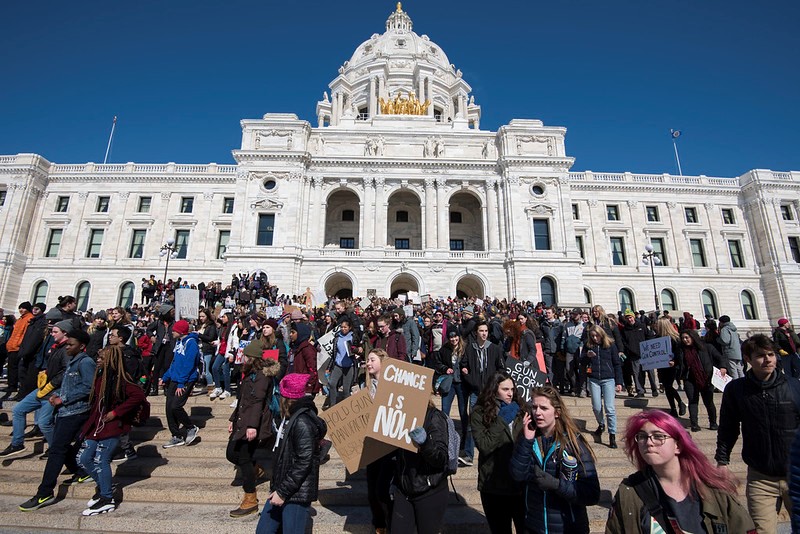
Often, the response is a push for more gun control.
This is the path President Biden is following. In fact, on April 7, Biden announced several actions to address gun violence. But will more gun regulations solve the mass shooting problem, or is there something else we should be looking at?
Biden’s Executive Actions
Of the six executive actions President Biden has signed, three have the potential to impact gun sales. These include: stopping the sale of “ghost guns” (homemade guns that don’t have a serial number), tightening regulations on stabilizing braces, and pushing states to implement “red flag” laws (laws where family members and law enforcement can petition the court to temporarily bar people from owning or purchasing guns).
Stopping mass shootings is an admirable goal, but it is important to ask if these executive actions will be effective. To help answer this question, we can examine the recent shooting in Boulder and current Colorado gun laws.
Would it Have Made a Difference?
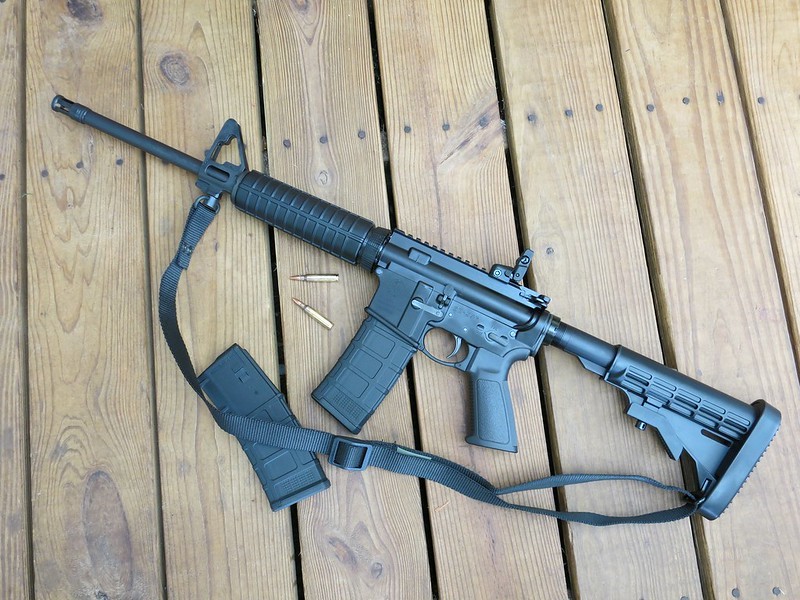
With the passage of HB19-1177 in 2019, Colorado already has a “red flag” law. Additionally, while Colorado does allow for the sale of “ghost guns,” the gun suspected of being used in the Boulder shooting was a Ruger AR-556 pistol and purchased legally from a gun shop (this gun does have a stabilizing brace).
That leaves only one executive action that might have made a difference — “tightening” of stabilizing braces. But Biden did not define what he meant by “tightening,” so that doesn’t necessitate a ban. Further, it is reasonable to assume if the gunman was not able to purchase a gun with a stabilizing brace, he would have purchased a gun without one, and still carried out the shooting.
Thus, even if the above executive actions were implemented before the Boulder shooting, they would not have prevented it.
What’s Driving Mass Shootings?
Over the past few years, the National Institute of Justice (NIJ) has invested in several research projects whose sole objective was to “understand and inform prevention of mass shootings.” As part of the process, a panel of renowned experts first defined what qualifies as a mass shooting; four or more people killed in a public place, and then collected all available data on mass shootings dating back to the 1960s.
When available, the researchers interviewed the perpetrators and the families of mass shooters, as well as interviewed the victims and their families. What the researchers found is that 98% of mass shooters were male, and two-thirds had a violent history or criminal record. Additionally, 80% were in what the researchers called “crisis mode,” meaning they were not able to cope with their current situation.
Researchers also examined the prevalence of mental illness in mass shooters and found that 70% had some sort of mental health background, and 31% were suicidal prior to the shooting. Further, a common motivation for mass shooters was fame-seeking, and a common trait among mass shooters was that at an early age they experienced trauma. The researchers defined this trauma as “very significant adverse childhood experiences,” which include a parent committing suicide, sexual abuse, and/or physical abuse.
No Simple Solution
Stopping gun violence, and in particular mass shootings, isn’t as simple as restricting gun access. Indeed, James Alan Fox, Lipman Family Professor Criminology, Law, and Public Policy, and one of the main researchers for the NIJ study states in regards to the study’s findings, “A lot of procedures, in fact, that had been proposed, whether it be red flag laws, or changing the age related to purchases of weapons, or limits on magazine size, et cetera … these may be good ideas, but in terms of mass killers, these are very determined individuals, very difficult people to stop. … And oftentimes they will get the gun or get the weapon that they need regardless of what roadblocks you put in their path.”
In other words, if someone is committed to carrying out an act of violence, they will find a way to do so regardless of regulations. More gun regulations won’t stop mass-shootings.
So, what’s the answer? In response to the Columbine High School shooting, Archbishop Charles J. Chaput said before the U.S. Senate in 1999, “Treating the symptoms in a culture of violence doesn’t work. We need to look deeper. Until we’re willing to do that, nothing fundamental will change.”
Simply put, more regulations won’t prevent mass shootings. When someone decides to commit a mass shooting, that decision is most often the result of early childhood trauma. Thus, while more regulations might appeal as a possible quick fix, there are no simple solutions for preventing mass shootings.

Before starting her career as a journalist, Katie was an active-duty Airborne Operations Technician for the United States Air Force. During her time in the military, she developed a deep love for her country, as well as a sense of what it means to be an American. Katie has a degree in Analytic Philosophy from the University of Colorado and uses this to help further her understanding of current issues — both political, and economic. Today, Katie writes for The Maverick Observer. Katie’s writing has also appeared on The Motley Fool, First Quarter Finance, The Cheat Sheet, Investing.com, and numerous other sites.







[…] meet a specific political agenda without looking at the cause of the tragedy itself. Indeed, as I previously wrote, the National Institute of Justice (NIJ) has investigated mass shootings, and their causes, for […]
[…] written before, according to the latest research from James Alan Fox, Lipman Family Professor Criminology, Law, […]