


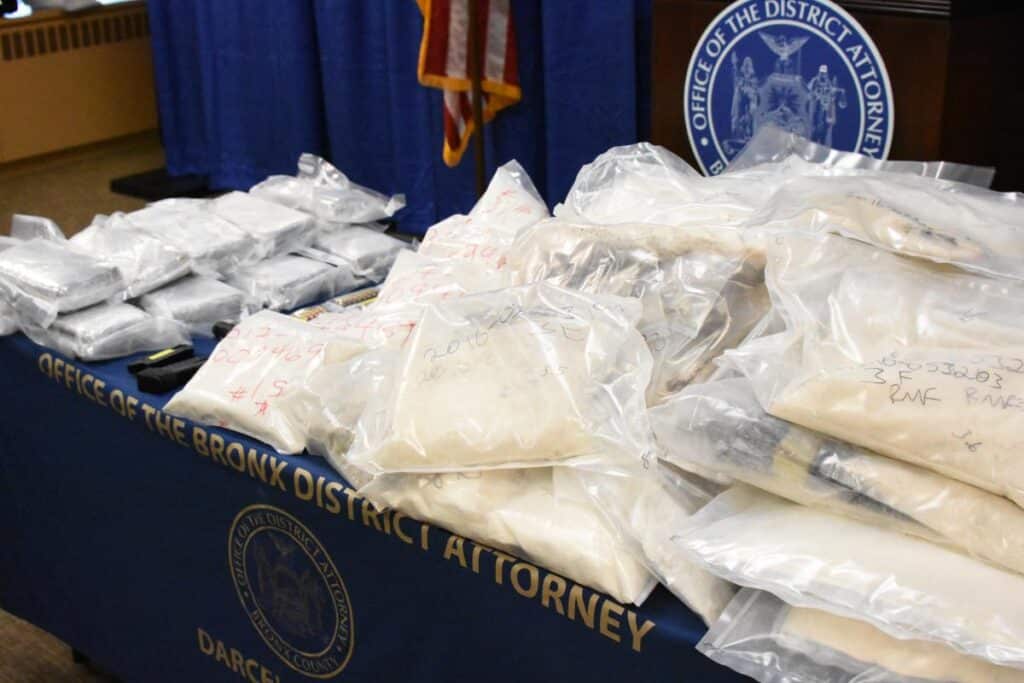
In the battle against Fentanyl, a coalition of leftward interests promote seatbelt-and-airbag-style safety measures for illicit drug users; same group efforts to defang any crackdown on dealers; new laws add criminal intent-based hurdles; Narcan-resistant animal sedative Xylazine complicating the situation.
Fentanyl-related deaths in Colorado have more than quintupled since 2020. A Democratic politician, media, and activist-fueled drive is on to accommodate the use of illegal drugs in hopes of preventing fentanyl and related drug-use deaths.
The same media, activists, and many Democratic politicians in the state (though not all of them) are rallying to blunt law efforts at convicting drug dealers with stiffer justice, claiming studies and data show that stricter penalties for drug dealers don’t work. (A closer look shows flaws in these data, studies, and analyses.)
Various state bills and proposals to crack down on fentanyl-inclusive drug dealers are in the works; some have even passed. But Democratic state politicians weighed last year’s Fentanyl Accountability Act efforts with amendments. Most of these add-ons come in the form of red tape for prosecutors and investigators to convict dealers who sell fentanyl or drugs containing fentanyl.
These new laws can result in punishments for users and addicts as well.
The notion that drug dealers don’t factor in criminal justice penalties to their business is cast into doubt with another new development: adding a cheap non-narcotic as a filler for cutting drugs. This veterinary tranquilizer, xylazine, has shown up in Colorado drugs already. While there are tougher penalties for fentanyl-related transactions—those penalties have many asterisks—there appear to be no enhanced penalties for drug transactions involving xylazine.
Probably the most relevant government action relating to fentanyl deaths is the 2019 Colorado state law “Offense Level For Controlled Substance Possession.” At the time, fentanyl was not the crisis-level drug complication it is today. As such, 4 grams of fentanyl was reckoned to have—in the eyes of the legislature—the same danger as 4 grams of marijuana or LSD. The law said criminal justice in the state now needed to reflect this reckoning. This weakening of criminal penalties for drug possession correlates with the start of rising fentanyl-related deaths.
More Drugs Means More Fentanyl
For self-admitted illicit drug users, Colorado ranked number one in 2014. The figure is around 4.1% per 100,000 citizens. The figure gives context to the state’s fentanyl wildfire. With more people admitting to using illicit drugs apart from (or in addition to) marijuana, there’s a natural increase in fentanyl ingestion: voluntarily or not. A footnote in the data table states, “Adult illicit drug use rate excludes marijuana.”
Fentanyl Fast Facts:
- it is significantly more potent than morphine, and a widely cited fact is that 1 or 2 milligrams can kill a person
- the medicine gets a lot of legitimate use for cancer and cancer-treatment patients
- fentanyl is often used as a cheap additive to thumb the scales for drug dealers to boost profits
- because it’s used as a counterfeit to pad the margins, recreational drug users can easily unintentionally consume fentanyl when ingesting other drugs
- using a pill press, drug dealers can manufacture counterfeit prescription medicines that appear to be legit—albeit illegally obtained—pharmaceuticals that are cut with fentanyl
- over the last three years, fentanyl overdose or fentanyl-related deaths in Colorado have skyrocketed, with the number at approximately 912 for 2021 and almost the same in 2022
- the CDC put Colorado at number 25 for all drug overdose deaths nationwide in 2021
- the large-scale black market of Chinese manufacturers selling fentanyl to Mexican drug cartels is well-known
Help is on the Way, for Users
The Democratic majority in state houses has sought to reduce deaths from the drug. Their goal— lobbied through most media outlets and so-called harm reduction advocates—is to ensure safer drug use. This includes illegal drug use. This further includes the use—whether intentionally or as a byproduct of tainted drugs—of potent fentanyl.
Fentanyl can be detected in drugs by using test strips. Harm reduction advocates are for these. The strips resemble the pH papers from chemistry class, and two pink lines “indicate” no fentanyl is present. The recent Fentanyl Accountability and Prevention Act gave $300,000 in the fiscal year 2022-2023 for the purchase of these and related test kits.
The University of Northern Colorado heard of recent plans to disburse testing strips, and they got on board. Two police departments in the county are now tasked with the bulk distribution of these strips after the college got Weld County Department of Public Health involved. As for the college itself, they are more than accommodating: “If you live on campus we can have those strips delivered to your door. If you are off campus we make them available for pickup,” said administrator John Hancock, who couched it in the context of taking a Xanax or Adderall.
The bill has made these safe-use papers free statewide.
The bill also spent $19.7 million on Narcan. This nasally-administered solution arrests the biochemical processes of opiates in the human body. Its generic name is naloxone, and it is a life-saving last-ditch measure to rescue opiate overdosers.
Narcan and test strips are two big pushes by the leftward coalition of state agencies, media, academics, and activists. The most recent novel approach in Colorado was the proposed opening of safe-use drug sites. Deep-blue places like Rhode Island and New York City have already created locations. They are promoted as safe places to do drugs. These locations are staffed with supervisors and are another effort to prevent deaths rather than trying to halt the use of life-threatening drugs.
Colorado recently delayed a bill that would have allowed safe-use sites to open.
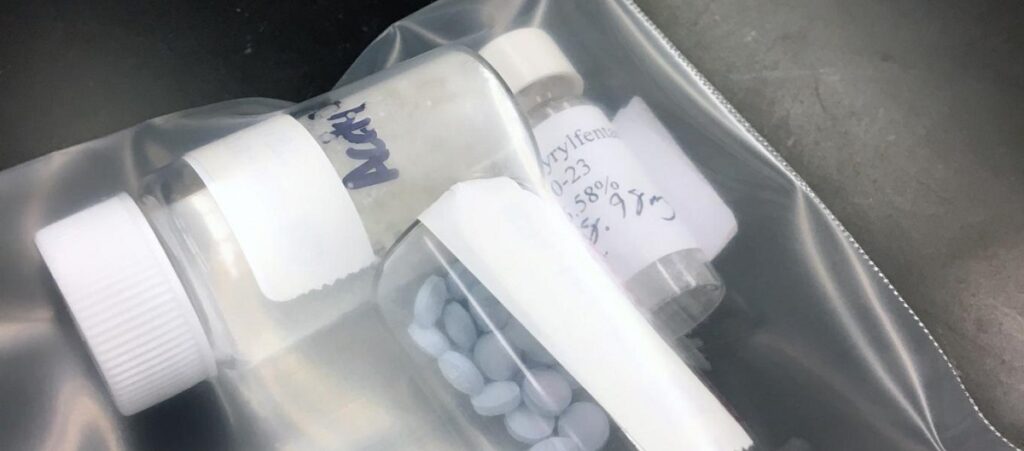
Procedural and Conceptual Limitations for Prosecutors Combatting Overdose Deaths
Multiple media accounts have noted that a maximum sentence of 32 years is on the table in Colorado for convicted fentanyl dealers in 2023. These harsher sentences face a battery of other conditions for the conviction to stick.
What’s often not said in these media reports about tougher fentanyl sentencing are those other conditions. For instance, regarding the 32-year sentence, the offender has to be caught with paraphernalia (like a pill press) or with out-of-state-made fentanyl or possessing 50 grams of fentanyl—1/8th of an ounce or enough to kill well over 10,000 people—to get charged with the Class 1 drug felony. Also, Colorado Class 1 drug felony sentences start at eight years and max out at 32. With parole, a dealer who unintentionally kills thousands of people could be back on the streets in 36 months.
That battery of other conditions also includes chasing down the exact pill, batch, or other fentanyl-related drug entity that killed the person. The charges appear to be lesser if the user doesn’t die. Once identified, law enforcement must prove the lethal item was in the dealer’s possession.
Another mitigating defense for fentanyl distribution was enacted in late April. Gov, Polis signed an act that shields users, distributors, and some dealers who call 911 and stay on the scene if there is a toxic reaction. Such “good samaritans” are exempt from prosecution or, in the case of bottom-tier dealers, allowed to cite their cooperation with first responders in their court defense.
There are numerous requirements for treatment and the provision of treatment in Colorado’s legal and social infrastructure as of 2023. Programs and spending are in place to reduce fentanyl-related deaths.
But, facing the bigger problem of criminals who sell it and end up killing people, the results are small. As of early May, a grand total of nine cases in Colorado have been brought for drug dealers charged under the new guidelines with fentanyl-related deaths. These paltry results are after almost a year since the passage of the Fentanyl Accountability law.
Xylazine Risks Including Overdose
Xylazine showed up in Colorado drugs not long ago. It’s a powerful sedative used on animals. Approved by the FDA in the early 1970s, there is no known safe human dose. Like fentanyl, it’s used to pad a drug dealer’s bounty. Unlike fentanyl, it is not an opiate-based narcotic. As such, it is resistant—but not wholly unresponsive—to Narcan. Some drugs are padded with both fentanyl and xylazine. If a user has ingested both substances, Narcan appears to have some effect.
But the effects of ingesting xylazine are more than slowed breathing, disrupted heart rate, and certain dangerously somnolent effects. Aggressive skin reactions can lead to pustules and other scarring. Some amputations have been required due to this effect.
The only response to xylazine being covered by the media at this early stage has been from Democratic representative Yadira Caraveo. She drafted a bill requesting that the federal agency National Institutes of Standards and Technology develop xylazine testing strips immediately.
A Pound of Cure
The Democratic leadership in both state government houses, their news media allies, and accompanying activists seek to ensure fewer people die from fentanyl. Few people think death from drug use is ideal.
Yet the responses that accommodate extremely dangerous drug use do not meaningfully address the life-threatening realities that accompany every individual instance of drug ingestion. The refrain from harm reduction advocates is to “meet people where they’re at.” But are these measures also keeping users where they’re at?
To read more about fentanyl issues in Colorado, check out “Fentanyl Deaths are Skyrocketing in Colorado: Is Help on the Way?“.