



Colorado Springs’ Police Force Mitigates Effects of Homelessness by Engaging with Local Homeless Camps
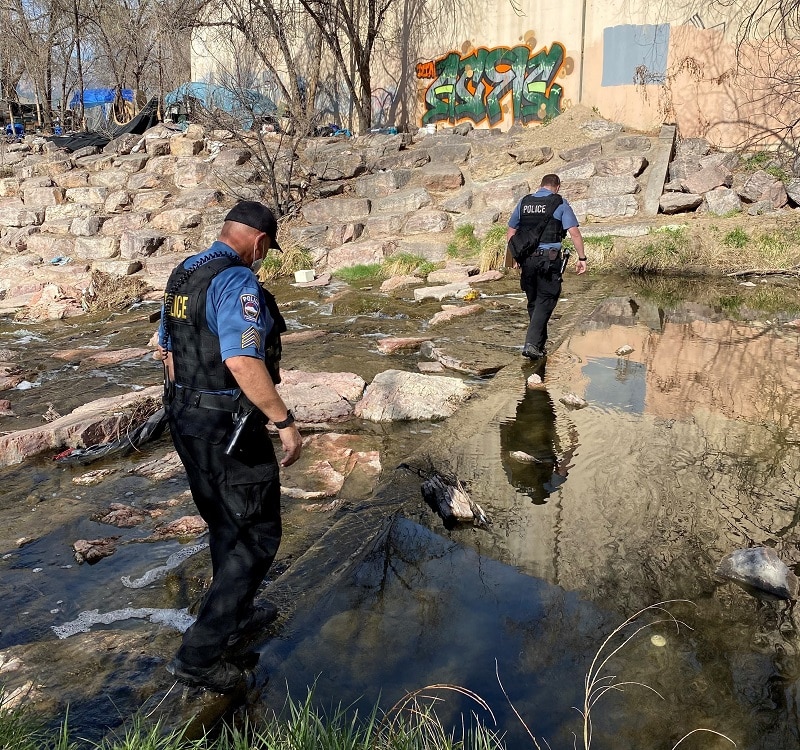
“How’s it going, Chaney?” local homeless man Kevin Seitz says with a nod, addressing a police officer in a copse of trees in south Colorado Springs. Seitz walks through refuse surrounding his current home: an old camping tent pitched near a highway overpass.
Colorado Springs’ HOT team
Sergeant Olav Chaney, one of the six members of Colorado Springs’ Homeless Outreach Team (the HOT team, for short), is going through the city’s largest homeless camp this month, notifying its members that it is time to move.
Colorado Springs has a significant homeless population. While homelessness has been difficult to measure during the COVID pandemic, according to a 2019 Point-in-Time count, during a single night in January around 1,500 people in the city were experiencing homelessness.
Living on the streets
For many, the idea that more than a thousand individuals live on the streets or in camps around the city is tragic. The city’s perceived need has given rise to food banks and pantries, homeless shelters, and other organizations working to support the city’s impoverished.
At the same time, this population presents its own challenge to Colorado Springs. For local police, mitigating drugs, petty theft, and violent crime among the homeless is a tough job, calling for a difficult balance of justice and compassion.
What about the trash?
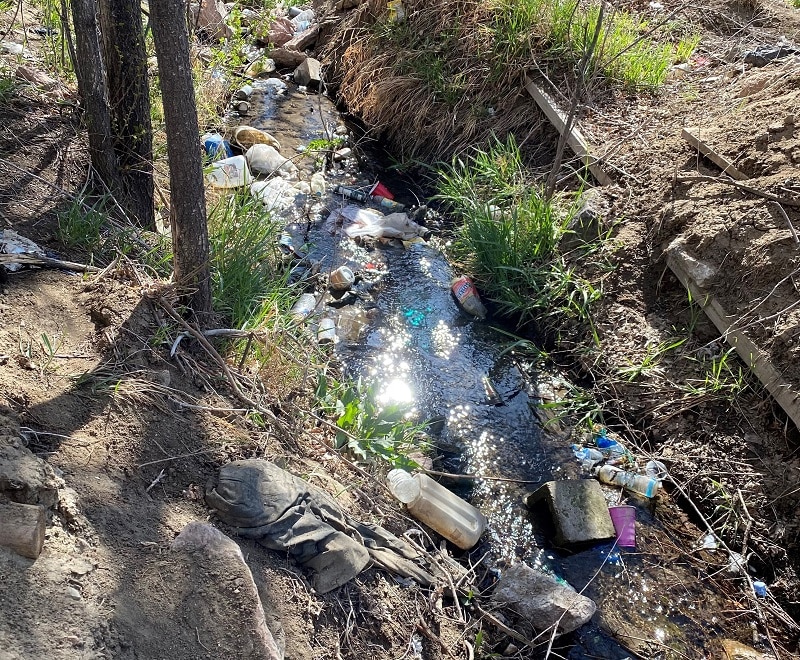
Not to mention the trash. In 2017, Pueblo County joined the EPA in suing Colorado Springs for downstream water quality problems that included increases in E. coli levels, sedimentation, and erosion. Much of the pollution can be attributed to the city’s homeless population camping and dumping human waste and debris into Fountain Creek.
Around that same time, the city established land around the creek as a riparian area; now, the HOT team enforces those rules. “We move in, we cite, we move them out, we clean up after them,” says Chaney.
Says Seitz, “Chaney’s always been a respectful man to me, I ain’t never had a problem.” And for HOT officers, a positive rapport with individuals experiencing homelessness is a boon.
HOT Team responds to complaints
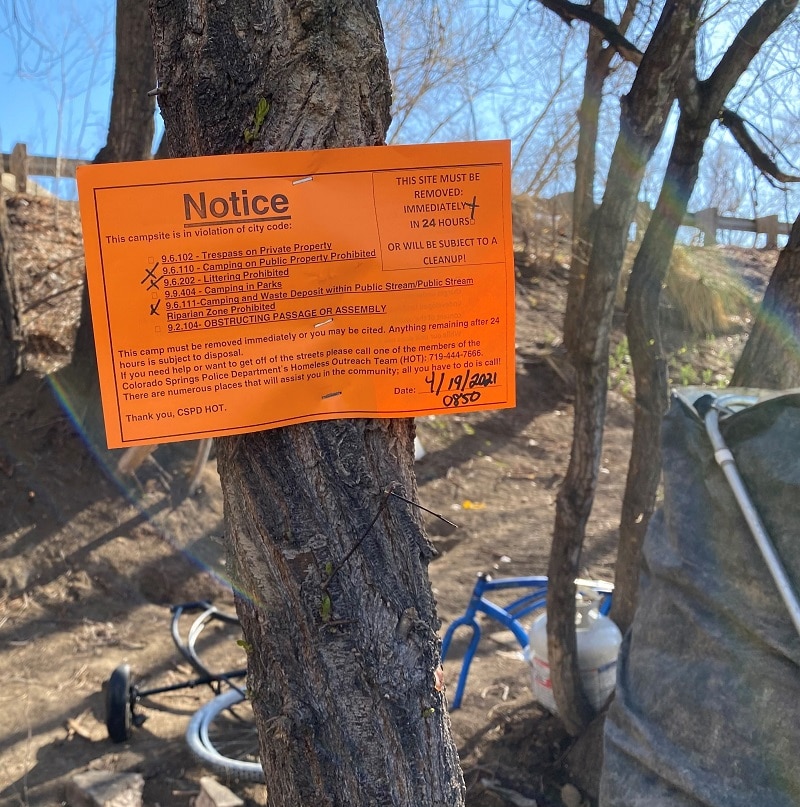
Accompanied by a case manager provided by Homeward Pikes Peak, a local non-profit organization “committed to…enhancing human well-being…with attention to the needs and empowerment of people who are vulnerable and living in poverty,” the HOT team responds to civilian complaints around the city. Officers find homeless camps and post notices giving residents two to 24 hours to take their things and go, while offering case manager services, listings of local resources, and—always—a ride to a local homeless shelter.
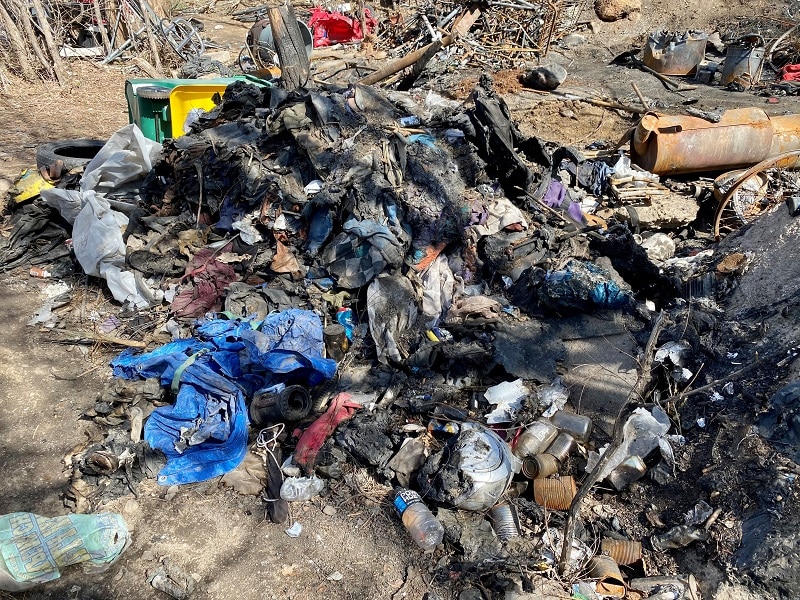
Later, after the HOT team finishes citing or arresting those who stay behind in a homeless camp, Colorado Springs Neighborhood Services’ Quality of Life Team arrives with personnel, a Skid-Steer loader, and trailer(s) to clean up the refuse left behind. In 2019 alone, the Quality of Life Team cleaned up 1 million pounds of trash.
Balancing act between help and enforcement
For the officers on the HOT team, “It’s a balancing act,” says Chaney. On one hand, he’d like to see the homeless population get the help they need. “If all these people said I’m ready to go [to the shelter] tomorrow, we’d bring a van out here for them,” he says.
At the same time, he adds, “We’re also the law enforcement arm.” It’s amazing, he says, how many convicted felons hide in the local homeless community. And with significant rates of addiction to methamphetamines and heroin as well as rampant mental health issues, members of this population frequently pose a risk both to themselves and to people in the greater Colorado Springs area.
The range of possible outcomes, says Chaney, can be saddening. “I get more excited about taking people to a shelter than jail,” he says.
Helping the homeless get off the streets
While no volunteers assist the team, local citizens have donated resources like blankets and socks during the winter. The HOT team can hand out these donations when they do wellness checks, seeing if homeless individuals are in danger from illness or the Colorado winter.
And while the team does their part to help keep Colorado Springs beautiful and safe, Officer Chaney maintains hope for each of the homeless people he meets, offering to accompany individuals to shelter intake, help them obtain necessary documents, or get them in touch with the team’s case manager. “Our goal is to get these folks off the street.”







[…] At any given time in Colorado, there are around 9,619 men, women and children experiencing homelessness, according to the U.S. Department of Housing and Urban Development (HUD). Most of these people have shelter, but approximately 2,188 are unsheltered, meaning they’re sleeping in a place not designed for such — think under a bridge, a park bench, etc. Obviously, this is a problem for our homeless population. […]
I’m halfway educated and I found myself living at a shelter with my child, drug free, and struggling terribly. If anyone could make it, I would have been the one because I was readily employable. The housing applications NEVER CAME THROUGH FOR ANY OF US. It was simply so they could meet their point system for the State of Colorado. There was a time limit of 2 months. They receive thousands for you during that time frame and then they kick you out when the state stops giving them money. These organizations make you even more homeless than what you started out as. They destroyed so many families and their dignity and self-worth. I’m now an Insurance Broker and I’m on my feet. I think they would probably fall over and die if they saw me now. They think you are worthless, hopeless, etc. They don’t care about your story. They care about the MILLIONS that poor Black, White, and Mexican mothers, domestic violence victims, drug addiction, and mental health issues generate for them. I’m starting my own organization, and we are going to actually HELP people. It traumatized me to see human beings in the United States of America being treated that way and then seeing them in the newspaper and on TV PRETENDING like they cared.
Hi LaToyia, Thank you for sharing your experience, and congratulations on your successes.
Thank you Angela. It was God because I wasn’t making it on my own.
[…] 2009, the Homeless Outreach Team (HOT) was formed to coordinate efforts among a large number of advocacy groups and service providers. In […]