


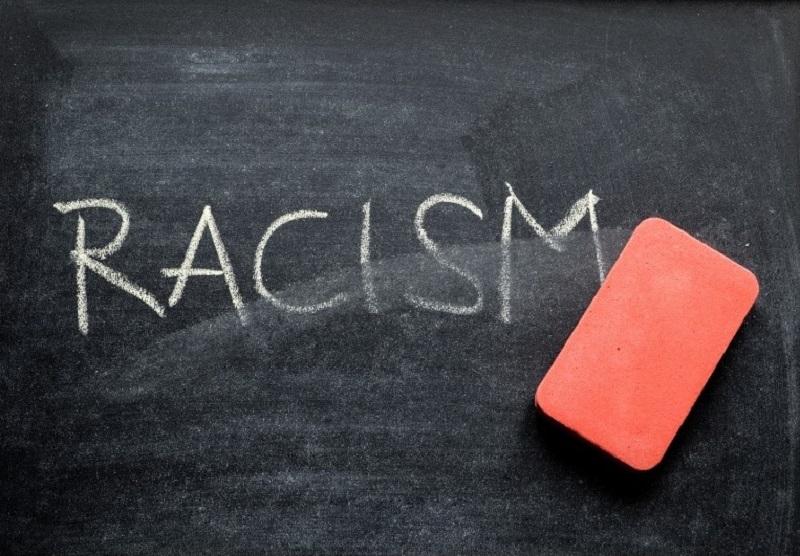
Have you caught wind of society’s latest controversial topic yet? If you have not heard of “Critical Race Theory” or the hype involving it, eat your Wheaties – it is worth investing a few minutes of time to devise an opinion on it.
It is especially important to know about if you are an American who is white, black, brown, light brown, black-brown, beige, etc. (you get the point) and if you send a child to a K-12 public school for six hours each weekday.
She said Critical Race Theory is what?!
So, what is Critical Race Theory and why is it a hot topic across the U.S.? Well, since education systems across the U.S. are reconsidering what K-12 students will learn within their American history lessons, CRT could shape the future of our nation. However, CRT is not a newfound concept.
CRT was coined in the 1970s when American legal scholars thought the civil rights movement had come to a halt. Since then, these scholars have continued to present their ideas of CRT through published writings. Kimberle Crenshaw, a professor of law at both Columbia University and UCLA and also one of the pioneering scholars of CRT, defined the concept in a recent interview with CNN as “an approach to grappling with a history of white supremacy that rejects the belief that what’s in the past is in the past, and that the laws and systems that grow from that past are detached from it.”
Crenshaw explained that CRT informs how racism is an everyday experience for blacks and still exists today. She specifically notes within the interview that American institutions determine someone’s privilege based on if they’re white, versus someone’s oppression because they’re black. Crenshaw, a Black American woman herself, has earned degrees from Harvard University, Cornell University, as well as University of Wisconsin and additionally has established a tenure at UCLA and Columbia University, where she continues to teach specialized areas of law.
What to know if you don’t know
The uproar that was unleashed in early 2020 sparked by several reported incidents appeared to the public as racial injustices, prompted many organizations, businesses, communities, and schools to feel compelled to identify and eliminate any practices that may have not been realized as such. Following these events, CRT headlines have become more frequent and numerous school districts across the country implemented CRT. Children as young as kindergartners are being taught what their skin color says about who they are and how they will experience the world.
Enter The 1619 Project – a project from the New York Times company published in August 2019 that has been integrated into K-12 curriculum. The project posits that the real founding of America was 1619, the year the first slaves were brought to Jamestown.
According to state tracking done by chalkbeat.org, 27 states have restricted the teachings on racism, bias and the contributions of racial or ethnic groups to U.S. history in the K-12 curriculum. They also tracked 11 states, inclusive of Colorado, to expand the teaching of these topics.
What used to be coursework studied only within higher education, CRT lessons are now formulated for students of all ages. At pulitzercenter.org, lesson plans for grade school students are available for teachers to reference how classroom activities should be structured when teaching CRT. For instance, one activity asks for students to map how the community they live in is connected to slavery.
But who calls the shots on a K-12 curriculum? Common knowledge would most likely answer that state and local governments play a primary role in enforcing education policies, which is correct, as it’s in compliance with the Tenth Amendment.
Therefore, since school boards share power with the local municipal government or state departments of education, a K-12 curriculum is ultimately under their discretion. According to findlaw.com, curriculum that doesn’t follow with “legitimate pedagogical concerns,” are recommended to be left out. This includes advocacy of political or similar matters, bias or prejudice and conformity or nonconformity to shared or community values.
It’s getting critical in Colorado Springs
In Colorado Springs, Academy District 20, the largest school district, held a board meeting in May where members discussed incorporating The 1619 Project into the curriculum. KRDO was also present at the meeting to report parents’ objections. One parent asserted, “Critical Race Theory only heightens racism. It is teaching children to hate, it’s teaching children to hate themselves, it’s teaching children to hate others.”
The CRT challenge continues to persist in the Springs, at the District 49 board meeting in June members and parents came to terms on how the matter would be handled. The board’s president, John Graham, proposed the formation of a committee to ban the teaching of CRT in schools. On July 11, the board voted 3-2 to vote and finalize the proposed resolution on August 12.
The 1619 Project vs. 1776 Commission
In the fall of 2020, former President Donald Trump established the 1776 Commission – a group of historians and scholars that would compose a report about the definitive history of the American founding, which would be provided to public schools to teach as a part of the curriculum.
This order by President Trump was in spite of the mayhem that ensued from the Black Lives Matter protests in early 2020, stating how the violence and destruction that occurred was a direct result of left-wing indoctrination that’s been present in education systems for decades.
Although Trump was using the power of the federal government to push one educational paradigm, President Joe Biden used the same power to promote another one: The 1619 Project. Upon an Inauguration Day executive order, Biden dissolved the 1776 Commission and instead devised a new order, “Advancing Racial Equity and Support for Underserved Communities Through the Federal Government.” Therefore, any school boards that choose to incorporate the 1619 Project or any related curriculum resources as a model for U.S. history and civics education will be awarded grants via taxpayer funds as indicated by A Proposed Rule by the Education Department on 04/19/2021.
A final note for locals
During KRDO‘s coverage of D20’s May board meeting, reporters asked a D20 representative what the verdict was on implementing CRT into the curriculum. The rep said there are no current plans to go forward with it. At the June 17 D20 board meeting attendees continued to oppose implementing CRT into the curriculum. District 49 school board is the most recent school board to propose a ban on teaching CRT within a K-12 curriculum.
If you are someone interested in engaging in the CRT K-12 curriculum discussions, district school board meetings are open to the public. A schedule for local meetings as well as more details on the meetings can be found on any district’s website.



Very interesting article and well written. A question among a number of them, looking at the 1619 Project across the country, how many districts are voting to include the theory versus those that are not and what is their geographic location and “normal ” political leaning? And doesn’t that in itself create even more disruption/confusion and potential for bias?
Thank you for your comments. Unfortunately there are no easy answers to the questions you posed. We are researching our county school districts and have run into a number of obstacles trying to get the CRT information. The best advice we have is to contact your school district and get involved. William Jacobson, Cornell Law School professor created Criticalrace.org (https://criticalrace.org/) which features a state-by-state list of colleges and universities promoting CRT. You can also check out chalkbeat.org (https://www.chalkbeat.org/22525983/map-critical-race-theory-legislation-teaching-racism) for what the individual states are doing. We will continue to follow this issue and report as needed.
[…] more information to aid your own research, consider reading ‘CRT + K-12 = B.S.‘ and watching the video […]