



In 1980, the average cost of tuition at a four-year public university was $1,856 per year in the U.S., after adjusting for inflation. But by 2020, that rate rose to an average of $9,403. That is a significant increase.
For the University of Colorado at Boulder (CU Boulder), 2020 in-state tuition for 30 credit hours at the college of Arts and Sciences was $10,728, not including fees. Sounds expensive, right? Well, starting in 2022, that is going up by $312, and if you want to major in certain areas of study, it’s going to get even pricier. Here is why.
Why is tuition increasing?
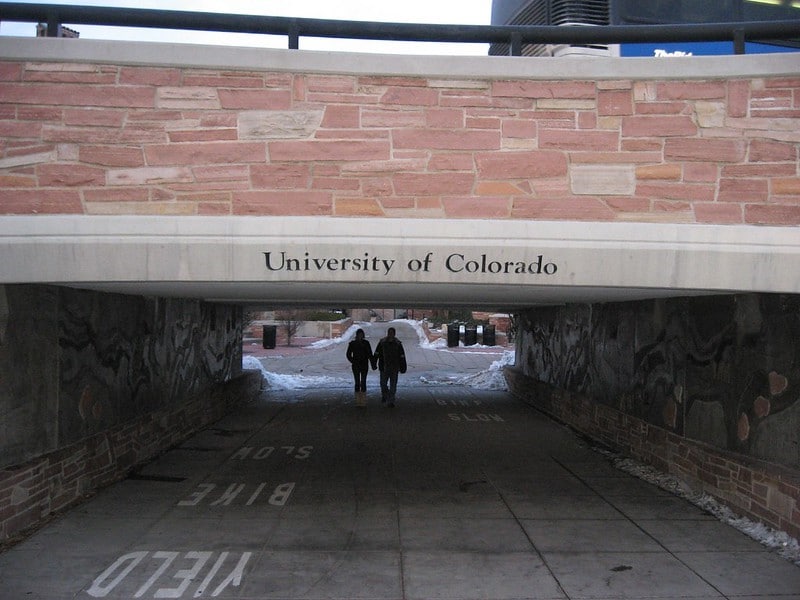
In the fall of 2019, there were 35,528 enrolled students at CU Boulder’s campus. By fall 2020, that number was down to 34,975 — a decrease of 1.9 percent — thanks largely to COVID-19. While that number is expected to rebound for the upcoming 2021-2022 academic year, it had a direct impact on revenue and helped contribute to expenses outpacing CU’s revenue starting in 2022, according to CU Boulder. However, lower enrollment isn’t the only reason CU is facing a budget shortfall.
Low state funding for higher education, lower numbers of high school graduates, and more money going toward financial aid are all contributing factors when it comes to CU’s money woes, reports the Denver Post. Consequently, CU is looking for creative ways to increase funds. This includes raising the tuition for specific majors.
Costly programs
To understand why CU Boulder is raising the price of tuition on specific majors, The Maverick Observer reached out to CU, and here is what CU said, “Starting in fall 2022, CU Boulder’s tuition will align to areas of study, compared to the current practice of aligning tuition solely to the specific school or college, and better reflect differences in the cost of instruction,” said Andrew Sorensen, Spokesperson for CU Boulder.
In other words, some programs cost more to deliver than arts and humanities programs — almost double, in fact — and because of this, CU is increasing the cost of these majors to better match that price difference.
How much will it cost?
Thanks to its four-year tuition guarantee, CU’s tuition increase will not apply to already enrolled students. However, for students starting in 2022, CU Boulder’s tuition will move to a tiered system.

Before implementing CU’s new tiered structure, any major that fell under the college of Arts and Sciences had one cost, while a major that fell under the college of Engineering had a different cost. Now, however, the cost for tuition is not tied to the school, but to the specific study track. This means that even if a specific major falls under the college of Arts and Sciences, for example art history, it could still cost more or less depending on which tier it falls into.
As you can see from the above table, the tuition cost for a degree in arts and humanities will come in at $11,040 in Tier 1, while tuition for environmental design and CMCI will cost $12,816 in Tier 2. The tuition cost for a degree in engineering and arts and sciences natural sciences is even more expensive at $14,592 in Tier 3.
More importantly, this restructuring of CU Boulder’s tuition schedule is expected to bring in $6.9 million in additional revenue. Something CU sorely needs, as its funding gap for the fiscal year 2022-2023 is projected at $33.7 million and will climb to an estimated $117.4 million by the fiscal year 2025-2026, according to Todd Saliman, the interim president for the University of Colorado.
However, some good news for incoming students is that CU Boulder is earmarking $1.2 million of this revenue for additional financial aid, specifically for students impacted by the tuition changes, Sorensen told The Maverick Observer.
CU Boulder, only

The CU system includes CU Denver and UCCS. However, the new tuition tiers only apply to CU Boulder. In fact, when asked if the new tuition tier applied to all campuses, Sorensen told The Maverick Observer, “No, CU Denver and UCCS are not structured in the same way.”
Indeed, both CU Denver and UCCS are cheaper to attend than CU Boulder. According to the University of Colorado’s Cost of Attendance table, the estimated cost for 30 credit hours of lower division residential tuition in 2020 at UCCS was approximately $8,850, not including fees. At CU Denver, the estimated cost for 30 credit hours of residential tuition at the school of Arts and Sciences in 2020 was $9,900, not including fees.
Don’t expect a cost decrease
According to CU Boulder, majoring in natural sciences can help you earn more when entering the workforce. Unfortunately, these programs are also more costly to run as not only do they often include labs, the professors who teach these subjects also demand higher salaries. And now, due to budget shortfalls, CU Boulder is passing these costs on to students.
Further, higher education is getting more expensive by the year, and this trend is unlikely to stop. The good news is if you attend CU Boulder, you’ll have a guaranteed four-year tuition rate. This means the cost of tuition for your first year will stay the same for all four years of study. However, if you take five years to graduate, your tuition cost may increase, especially if CU Boulder continues to face budget shortfalls.







Unspoken is that degrees in Communications, Environmental Design, Engineering, and natural sciences are simply worth much more than degrees in social engineering and exploratory studies.