



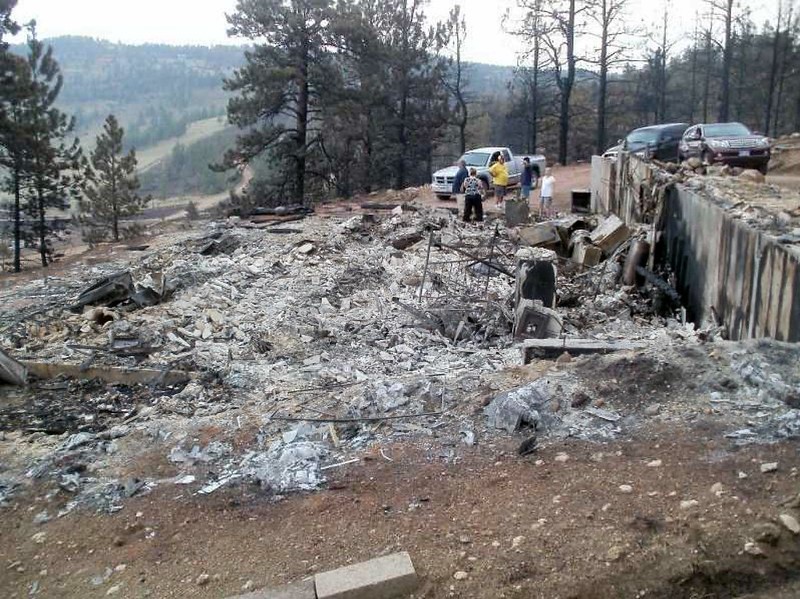
Publisher’s note: Writer Katie Spence’s property burned in the Black Forest Fire, so she does have a bias against anything that leads to more wildfires. Are Boulder and San Miguel counties on the right track suing the oil industry?
When I was growing up in Colorado, we never needed an air conditioner. Recently, however, I installed AC in my home — the first time I’ve ever felt the need in Colorado. Why? Because the cool, clean Colorado air from my childhood is gone, replaced with smoke-filled skies and terrible air quality.
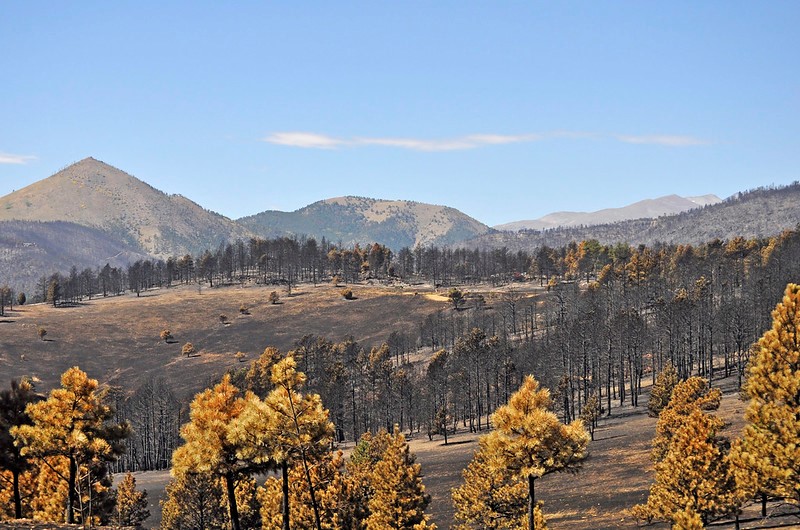
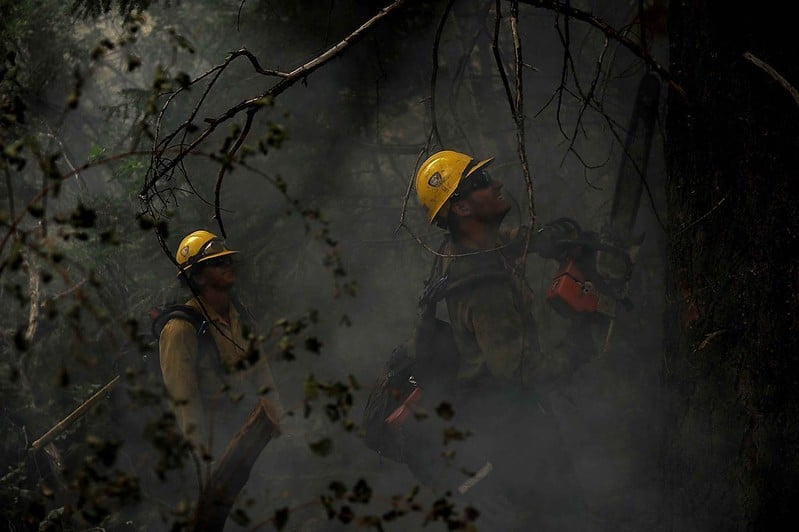
The smoke Colorado is dealing with is partly because of fires out West and high-pressure systems bringing that smoke over the mountains, but it’s also because of fires in Colorado. In 2020, fires burned more than 665,000 acres in Colorado.
What’s causing this increase in fire activity? Well, Boulder and San Miguel counties believe it’s the oil industry’s fault, and they’ve filed a lawsuit against Exxon Mobil and Suncor, seeking compensation. Here’s what you need to know.

The Backdrop
In 1968, Stanford Research Institute completed a report that examined the impacts of gaseous compounds in the atmosphere due to fossil fuel combustion. The study, titled “Sources, Abundance, and Fate of Gaseous Atmospheric Pollutants,” was commissioned by the American Petroleum Institute (API) and found that fossil fuel combustion led to significant increases in CO2. Further, the study found that the impacts on the environment would be “severe.”
Obviously, those results didn’t bode well for the oil industry. So, according to Earth Rights International, the firm representing Boulder and San Miguel County in their lawsuit against Exxon Mobil and Suncor Energy, the oil industry ignored their own report and created several entities with the expressed purpose of casting doubt on climate science.
Indeed, according to internal Exxon documents obtained by InsideClimateNews and the Los Angeles Times, Exxon, API and other fossil fuel companies paid scientists Fred Seitz and Fred Singer to publish papers casting doubt on climate science. Additionally, the oil industry paid climate change denier and Harvard aerospace engineer Wei-Hock Soon $1.2 million. Something Soon failed to disclose in his scientific papers arguing against climate change.
Internal documents show that Exxon purposefully hid the knowledge that fossil fuels were causing significant environmental damage and knowingly spread misinformation about climate science.
The Suit Against the Oil Industry
As a result of the above information, in April 2018, Boulder and San Miguel County filed a lawsuit in Colorado State court against Exxon and Suncor. The suit alleges that Exxon and Suncor knew fossil fuels were damaging Colorado’s environment by bringing increased temperatures, wildfires, droughts and floods but sought to hide these impacts.
This allowed climate change to “grow more severe” and caused plaintiffs “greater expense” — in Boulder County alone, climate damage will cost taxpayers over $100 million over the next three decades.
Consequently, the counties aren’t asking Colorado’s court to regulate or stop fossil fuel production. But instead, are asking that Exxon and Suncor help “remediate the harm caused by their intentional, reckless and negligent conduct, specifically by paying their share of the costs Plaintiffs have incurred and will incur because of defendants’ contribution to alteration of the climate.”
In other words, Boulder and San Miguel want Exxon and Suncor to help pay an unspecified amount for the damage that was knowingly caused by burning fossil fuels.
What to Watch
As of this writing, the lawsuit between Boulder/San Miguel and Exxon/Suncor was remanded to Colorado State court by the Tenth Circuit. That means the suit will be fought in Colorado and heard by Colorado jurors — even though Exxon and Suncor fought to get it tried in federal court.
This remanding is a significant blow to Exxon and Suncor. If they’d been successful in claiming the case needed to be tried in federal court, they could’ve then argued that federal law provided no remedy and had the suit dismissed. Instead, Exxon and Suncor will face Coloradoans familiar with and personally impacted by the changing climate in Colorado.
Moreover, as Daniel Farber, a law professor at the University of California, Berkeley, and director of the Center for Law, Energy, and the Environment, pointed out to The Guardian, “The discovery of pretty clear-cut wrongdoing – that they knew their product was bad and they were lying to the public – really weakens the industry’s ability to resist legislation and settlements.”
At this time, there’s no way to know which way the case will go. But, if Exxon and Suncor are required to pay for damages, that’ll significantly eat into their profit share. Further, the lawsuit in Colorado isn’t the only one the oil industry is facing. Across the country, counties and cities are filing lawsuits against the oil and gas industry, alleging wrongdoing and cover-up. If the oil and gas industry is found guilty in one suit, it could lead to a wave of guilty verdicts.
As such, this lawsuit is something The Maverick Observer is keeping tabs on and will update as more information becomes available.







What a load of complete ignorant radical lib horse-scheisse! The people bringing the action and their supporters should be banned from transportation by vehicles, gas or electric, since they all ultimately use fossil fuels. And no bicycles – the tires are also a fossil fuel product.
Thank you for reading our articles.
[…] farmers and ranchers. All Coloradoans are experienced summers filled with smoke-filled skies due to increasingly destructive fires. According to a report commissioned by the American Petroleum Institute (API) titled, […]