


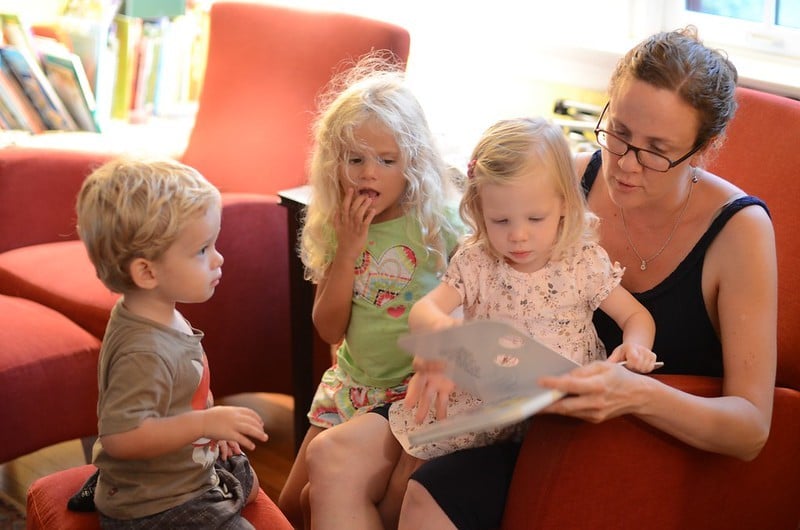
Is homeschooling an option for your children?
Education is something I highly value. As such, when my oldest was a baby, I put her on a popular charter school waitlist, and when she was old enough, I enrolled her in a private preschool called Preschool Partners.
Our experience at Preschool Partners was top-notch, my daughter thrived, and she made some fantastic friends. Thus, when kindergarten rolled around, we were expecting great things.
To make an incredibly long story short, traditional schooling turned out to be a disaster — less than stellar teachers, bullying, stress; you get the picture. Thus, after many talks with my husband and a dear friend (who asked to remain anonymous, but we’ll call AH), I decided to withdraw my daughter from traditional kindergarten and give homeschooling a shot. If it didn’t work out, I could always go back to a traditional school — meaning a public, private, or charter school.
Four years later, I’m still homeschooling. And while there’ve been struggles, overall, I think homeschooling is a beautiful alternative to traditional school. Here’s why homeschooling is worth it.
A Better Environment
If you ask a homeschool parent why they homeschool, you’ll probably get a variety of answers. But amidst all the reasons, one central theme is constant, and that is concern about traditional schools. In fact, according to the National Center for Education Statistics (NCES), 80 percent of parents homeschool due to concern about the environment of other schools.
For example, when asked why she started homeschooling, Colorado Springs Mom, Sarah Jackson replied, “Although we loved the diversity of the neighborhood school in our previous state (Oklahoma), it was overcrowded and relied too heavily on technology in the classroom for our preference. Private school options were not financially sustainable for us at the time. So when our oldest was in second grade, we decided to try homeschooling as a way of spending more time together as a family (our jobs require a lot of nights and weekends).”
Similarly, AH stated, “We started homeschooling after a traditional school kindergarten did not work out for my son. We had a terrible experience with a teacher, and I hated to see his love of learning disappear. At first, homeschooling was a decision just to get him by until first grade. We ended up loving it and have not looked back.”
For my daughter, traditional kindergarten was a nightmare. The stress she experienced caused her to lash out. When I removed her from traditional kindergarten, her behavior dramatically improved, and she reverted to her happy state.
A Better Education
Concern over what my daughter was facing at school was the deciding factor when choosing to homeschool. But as Jackson and AH both alluded to, a significant benefit of homeschooling is more time with your kids. And this brings with it a bonus.
When asked about the best part of homeschooling, AH said, “I love being able to teach them at the pace that is best for each individual child.” Jackson similarly said, “[homeschooling] has challenged me to become a student of my children – how do they like to learn? What things are difficult for them? What do they need to thrive? What do they enjoy?”
This personalized attention is true for many homeschoolers and has a direct impact on their education. Indeed, the National Home Education Research Institute (NHERI) found, “78 percent of peer-reviewed studies on academic achievement show homeschool students perform statistically significantly better than those in institutional schools.”
Further, Widener Law Review examined recent social science research and found, “Research has shown that homeschooled children reach levels of academic achievement similar to or higher than their publicly schooled peers. These results cut across racial and socio-economic lines – an accomplishment unique to homeschooling.” As a result, many universities “made special efforts to attract and enroll homeschooled students, who as a group have gained a reputation for being particularly motivated and for possessing ‘intellectual vitality.'”
Widener further states, “Data shows that a greater proportion of homeschooled students go on to college than their traditionally schooled counterparts. … Specifically, 50.2 percent of homeschooled adults ages 18 through 24 had obtained some college education compared to 34 percent of the general population in this age range.”
Learning how to engage my children and instill a love of learning for the sake of learning and not a test, is one of the true joys of homeschooling. More pointedly, this individualized attention will help further them academically in the future.
Dispelling the Socially Awkward Misconception
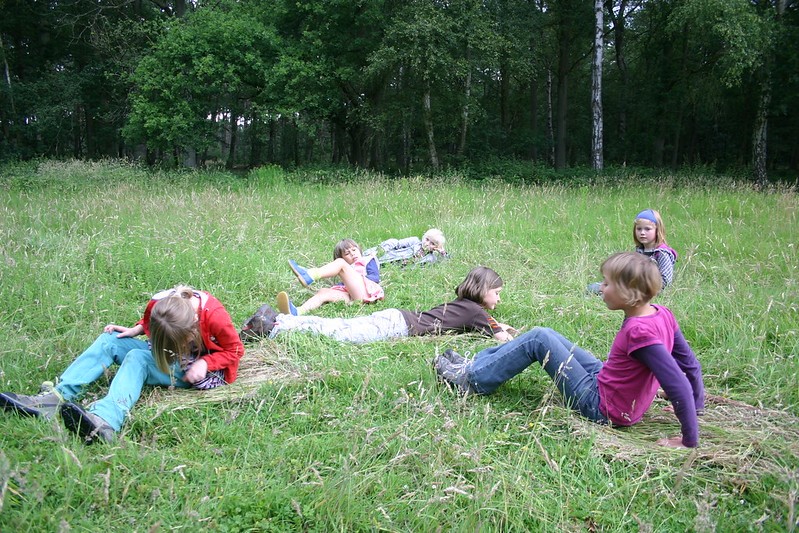
Inevitably, when you tell someone, you homeschool, one of the questions you’re asked is, “Aren’t you worried your kid is going to be weird?”
Indeed, the idea that homeschooled children are socially awkward is pervasive in society. After all, if you’re not in school with your peers, how will you learn to socialize? Or at least that’s the reasoning behind the statement. But does this reasoning pan out?
When asked about socialization, AH replied, “The misconception that homeschoolers are socially awkward is so bothersome to me. My children have plenty of time to socialize with play dates, field trips and sports. When they have these activities, they truly get to socialize. A lot of time spent in a traditional school is at a desk with short socializing times in between. We can take off at noon on Friday and have a play date for 4 hours if we choose. Every child is different. Homeschooling does not make a child more shy or awkward. Children are just children with their unique personalities.”
Jackson similarly said, “It is true that homeschool parents need to be intentional about giving their kids opportunities for enough social engagement, so they can practice necessary skills for socializing and working with people outside their family and close friend groups. But I’m of the opinion that if social adeptness is a value and skill for the parent(s), that won’t be hindered by homeschooling.”
NHERI reports, “87 percent of peer-reviewed studies on social, emotional, and psychological development show homeschool students perform statistically significantly better than those in conventional school.”
Further, Vanderbilt’s Peabody Journal of Education found, that “evidence shows that homeschooled students score as well as or better than traditionally schooled children on widely used measures of social development.” Moreover, “Adults who were homeschooled as children are civically engaged and functioning competently in every way measured so far. An alarmist view of homeschooling, therefore, is not supported by empirical research.”
The Joy of Homeschooling
When I had kids, homeschooling wasn’t an option for me — or so I said. Don’t get me wrong, my mom homeschooled me until high school, and I firmly believe it helped instill a deep and abiding love of learning, as well as a strong sense of self.
But to homeschool, myself? No. Not interested. I had a career as a journalist, homeschooling seemed like a lot of work, and truth be told, I was terrified I’d screw up my kids. But then my oldest went to a charter school for kindergarten, and everything changed. I saw her misery, and I didn’t want that for her.
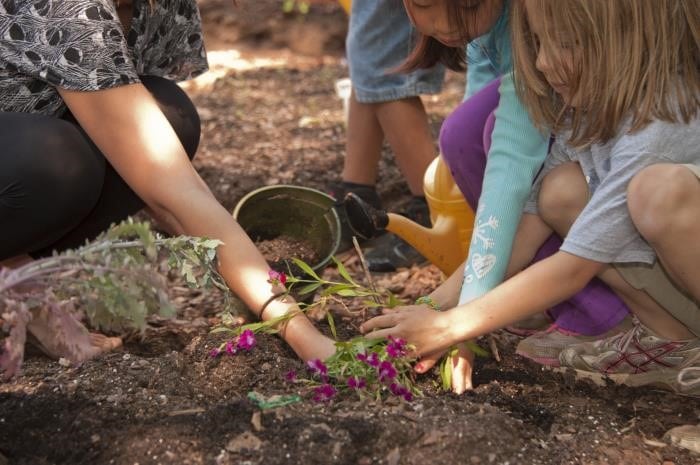
Today, I can’t imagine my life without the joy of homeschooling my children. Is it hard? Yes. Undoubtedly so. And sometimes, I want to quit. But then I think about all the benefits that come from homeschooling, and I continue. If you’re thinking about homeschooling, I encourage you to give it a shot. You might surprise yourself with how much you and your kids like it.
Publisher’s Note: In our continuing research on homeschooling, we came across this article on Porch, “Education for All: Think About Homeschooling“.






[…] you are interested in this topic, check out this perspective on homeschooling at The Maverick […]
[…] many parents — myself included — have chosen alternative methods of education. I homeschool my kids, and I know quite […]