



How do you tie the knot without the guests? Part 1 of a 2-part series researching the impact of COVID-19 restrictions on the Colorado wedding industry.
At a typical wedding, far-flung friends and remote relatives congregate and celebrate. But this year, COVID-19 restrictions and risks forced postponements and cancellations of an untold number of weddings, putting brides—and a significant Colorado industry—in a tight spot.
How do you cancel a Colorado wedding?
“I didn’t know how to cancel or postpone a wedding…I didn’t know that was possible,” says Shelby Brown. Engaged last December, Brown and her then-fiancé Nick had planned to marry May 3, 2020.
But when the nation began to shut down because of the novel coronavirus, Brown found herself in the same nightmare as thousands of other brides as she rushed to make a postponement plan.
Lauren Ripko, owner of Studio Q Events, estimates that some 40,000 couples wed in the state each year. “That’s certainly not [all] Colorado couples,” she says. Every year the state hosts many destination weddings, from massive, high-end parties in Aspen and Vail to intimate celebrations in Airbnbs.

Waves of cancellations
But in March, the massive industry went to its knees as waves of cancellations left vendors spinning. According to Michelle Talarico, co-owner of local catering company The Picnic Basket Catering Collective, the company initially lost some $900,000 to $1 million in future bookings in one terrifying 48-hour period.
Event planners and vendors faced the same questions. Should money be refunded from the deposit? Should the wedding be postponed? Should the wedding go ahead, but with fewer guests?
And the biggest question: How long is this all going to last?
Phil Gallagher, a wedding officiant based in Breckenridge, describes last spring: “…I stopped performing weddings, but my administrative [work] shot through the roof.”

Gallagher, who officiates some 150 ceremonies a year, found his time consumed with taking calls and answering emails from panicked brides and concerned wedding planners. “I can’t even imagine being a planner or a coordinator this year,” he adds.
Between cancellations and postponements, businesses in the special events industry saw crippling revenue decreases. Brynn Swanson, owner/designer at First Look Events and founding member of the Colorado Event Alliance, says that on average, special events businesses (such as wedding vendors) are currently experiencing a 75% slump in revenue.
A financial limbo
Shelby and Nick—like many others—did not imagine COVID-19 shutdowns would continue beyond the summer. They postponed their May wedding to October.
“None of us ever thought it would last this long,” adds Talarico. Vendors’ calendars filled with a rush of small, intimate fall ceremonies. Shayla Marin, co-photographer at Leather and Lace Wedding Photography, says that in September and October she photographed 15 weddings in 42 days.
As weddings cancelled, postponed, or trimmed down to a smaller group size, vendors went into a financial limbo. Most vendors take an advance deposit of some percentage of their total fee, with the full price paid in the days leading up to the wedding. Hundreds of brides hitting the brakes left vendors and planners negotiating refunds for weeks.
The result was a nightmare. “I can’t imagine having to say, we have to cancel it, you already have all of my money,” says Ripko.
The dilemma of destination weddings
Gallagher tells a story of a couple whose destination wedding in Hawaii was cancelled without refunds, leaving the couple with neither wedding budget nor wedding.
When Gallagher officiates, most of his work is completed before the day of—meetings with the bride and groom, tailored vows and event preparation are factored into his price, so when brides contacted him asking for a full refund, it put him in an awkward position. “You know, 50% of my work is finished,” he said.
Ripko stopped taking deposits altogether. When contacted to help with a summer wedding, she advised the couple to wait, saying, “I’m just not willing to put the work in right now [and] take money from you right now.”
Marin took a different approach: Keeping deposit money but allowing her brides to postpone. Now, next year’s calendar is filling up with weddings that will have paid a deposit one year in advance. Even though she will have more weddings next year, she says, “It’s hard to say necessarily if we’ll make more money or less money.”
The waiting game
And un-postponed weddings were a game of waiting to see if Colorado’s COVID-19 restrictions would change the week or—God forbid—the day before.
As it happened, Shelby Brown’s October wedding was preceded by a national surge in COVID cases that kept most of her guests away. Further, a snow squall hit the day of the ceremony, leaving Brown and her bridal party standing in -5-degree wind chill during the ceremony.
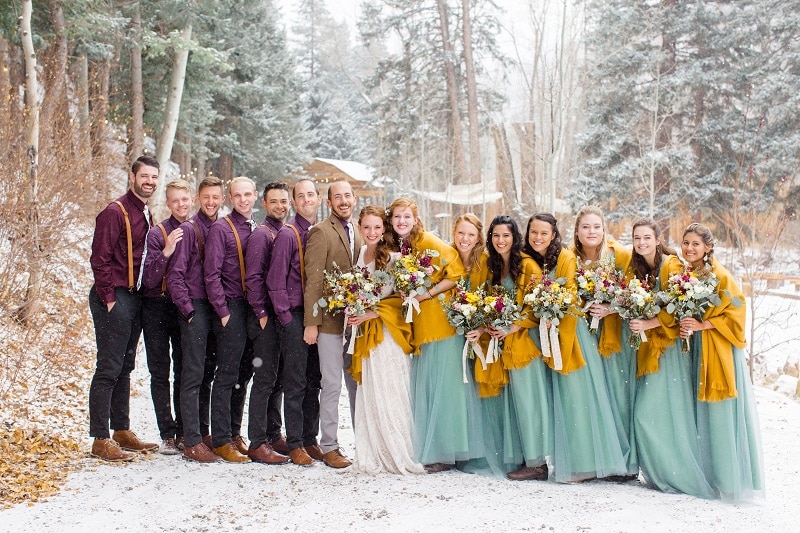
Brown reminds herself that she is thankful she and her husband did not lose as much money as those who cancelled their entire wedding. But, she adds, “It was extremely complicated from start to finish.”