




Understanding the differences in notes and textures within whiskies is a learned science. Greg Huesgen, owner of Downtown Fine Spirits & Wine in Colorado Springs, has honed his craft of selection and taste over many years while also understanding the dynamics and economics of the spirits industry. In this way, he is also able to account for the importance of artisan spirit creation, distribution hurdles and generational shifts in palette.
Downtown Fine Spirits & Wine was established in 2013. For 30 years before that, Huesgen was a banker in Asia and Europe before retiring from that industry and settling in Colorado Springs. He bought property commercially downtown. After one of his tenants passed away, he pivoted in his business approach. He thought downtown showed promise of growing (it did) so he opened a liquor store. However, he wanted to create one with infinite diversity in mind. His approach, like his banker background, was driven by trends and economics but with a sense of flair.
Changing Business Landscape of Downtown
“What happened is if you look at the business landscape in Colorado, it’s becoming more and more [of a] chain state.” Beer, Huesgen explains, moved about five years ago “full strength” into the supermarket arena. Up until that point in Colorado, most liquor stores made their living from beer sales. When Huesgen saw that market moving about seven or eight years ago, he shifted his business model to focus more specifically on wine and spirits. “I benefited from that.”
Huesgen explains that the spirits market grew tremendously in that time. “If you look at whiskeys, tequilas, etc, those sales grew double digits and overall, the sale and consumption moved drastically over the last 10, 15 years to 55% [of the market for spirits]. Beer is down to about 45%. And the wine market stayed around 20%.” This shift allowed Huesgen to stay ahead of the pack.
This also reflects in the range of spirits in price and quality that he carries. “My spirits go into the low 1,000s on the shelf for a bottle. So, I sell anything from about 10 bucks to 1,000 bucks.” He says if one looks at the overall market development, his re-adjustment was correct.
In this way, Huesgen has the advantage since his clients come from as far as Denver and beyond because of the breadth of selection he carries but also the expertise in being able to find the right taste for the right person, even if it is a special order. “I have an advantage. I see long-term trends that a very few specialized stores in a more urban setting can actually survive.”
He explains that if one looks at downtown Colorado Springs, in the next few years, it will grow into about 6,000 apartment units. “So, Colorado Springs downtown goes from a residential desert to a residential density. That will help a business like mine.” He also suggests that urban developers in this type of area don’t get that much into big supermarkets and chains because it is less local and authentic to the people living there. As a result, residents really like to go out to support more local restaurants and business that are perhaps within walking distances. “And that will continue to change over the next 10, 15 years.”
Competitive with an Array of Choice
With Huesgen’s type of business, the key to be competitive is that “you have to have a wider choice for the consumer. And what helps as well is to be very good in service.” He is proud of their 4.8 Google rating. “We actually focus on the consumer and help them. You won’t find that in a big chain store necessarily, which helps us to stay in front of the change going forward.”
However, knowing the distillery business, its ins-and-outs, the different players overseas as well as local and national distillery artisans, plays a big part in understanding the selection game correctly. “Right now [as far as local], we have 291, Axe and The Oak, 1350. There are now a few distilleries in the Springs.” In the last 10 years, Huesgen says, Colorado has grown to over 100 distilleries as a state. In parallel with –, and almost in an acceleration past – the craft beer market, there are many new distilleries opening across the country ranging from easy vodka to whiskies to tequila kinds of spirits.
Huesgen is quick to point out though both personally and his store, “I’m not only a whisky guy. I like a good brandy as well, like a good Armagnac…or a good Cognac. An aged rum is good as well. So I don’t discriminate. I like anything with a good flavor basically.”
Unique Picks with a Sense of Flavor
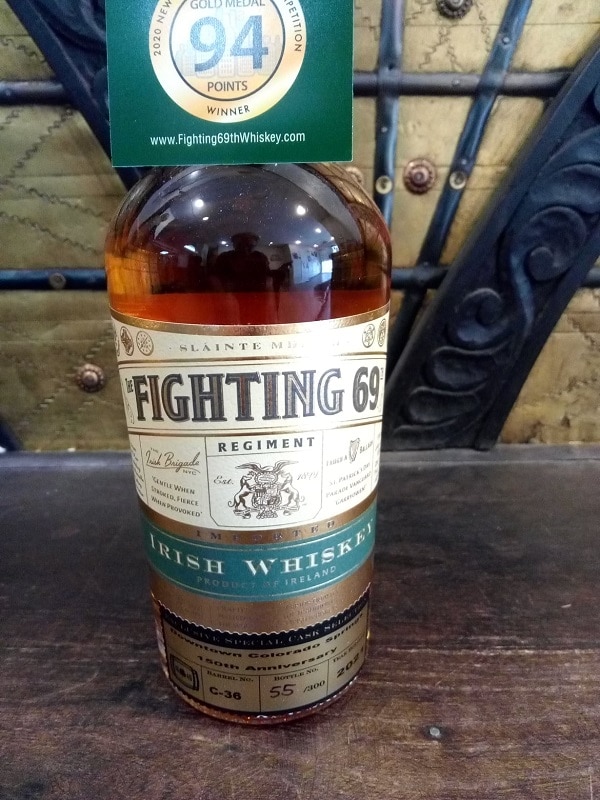
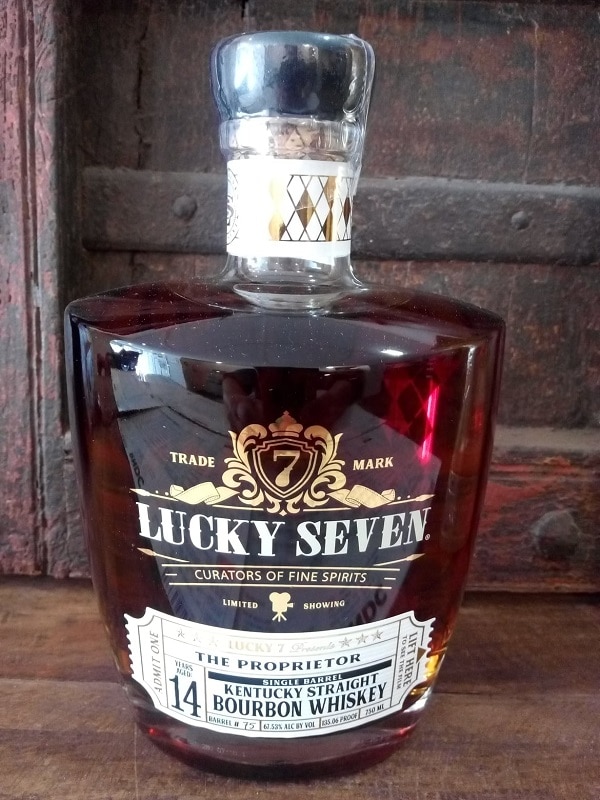
When it comes down to brass tacks and recommending to customers, Huesgen and his team don’t mess around. “We have, at the moment, close to 20 unique store picks. So, when we pick a Bell whiskey out of Kentucky, or a tequila or an Irish whiskey, we first sample a wide variety of spirits.” From there, they will pick a barrel from a batch and put their name on it. “In my opinion, what we tend to savor in those picks is stuff that’s just complex and has a lot of flavors.”
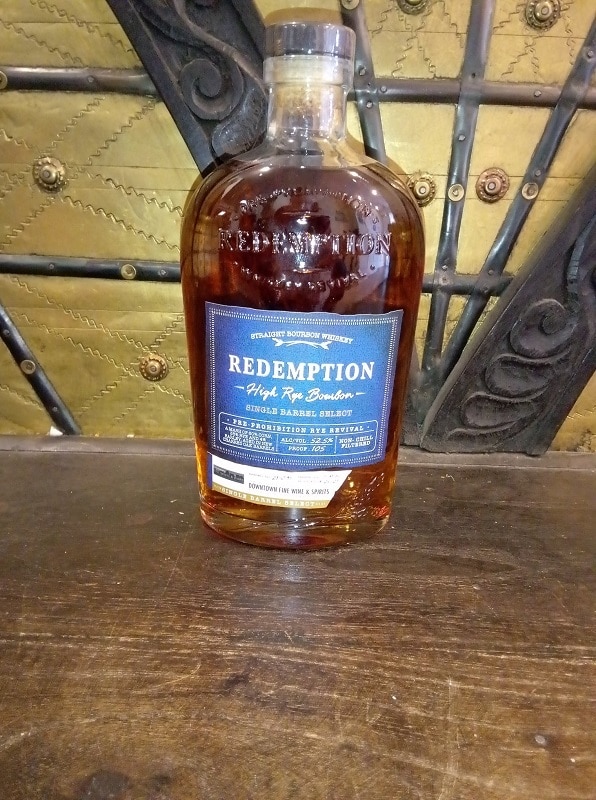
One complex spirit he singles out from recent memory (which was a store pick as well) is a high rye bourbon from Redemption (sourced by MGP from Indiana). “That had really good flavors and is about 40 bucks on the shelf.” They also highlighted a bourbon from Elijah Craig at Heaven Hill Distillery. “Beautiful whiskey. Clocks in at about 132 proof. Lots of flavor. Lots of complexity, which I love.”
But what customers like is always individual but it is those little differences that fuel the industry. The time of year changes the approach as well. “It depends on your taste profile. For example, some people love a very smoky peated Scottish whiskey, and some people hate it. So, I would ask always, ‘What do you like?’ and then recommend something.”
The Geography of Taste
Ultimately, with any spirit, it depends on where they are from, especially whiskey. It even makes a difference where they age in the “rickhouses” [the warehouses used to store evolving barrels of whiskey]. Huesgen explains, “I like whiskeys when they are a bit more at the top of the rickhouses because of the temperature fluctuations.” With those fluctuations, a whiskey will age faster, but also impart a very complex flavor profile. “Whereas if you age something at the bottom of the warehouse where the temperature is much more even, aging is much slower, and sometimes not as flavorful as in the upper parts.”
Huegen’s point is that different climates make different whiskeys and that is part of the diversity of selection even within a single distillery. “For example, if you look between Colorado and Texas, there is a big temperature fluctuation between day and night hence aging is different in a whiskey aged here in Colorado from a whiskey aged in Scotland.”
In Scotland, Huesgen explains, the temperatures get extremely cold, so it’s a very slow aging. “You have to look at the climate. You have to look at lots of variances. Sometimes when novices come into this market, they always think age is a number. Age is not necessarily a number. If you do a single malt in Scotland versus a single malt in France, [it is] totally different temperatures. A single malt in France made in the same Scotch style would basically age much faster than the one in Scotland. A seven-year in France may be the same as a 15-year in Scotland. Or if you go another extreme, you go to India, with like an Ambruge, after three or four years, those whiskeys are done.”
For Huesgen it is about those details, finding the balance and passing that knowledge to the customer in the heart of the Springs.







Thank you so much on your research in publishing this story I am a customer/neighbor. I am from New Jersey and with this piece ,I have more respect and admiration for Gregor. Warmest congratulations on your achievements!
Congratulations and best wishes for your next adventure! Blessings, Sabrina
Downtown wines and spirits you can Always find something special/unique at reasonable prices.
very good very nice <3