


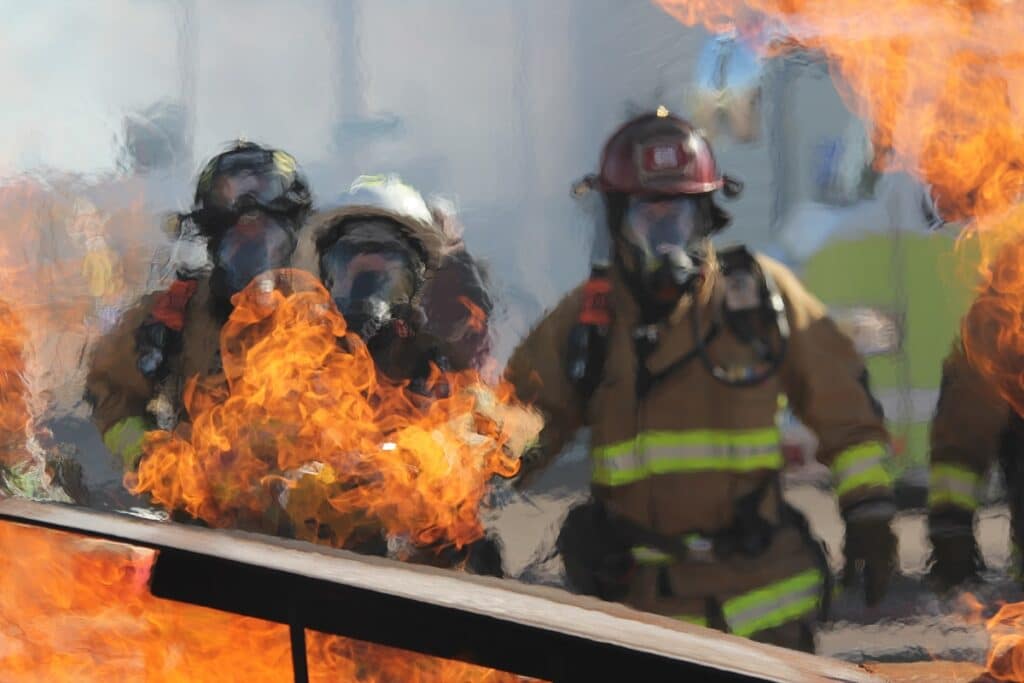
With One Firehawk Ready-to-Go and Another Undergoing the Build-Up, Colorado Fire Fighters Have Some New Tools to Keep Us Safe and to Dump Scarlet, Fertilizer-Mixed Fire Retardant During Fire Fighting Operations
A Colorado fire map shows about 35 wildfires in the state as of late June, according to the non-profit Fire, Weather and Avalanche Tracker. The expected count is 5,500 wildfires for Colorado in 2023, according to the Forest Service cited by ABC News 7 KMGH.
The Devastating Impact of Wildfires in Colorado and Beyond
Many of the news media are alluding to the reality of fire season becoming the norm: that forest fires and wildfire areas are becoming an annual thing in the Western US. Whereas natural disasters have long been covered by media, in recent years, the spoken or unspoken assertion in the coverage is that climate change fueled mostly by petroleum consumption is the cause of weather disturbances.
Whatever the causes, Colorado fires have already devastated the Centennial state in this still-young decade.
Roaring 20s – Quick Data on Colorado Fire Damage Since the Start of 2020:
- Boulder and Denver county officials estimated that Marshall fire losses topped a half-billion US dollars, according to an AP article from January 2022.
- Ten months later, the Denver Post reported that State Insurance Commissioner Michael Conway had quadrupled that estimate to over $2 billion for homes, properties, and other damages.
- The Wikipedia page “List of Colorado wildfires” has 61 sources. According to this page, the state’s four largest-ever wildfire incidents occurred in 2020.
- If any fire overlap is excluded, the equivalent of 1,271 square miles in Colorado was scorched by all wildfires in 2020, according to the Wikipedia entry. That area is about 1.2% of the state by square mileage.
- Surprisingly, only two new fires are listed after 2020: one for 2021 and one for 2022 on this same Wikipedia entry.
- In US history, only nine wildland fires have been more costly than Marshall.
Colorado’s New Efforts in Aerial Fire Fighting
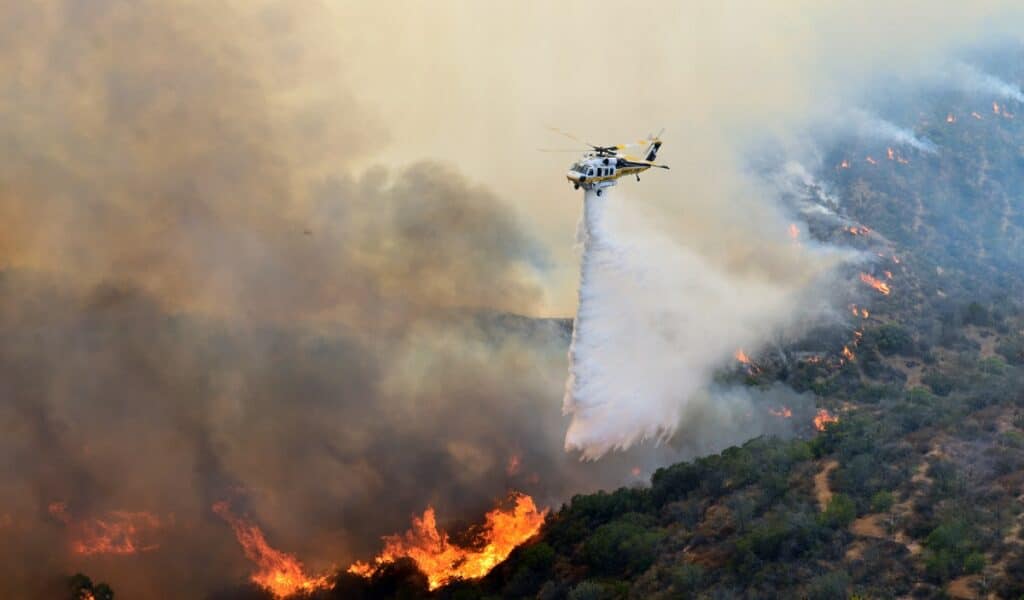
According to the Denver Post, by the close of the state law-making session 2023, the government passed 11 Colorado wildfire prevention measures and recovery bills, including support for impacted communities. One of them was the purchase of a tactical military chopper for fire and rescue teams.
The bill signed just this year will purchase and upgrade Colorado’s second Black Hawk helicopter for about $26 million. The previous government measure in 2021 bought the state’s first Black Hawk, which was modified at United Rotorcraft Inc in Centennial. The second “Firehawk” helicopter will also be bulking up with the personal trainer technicians at United Rotorcraft.
The website FireAviation.com posted an article on June 18 that included an NBC Denver News 9 clip. The Fire Aviation article states that Colorado’s first Firehawk is stationed and ready for service at Yampa Valley Regional Airport.
Firehawks have a 1,000-gallon “belly” tank for water drops and, in under a minute, can fully refill.
Colorado fire and rescue teams have another permanent aerial firefighting technology asset, a tanker jet stationed in Colorado Springs. The Air Tanker Base in Colorado Springs, constructed over the last few years and run by the USDA Forest Service, will be staffed full-time, and the jet will be tethered to this base specifically.
Colorado Public Radio posted an article fretting about the $32,000 per day price tag of keeping the jet bound to this base. They also noted how in years past, Colorado had called in firefighting and water-dump aircraft as needed from around the country, including neighboring states. This particular jet now stationed in Colorado Springs has seen action dumping 3,000 gallons a pop in New Mexico, Wyoming, South Dakota, and Nebraska in 2021 and 2022.
Flame Retardant as Part of Wildfire Control Tactics
In addition to precision water drops, prescribed burns are one of many wildland fire prevention measures. Deliberately modifying land with fire actually goes back to the beginning of humanity. This controlled fire practice is an excellent example of how prevention is the main thrust of fire fighting. And retardant dumps are also a big part of that prevention effort.
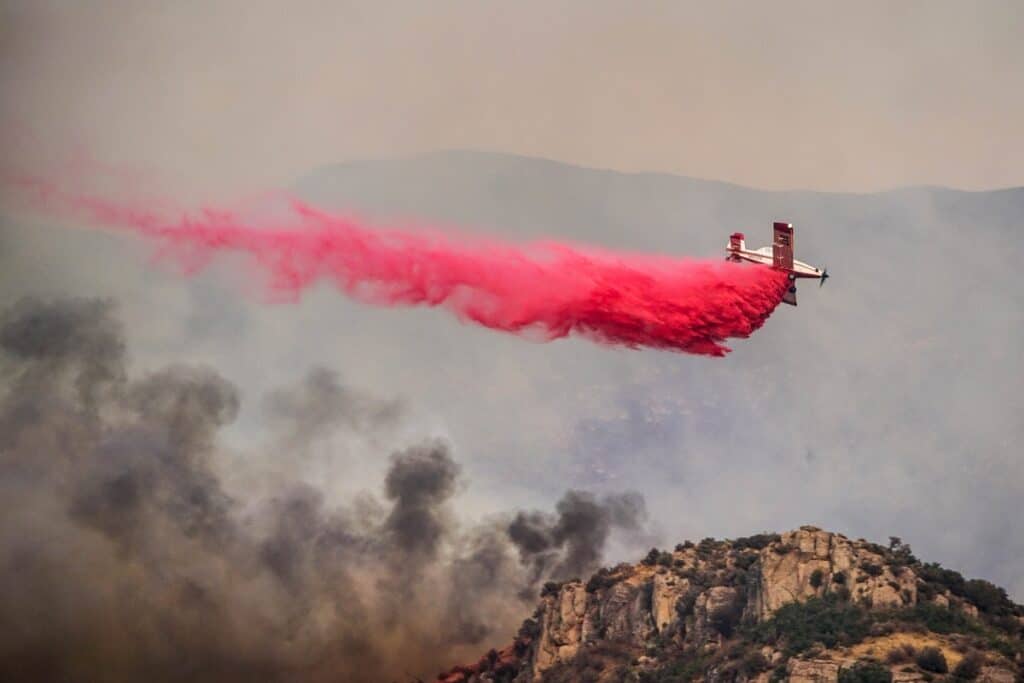
Video of Kool-aid red slush dumped on wildfires is a fixture of news coverage on the topic.
Rather than dumping onto raging infernos, planes slake the susceptible trees and plants with this slurry, halting fires in the process. Janet Upton of Cal Fire (CA Dept. of Forestry and Fire Protection) told TIME magazine, “Basically, they’re trying to box in the fire.” Laden with fertilizers to help regrowth after the fact, the red dye in the solution helps ground crews see more clearly where the dumps have happened.
Colorado Fire Crisis: The State is Taking Action
As news media and other environmentalists in Colorado continue to remind their fellow citizens, the heavy snowmelt from this last winter is just one year off, in their view, good luck; it keeps vegetation from drying out too much and catching fire more easily. But they stress, it’s not really good news and is only a one-off. Other citizens will take the win for now. Plus, another version of aerial fight-fighting is advancing too.
CO Dept of Fire Prevention and Safety employs drones to monitor and prevent fires. And technology is keeping up. A tech journal, Sensors, reported on an experiment using a drone with an extensive range of temperature detection, plus IR scanning and other features. The SUAS (small uncrewed aerial system) can measure fire temps ranging from 608 degrees F (well below a campfire) to 2732 F (beyond the hottest organic forest fires). Professors at UC Boulder were part of the study, and the aircraft was tested over a prescribed burn in the state. While that’s an exciting prospect, the deployment and routine use of such advanced, lower-human-risk technology is a ways off.
In the meantime, the Firehawks and air tanker will be a boon for the state’s fire fighting and fire prevention efforts.
United Rotorcraft Inc expects to have the second Firehawk ready for summer 2024 or summer 2025, according to Chief Mike Morgan, Director of the Colorado Division of Fire Prevention and Control, quoted in a Fox31 KDVR news clip.
As of late June, one small wildfire is being tracked in El Paso County, and “100% of El Paso County is experiencing no drought” says the Fire Weather & Avalanche Center. It offers a county-level breakdown of wildland fire tracking for the US at fireweatheravalanche.org. Consult it for daily updates on wildfire statuses.