


New Way to Solve Homelessness Proves to Be Successful at Working Fusion at Mill Street.
All across the world, homelessness seems to be becoming more of an issue each year. In Colorado, the number of homeless people has increased over the last several years due at least in part to rising housing costs.
According to the Colorado Coalition for the Homeless, 2,455 people identified as being homeless in 2022 which was an 85 percent increase from the 1,326 homeless people in 2020. Chronic homelessness has increased by 130 percent over the last 10 years.
According to Colorado Politics, the number is much higher as an annual federal report counted 10,397 homeless in the state in early 2022, an increase of 551 individuals compared to two years prior. “When compared to last year, the picture is much worse,” the article reported. “The state added nearly 2,000 homeless people since 2021.”
However, Shelley Jensen, founder and CEO of We Fortify, has spent much of her life looking for ways to fight homelessness. For several years, she traveled the world to find possible solutions to the growing issue of people living unsheltered.
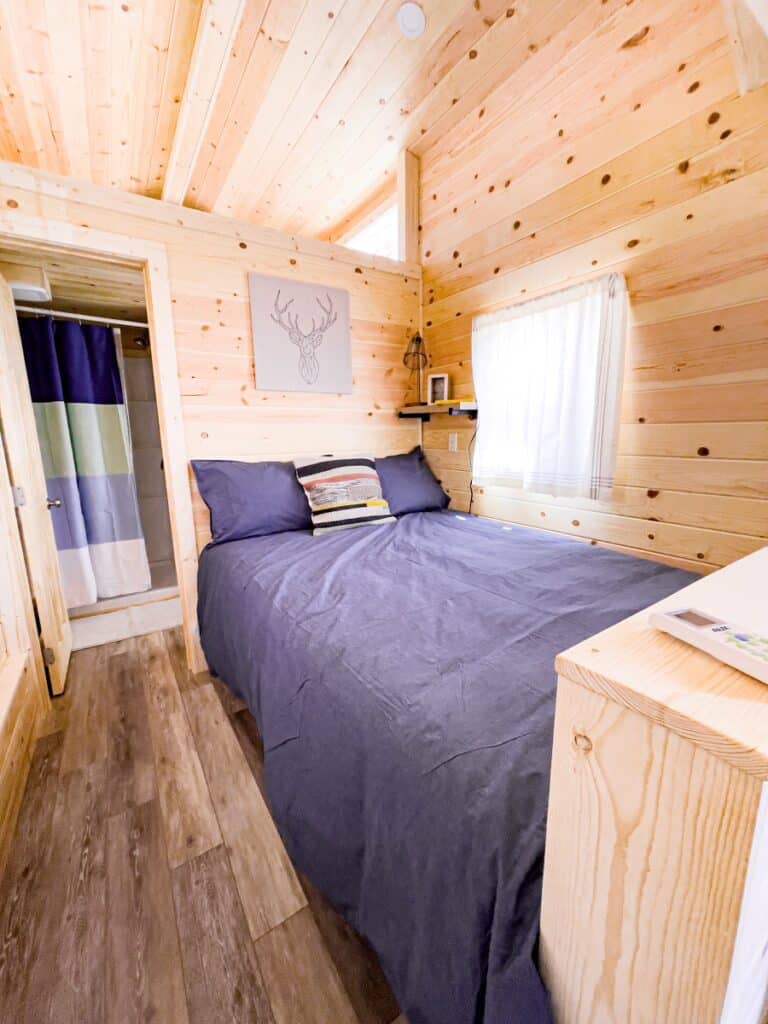
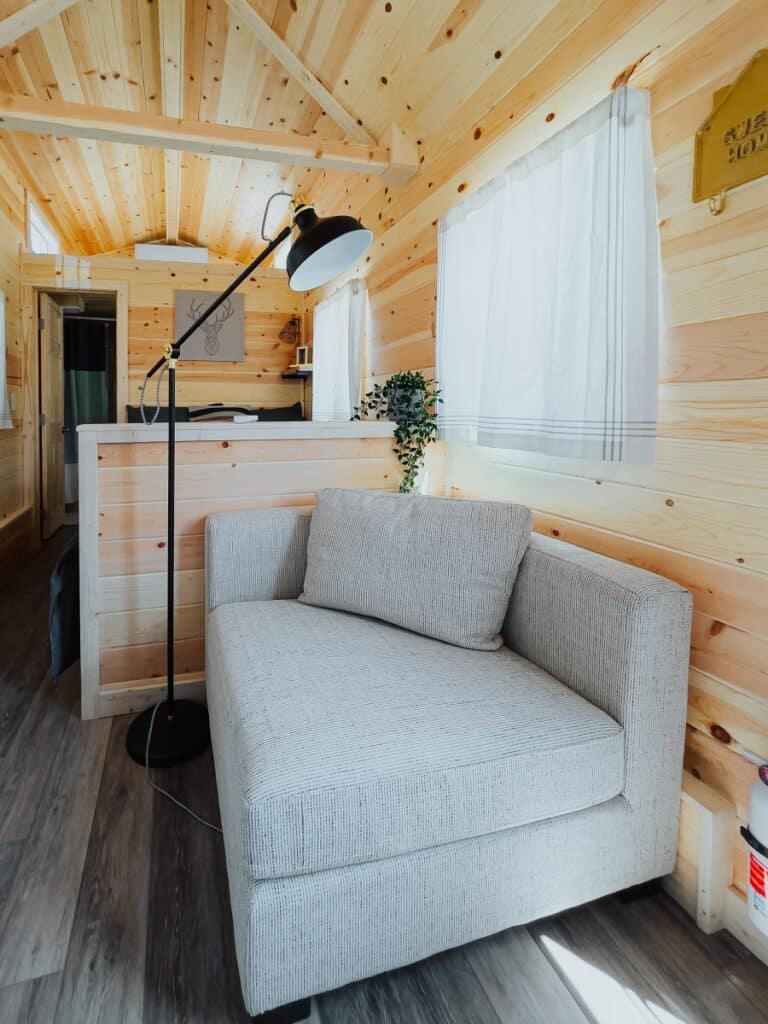
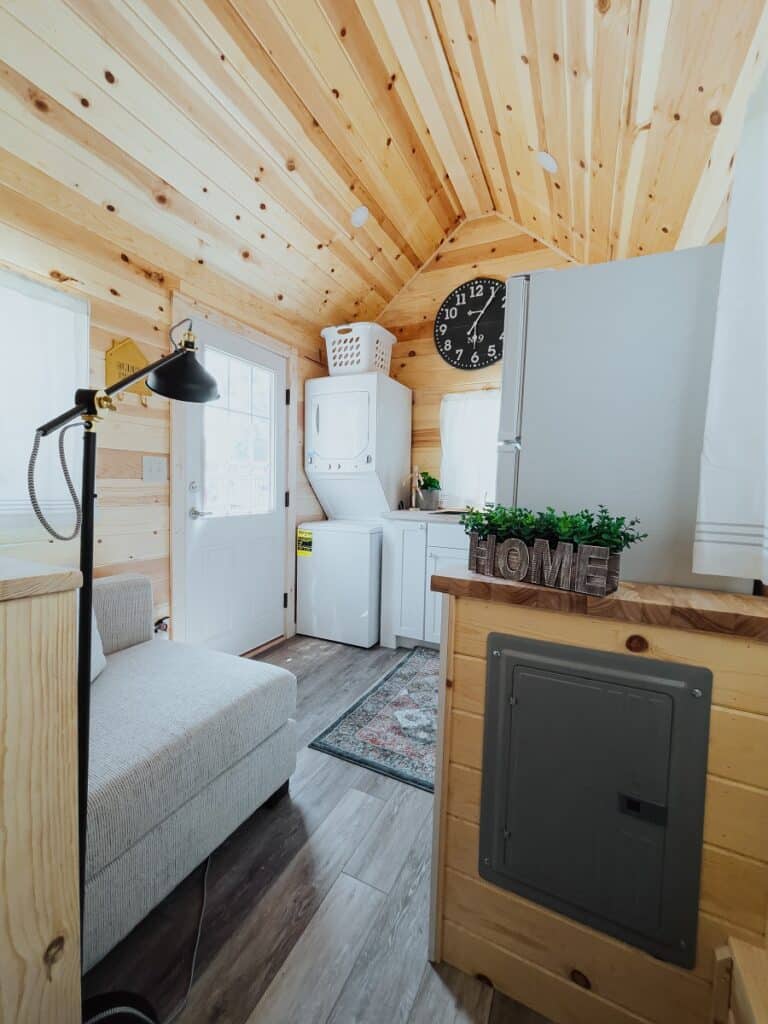
Two years ago construction commenced on the Working Fusion at Mill Street project which was Jensen’s way to help young adults experiencing homelessness by providing temporary housing. Now two years after the project started, the community is almost complete and residents have lived in the tiny home community for nearly two years.
Mill Street Community Now Contains Over a Dozen Tiny Homes
The community held its grand opening last October and according to Jensen the idea of temporary housing for young adults has been well-received. She said that when former Mayor John Suthers attended the event he said that it was his favorite grand opening celebration he has attended in his eight-year career.
According to Jensen, the community now has 13 homes with 13 residents living in them. In early June, the 14th and 15th tiny homes were added to the community.
They have also added a container that serves two functions for the village. “One side is for the team of volunteers that comes in and maintains the village,” Jensen explained. “And on the left side, the residents have turned into the living room. And that is an area where they play games, watch movies, and just hang out. It has couches, a desk for tutoring, and a bunch of chairs. It is just kind of this fun, safe space for them.”
When the village is complete, it will have a total of 18 homes. The nonprofit originally had all of the homes financed but they have seen one major setback.
“They are mostly fully funded but what happened was when we started the project, the homes cost $50,000 and now when we are building them they are at $68,000 and they keep going up,” Jensen said. “So we are having a bit of a deficit and we are working on it.”
The Project So Far Has Been a Success
Now that residents have been living in the village, Jensen said that the program has been a big help for young adults. “The community has embraced it and the residents are individually doing better than when they came,” Jensen stated. “We are finding that some of the results are better than what we expected.”
Many have proven to find jobs and work toward having better lives. “We have had our first early graduate,” Jensen said. “This young man was able to get a job six or seven months ago. He’s working at a higher-than-minimum wage position. He has a 401K, paid time off, and health insurance. He just notified me that he is up for a team lead position, which would be a promotion.”
The community has also developed a life skills curriculum to help educate residents in certain subjects. They have partnered with ENT Credit Union which has helped teach financial literacy classes.
They have also partnered with a realtor who is going to help the residents with how to do a job interview, write a resume, and use good manners. The village also provides a life skills coach who will focus on helping the residents develop healthy personal relationships.
The We Fortify organization has also grown over the last two years. The group now consists of Jensen and three staffers including a manager, a volunteer specialist, and a resident specialist.
The team has grown its volunteer base and increased its presence in the community. “We meet with each one of our residents each week,” Jensen said. “Most people in this space only get to meet with their support team once a month and they just check boxes. We actually know what’s going on in all 13 of our residents’ lives.”
Jensen said that young adults in poverty often get stuck in a cycle when they get evicted from Section 8 housing communities. She said that people who are in unhealthy communities and have decentralized support systems tend to get stuck in the homelessness cycle.
Working Fusion at Mill Street reverse engineers this by providing centralized services and a healthy community. They intentionally kept it small so they can provide services like getting a birth certificate or providing needed job training. For example, many of the residents didn’t know how to properly write a rent check prior to living in the community.

New Plans for the Organization
The original plans for the village were to construct a building that could provide training and jobs for residents. But due to rising construction costs, the plans for the new facility had to be changed.
“We had to take the top two floors off of that building,” Jensen said. “We will be shovel-ready this year. And in that, we will have a demonstration kitchen and we will be able to teach our residents how to cook. And then hopefully we will build something in that space. Until then we just continue to make partnerships.”
Once the 18 homes get put in the community on Mill Street, the organization has plans for other similar projects. The organization has partnered with a local school district to build affordable housing for teachers and staff.
According to Jensen, the organization also has its eyes on another site that will be the same model as the Mill Street community. “We know that there are more young adults that need help in this exact way,” Jensen stated. “Our model is preventative as well as immediate. I truly thank the community of Colorado Springs and Denver for their generosity. We have raised a little over $2 million. We’re almost there we still need help, but $2 million in two years is a pretty good story for something new.”