



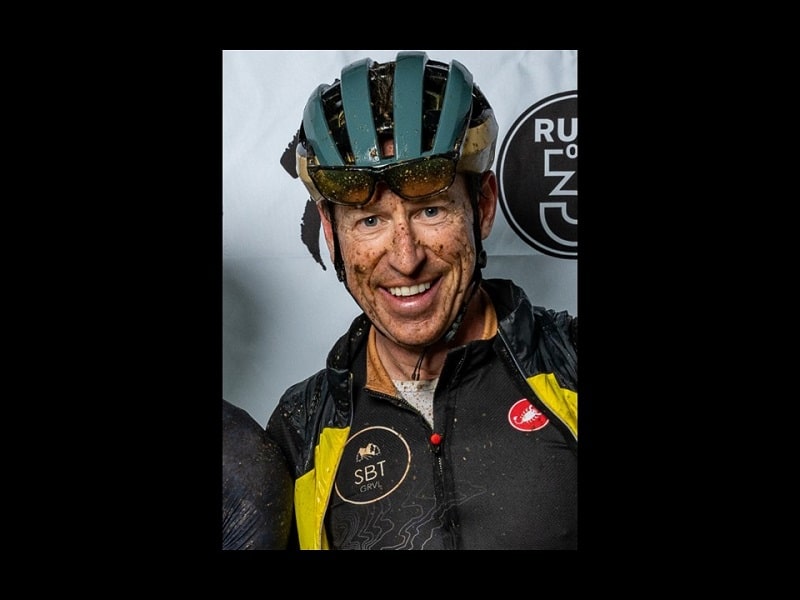
Micah Rice, executive director of the Pikes Peak APEX cycling race, approaches his job by balancing planning, fun and conscientious understanding of the land. Held in September every year, the APEX mixes elements of professional and amateur riders in a four-day mountain bike challenge bringing the outdoor community together.
Rice moved to the Springs in 2009 to take a job with USA Cycling overseeing national events. He noticed that there were very few cycling events in the area. After leaving USA Cycling, he began Sports Strategies, LLC to help put together premier events in the area when was approached with the idea of creating a mountain bike event. APEX launched with its first race in 2019 and they now have two years under its belt heading into the 2022 event.
Prior to moving to the Springs, Rice lived in Athens, Georgia, working for USA Cycling. The back roads in Georgia, he explains, were fantastic for riding because there was a huge network of roads – a rider could go on a different route every day of the month and not get bored. When Rice got to the Springs, the expanse of roads he found was not vast, especially against the Front Range.
Finding the Right Path
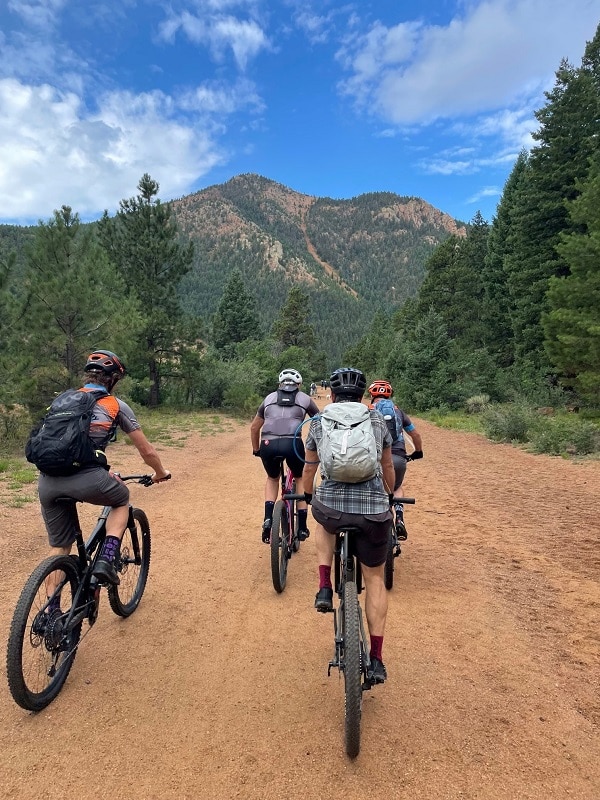
“There’s few roads that go out East but it is fairly congested here in town,” Rice says. He did find a network of off-road trails and dirt roads that were much better than the paved roads. He began turning himself into a mountain and gravel path biker. This later shaped his idea of what the APEX could be.
“Just in terms of the planning, I think the biggest thing that we put time into [with APEX] was really working with all the land managers to create loops that were going to be a great experience.” This included discussions with the National Forest Service and the Bureau of Land Management plus involving El Paso County as well as user groups like Friends of Palmer Park and Friends of Cheyenne Canyon.
Pikes Peak APEX is also a nonprofit event, hosted by the nonprofit Pikes Peak Outdoor Recreation Alliance (PPORA) The event is a way to spotlight the trail system in the Pikes Peak region and raise money for the PPORA Trail Stewardship Fund. The APEX, according to Rice, has become one of the biggest, most prestigious mountain bike events on the Front Range of Colorado and one of the very few stage races in the country.
Last year, the male winner of the race was Keegan Swenson, who Rice says, had a blast. Swenson is ranked as the number one off-road racer in North America. “We’re getting the absolute top-end pros to come show up, and they put stuff up on their social media and talk about the trails in Colorado Springs.”
From Rice’s perspective, as well as his trail planners and a team of volunteers, creating the race is significantly complex (to say nothing about the adjoining Festival & Expo in America The Beautiful Park running during the four-day event).
“The way we build these courses and why we build them the way we do is to be gender inclusive. Our goal was to create a mountain bike event that we would have an equal prize purse for the men and the women. A lot of races just pay maybe five deep,” Rice says. “We pay 15 deep, which gives a lot of opportunities, especially to that next level of rider that maybe isn’t always in the money. We wanted a way to try to pay those people that are getting 10th and 11th as well.”
The Structure and Inclusivity of the Race
The race on the first day of the event is based on a time-trial style structure beginning in Palmer Park with a 30-second start between each rider. It is a race against the clock. “So point A to point B, we time each rider, and then your time is your place.”
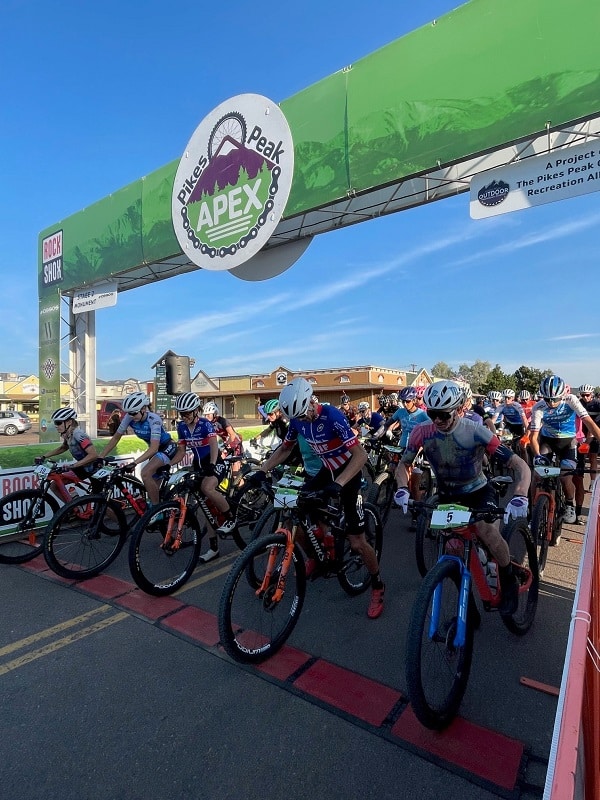
After this initial stage, the next three days are done with a mass start. “Men, women, it doesn’t matter if you’re 15 years old or if you’re 65 years old. We just start everyone in one swoop, which is really a lot of fun for the amateur riders because they’re literally lining up and on the start line with professional riders, Olympians and world champs.”
Rice compares it to the start of a marathon. At the front are the professionals and those going for the prize money while some of the people in the back are just hoping to finish up the four days. But there they are lined up with the top riders in the world.
We tried to create an event that is hard enough for the pros to feel like they’ve gotten a workout but not so hard that we turn off a lot of amateurs that don’t think they can finish. It’s a very doable event, and we give them plenty of time to do it. Some of these pros are finishing some of these larger loops in two and a half hours. And some of the folks in the back are taking six, but that’s fine.”
Finding Ways to Collaborate and Co-Exist
The event requires interaction with different people and organizations, especially those who use the land for the rest of the year. It is about working together and working out differences as they arise. Rice provides an example of this in that two years ago they were looking into using a famous trail in Cheyenne Canyon called Captain Jacks for the race.
Captain Jacks is a trail that goes right up into Cheyenne Canyon all the way up to Jones Park, which is close to 10,000 in elevation Those areas, Rice explains, including Gold Camp, Jacks, Pipeline, and Jones Park, are all motorized trails. Mountain bikers share those with motorcycles but, he explains, it is really the motorized riders that maintain it.
Every motorcycle that drives up the trail must have a motorized permit and they pay a fee every year. The money collected goes back into maintaining those trails. The CMTRA (Colorado Motorcycle Trail Riders Association) is the local moto group. Mountain bikers ride those trails. Motorcycles also ride those trails. “And they run into each other…it’s not always a happy situation.
APEX applied for a permit with the National Forest Service to use the trail for the race in 2020, which would be over one weekend. The CMTRA wrote a letter to the Forest Service saying that they didn’t want the race to use that trail thinking it would be damaged. “There was a lot of discussions and sit down with that group.” The organization was very divided, he explains. They had a number of people that wanted to support the event and a number of people that were very against it.
Planning for the Future
The Forest Service ended up approving the use of the trail for the race. A few of the CMTRA members got involved with the race and Rice says they had a really good time. “But here’s what happened…that group that helped us went back to their club and talked about all the stuff that we did to make sure that we didn’t wreck the trails.”
Rice then says the motorcycle club turned a full-180 degree for the second year and wrote a letter to the Forest Service supporting the event. “They understood that we really wanted to have a kind of partnership. It’s stories like that kind of get me excited about really trying to create these multi-use trails. It really can work if everyone’s willing to work together.”
Heading into the 2022 event, Rice holds great hopes for the future. For him, different user groups are important to pull in more of the Pikes Peak community and give more ways for people to participate.
“If you’re not a runner or cyclist, we’ve got that APEX Festival on Sunday. We’ve got a couple of bands. We’ve got a beer garden. We’re partnering with the Pioneers Museum to do a history tour just five minutes long to let people hear a little bit about the history of Colorado Springs. The idea is to really find an aspect that everybody in this community is excited to be a part of.”







[…] camps were able to talk, hear the issues and work on those points outside of the race. Now APEX is entering its third race this fall, with the motorized community significantly involved. “They […]