



In 2007, the New York Times published an article labeling Manitou Springs a “hippie Mayberry,” in reference to the classic television series, “The Andy Griffith Show.” For those not in the know, its opening sequence contains an earworm-forming whistling tune and revolves around a kind, gentle local sheriff and his family as he handles policing issues within his community in fictional Mayberry, North Carolina.
The series, which originally ran during the 1960s, is a throwback to times when cities and towns across America were more community-oriented. Folks and law enforcement mingled together without any need for heavy-handed law enforcement policing. The essence of “The Andy Griffith Show” reflects back to an era of more passive than aggressive law enforcement.
Defund the Police
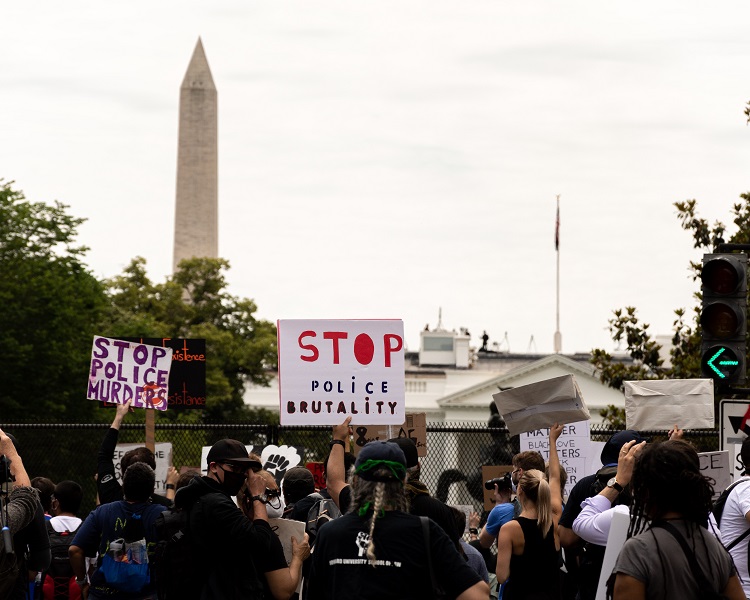
Today, calls to “defund the police” are common. The American Civil Liberties Union (ACLU) describes some cities’ law enforcement agencies as targeting Black folks. One consequence of these forms of systemtic racism has been the degradation of law enforcement’s integrity in some areas.
Nationally, the unfortunate death of George Floyd has been a catalyst for mounting demands for increased police accountability. In Colorado Springs, the tragic shooting death of Le’Von Bailey spurred calls for police accountability. This led to the creation of a commission designed to promote discussion that hopes to improve police accountability.
But the problem here is law enforcement being unfairly targeted and blamed for the wrong reasons. Local communities ask law enforcement to do far more than what they should be doing. The War on Drugs is a prime example of a failed federal program. Government agencies improperly utilized law enforcement on a large scale across the country. We can find disproportionate policing that harms and threatens Americans across the country as the War on Drugs may actually perpetuate violence in certain communities.
Zero-Tolerance Policy
Back to Manitou Springs: In 2016, the city council passed a zero-tolerance policy for the downtown district in response to growing complaints about homeless and transient folks. A violent fight at a popular park resulted in one person paralyzed. The final straw was a verbal altercation between a city employee and a resident over a stage at the same park. City council passed their ill-fated zero-tolerance policy though complaints of transients and the homeless harassing shoppers in the downtown area were long on the rise.
And so the zero-tolerance policy began in beautiful, sleepy – “hippie Mayberry” Manitou Springs. The police department began issuing citations for petty offenses. Prior to the enactment of the zero-tolerance policy, police in Manitou Springs rarely issued citations for petty offenses in the downtown area. After the policy went into effect, complaints began increasing and created more problems dealing with angry tourists and targeted residents. By mid-2017, half of MSPD’s asked city council to rescind the zero-tolerance policy, noting lower morale in the department, among other negative issues.
Tools of Social Engineering
Likewise, if we could rescind the failed War on Drugs entirely, then we could reduce many of the issues related to law enforcement today. With the common link between Manitou Springs’ failed zero-tolerance policy and the War on Drugs, politicians and government bureaucrats viewed law enforcement improperly as tools of social engineering. Both the Manitou Springs policy and the War on Drugs sought to force people to do things or, really, not to do things, punishing those who failed to heed new rules.
In another context, both the policy in Manitou Springs and the War on Drugs focused on punishing people for crimes without victims. Possessing a baggie of cannabis used to put people into jail before cannabis legalization came along. In Manitou Springs during the zero-tolerance policy, law enforcement issued citations for things like smoking a cigarette in a public park. Something they could freely enjoy before enactment of the policy.
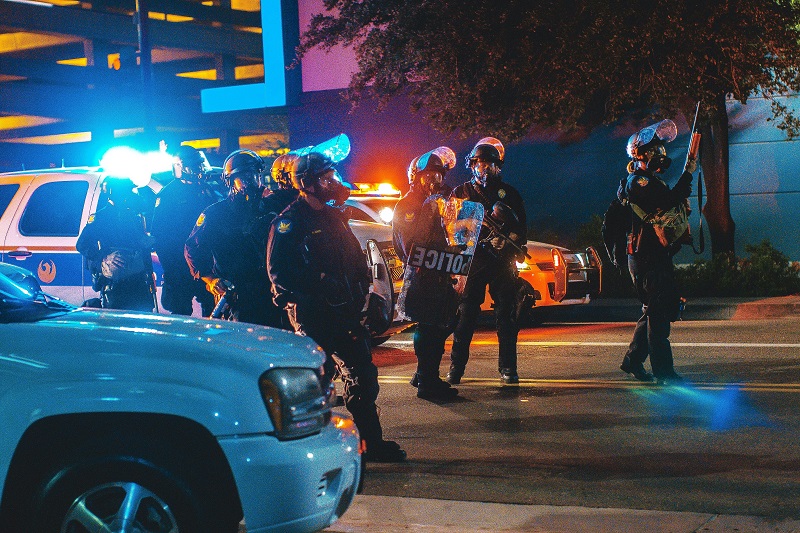
In today’s climate, we would likely see “The Andy Griffith Show” feature military-style armored personnel carriers parked outside his office window. Maybe he’d have military weapons on display in his office or crowded jail. Some people would be too poor to get out of jail as happened in Colorado Springs. In short, if “The Andy Griffith Show” were still on the air, we’d see a vastly different type of law enforcement. More akin to Mel Gibson’s “Lethal Weapon” movies, in which a lone police officer routinely used violence as a means of his job.
The Image of Law Enforcement
Burned into the minds of millions whenever someone dies at the hands of the police is an image of agressive law enforcement, regardless of the circumstances. This suggests law enforcement has an image problem as corrupt and making society more difficult, especially for Black people.
But there’s another problem. According to a recent Gallup poll, 81% of Black people said they want law enforcement to remain in their communities. This seems in sharp contrast with calls to defund the police, especially when the main premise is the racism perpetuated by law enforcement against Black people. But closer examination suggests that Black communities across the country are not demanding the elimination of law enforcement but want improved police accountability. People want to feel law enforcement is not above them and are part of their communities.
As the ACLU notes, the War on Drugs has disproportionately targeted certain communities in large cities, negatively impacting both minority groups and law enforcement. One of the consequences has been strained relationships between police and their communities. Likely exacerbating existing tensions in those same areas. Perhaps this is one reason why “defund the police” has become synonymous with the lack of police accountability.
We conclude our series, Policing During These Uncertain Times-Part 2, with a discussion on the War on Drugs, Funding Priorities, and the Role of Law Enforcement.







[…] the first part of series, Policing During These Uncertain Times – Part 1, we focused on a number of topics. The Defund the Police movement, Manitou Springs Zero-Tolerance […]