



In the first part of series, Policing During These Uncertain Times – Part 1, we focused on a number of topics. The Defund the Police movement, Manitou Springs Zero-Tolerance Policy, using police as Tools of Social Engineering, and the Imge of Law Enforcement. We hope it started the discussion on policing in this troubling time.
Accountability with Law Enforcement
Accountability is a powerful deterrent. It tells police officers their actions will be monitored. “Defund the police” is essentially a call for accountability but it unfairly targets and blames law enforcement entirely for its actions. It is politicians and government bureaucrats who work to create more laws and actions for the police to engage.
In Manitou Springs during the ill-fated zero-tolerance policy, it was the MSPD who were out issuing tickets because the city council demanded it. After the zero-tolerance policy was rescinded by the same council, few people condemned the MSPD or their actions and since then, issues related to homeless and transients in downtown Manitou Springs have mainly disappeared.
War on Drugs
Congress could do more to end the federal War on Drugs but probably will not anytime soon. Meanwhile, law enforcement at local levels should be approached as a minimalist sees a new home: Just a few rules and laws, and keep things simple, and move along. Among other forms of accountability are vest cameras for police officers to record interactions and more; as noted before, commissions to hold police departments accountable have been created with the additional goal of improving relationships between law enforcement and their communities.
At the state level, Colorado governor Jared Polis signed into law the end of qualified immunity for law enforcement. Since the early 1980s, local law enforcement has been shielded from some of the consequences of their abuse of citizens’ civil rights. The end of qualified immunity serves as another form of accountability since it will enable regular citizens to sue law enforcement officers for abuses of their civil rights.
Funding Priorities
It seems intuitive to supply funds to programs that are not achieving the desired results, but for law enforcement, the opposite seems to be the case: When they do wrong, they’re expected to do more with less. Maybe that’s the big mistake here. Maybe law enforcement doesn’t need to be so much as defunded as much as reprioritized. More of the “Andy Griffith” approach to policing when required; and tactical policing only under extreme circumstances, such as in certain communities with high rates of violent crime.
When poor communities are without law enforcement, poor folks suffer disproportionately compared to wealthier folks. As such, law enforcement serves a vital purpose in those communities. Completely defunding them will make things worse and perpetuate a cycle in which poor folks can easily become entrapped in a bureaucratic criminal justice system, either as victims of criminals or labeled and treated as criminals, or even worse, both.
But more importantly, funding should reflect a reprioritization of law enforcement itself. The role of law enforcement has shifted away from community policing toward bureaucratic management as in Manitou Springs during its zero-tolerance policy. As such, this suggests the path forward is a return to a time when law enforcement focused on major crimes such as violence against people and property rather than being used as bureaucratic social-engineering tools.
Role of Law Enforcement
What is needed is a discussion of the role of law enforcement today. Law enforcement needs to be doing less, not more. It may need better training in terms of engaging the public; perhaps more funding will see better training for police officers.
I’m sure there are some situations and circumstances in which local law enforcement may need additional funding and that’s fine. Perhaps more funding to educate police officers on the Constitution is necessary.
Perhaps more training is required for police officers to learn to de-escalate certain situations to prevent unnecessary violence. It’s just that we should know precisely what the funding is for, what it will do, and measure the effects to know whether or not it has worked.
But more importantly, the discussion of the role of law enforcement needs to address the simple fact police officers are expected to do far more than what they may be prepared to do. “Defund the police” is a humane cry for help but it is not the only solution. It is a call for a discussion about the proper role and funding of police departments across the country as it relates to modern policing tactics.
Law Enforcement Accountability
Accountability of law enforcement has become a major sticking point at most anti-police rallies across the country. And so it is that we can improve police accountability by addressing the fact they are doing far more than they should, and also improve accountability through body and patrol car cameras and ending qualified immunity for police officers.
Today, Manitou Springs ain’t no “hippie Mayberry” and the federal War on Drugs continues its factory-like production of ensuring prisons and jails remain filled. But the most important thing is we need a discussion about the proper role of law enforcement, and it isn’t to be an aggressive tool for the sake of politicians and government bureaucrats. The proper role of law enforcement should remain mostly as a deterrent, and investigative arm for the public in protecting individuals and property from harm.
“Defund the police” is a humane call to action but should not be seen as a call to eliminate police departments. It is a call for a return to a time when law enforcement was part of the community and working with and for citizens rather than used as social-engineering tools. Focusing on crimes with actual victims is an issue of priorities that local communities can consider rather than outright defunding police departments.
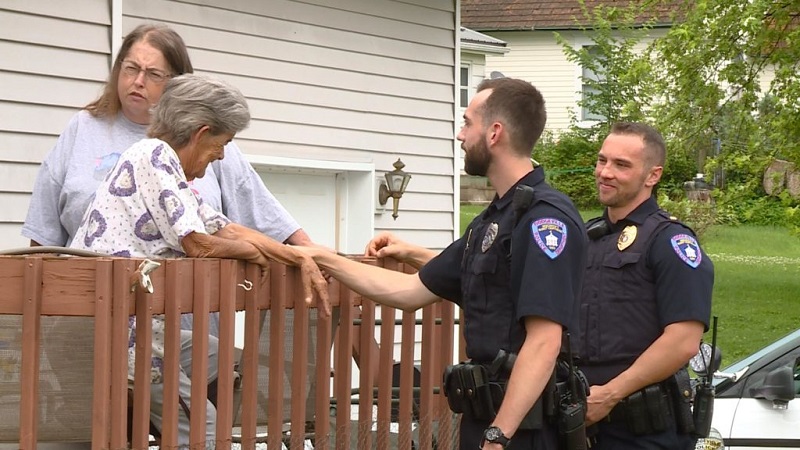
Funding and priorities of the law enforcement should reflect a move away from political and bureaucratic social engineering and focus more on police departments building bridges of connection in their local communities. And then they can save a cat from a tree, help a neighbor change a tire, and help the elderly tourist cross a busy downtown street.
This is the way.







[…] conclude our series, Policing During These Uncertain Times-Part 2, with a discussion on the War on Drugs, Funding Priorities, and the Role of Law […]