

As COVID strains blood and organ donation, how do organizations support patients in need of Red Cross life-giving donations?
Life-Giving Donations Struggle
In spring 2020, while most of the United States was under lockdown, vital donations of plasma, blood and organs struggled to keep up with medical needs, which had not diminished.
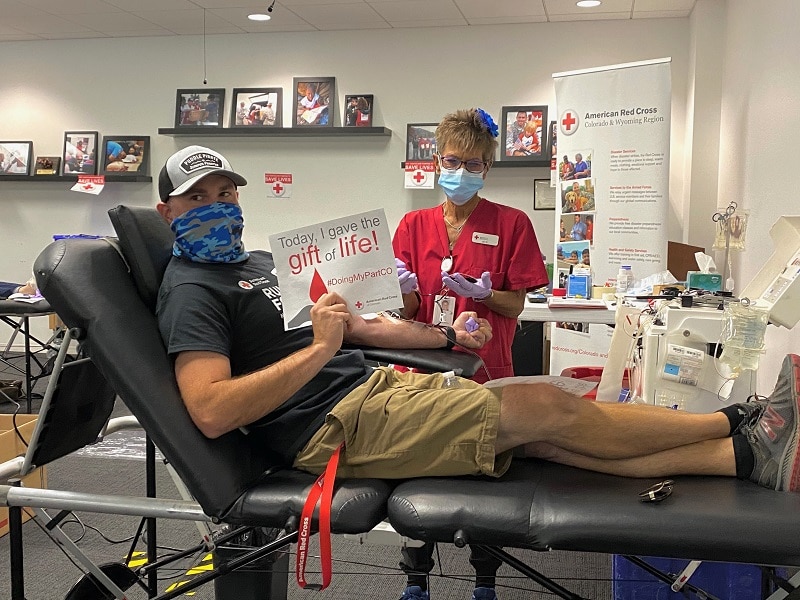
“You definitely have people who are less confident to come in,” says Andrea Carlson, Communications Director for the American Red Cross in Wyoming and Colorado. Carlson explains that for blood donation, a majority of regular donors are retirees, one of the population groups most likely to stay home since March.
Drop-off in Plasma Donations
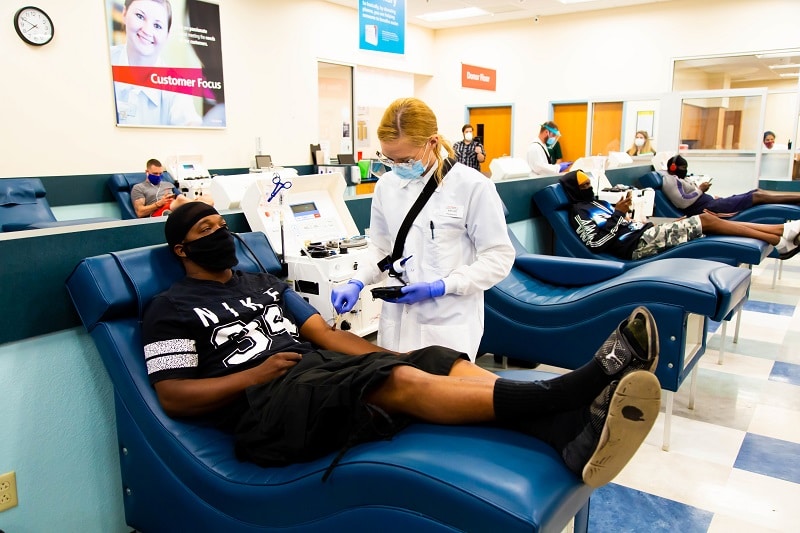
Toby Simon, Senior Medical Director at CSL Plasma, saw a similar drop-off in plasma donation last spring. “When COVID came along…people were concerned in general.”
CSL Plasma collects plasma—a liquid component of blood containing substances like disease-fighting proteins and blood-clotting factors—and uses it to manufacture life-saving medications for problems like bleeding disorders, immune deficiencies, and neurological disorders.
Lockdown & Public Hesitation
But while the country was on lockdown and the public hesitated to be in medical facilities, accidents and disease remained unchanged. “The hard part with blood is that we always need it,” says Carlson.
According to US News, blood centers try to maintain seven days of blood supply, but as of Feb. 3, America’s Blood Centers database shows 34 percent of blood centers in Western states with fewer than three days’ blood supply.
Simon adds that nothing changed for the immune deficiency patients or patients with neurological disorders – many of whom rely on plasma products to live normal lives.
Quickly Implementing Processes to Protect Donors
Organizations like these, already equipped with much of the necessary equipment and experience to avoid disease, quickly implemented processes to protect donors, recipients. and staff from the novel coronavirus. From personal protective gear to dividers between donors, routine temperature checks and asking donors to wait in their car until appointments, they beefed up their sanitization and safety standards.
But while these life-giving donation organizations were making routine visits safer, other medical organizations fundamentally changed the way they meet with patients.
Telemedicine on the Rise
“Telemedicine saved the first half of the year for most transplant centers,” says Alex Wiseman, Executive Director of Kidney Transplantation for Centura Transplant in Denver.
Deemed a non-emergency surgery, the majority of transplant centers were put on hold during March and April of 2020, explains Wiseman. A study published in The Lancet found a 50% decrease in transplants during that time.
But after those initial months, telemedicine—diagnosing and treating patients remotely—was the silver bullet. It allowed transplant centers to continue their work.
Kidney Transplant Over the Phone
How on earth, you may be wondering, could a kidney transplant be done over the phone?
Of course, “ultimately, a face-to-face visit is necessary,” says Wiseman. But there are far more doctor visits to a kidney transplant. Preliminary appointments to decide compatibility, update organ donors and recipients on the organ donor list, perform social worker assessments, and meet with dieticians can all be managed remotely.
According to Wiseman, the use of telemedicine more than just helped patients stay safe from the coronavirus. “It essentially changed the experience to a very streamlined, low-touch experience for the patients.” Donors and recipients come personally to the transplant center for just a short time to undergo surgery, minimizing risk of contracting COVID-19 and also participating in a simpler, more efficient process.
Wiseman says that Centura Transplant donors tend to be an altruistic group of individuals who are meeting an important need. But even with willing donors, he points out, some recipients are just not comfortable receiving an organ during the this pandemic.
For donors, Wiseman says, “if their intended recipient is on dialysis, minding their own business, and they have a significant fear of changing that environment, it probably does influence that person’s living donor’s philosophy.”
But while some living donations can wait, others are more important than ever. In April 2020, CSL Plasma’s parent company, CSL Behring, partnered with other plasma organizations around the world to begin collecting plasma from individuals who had recovered from COVID-19.
The goal of this CoVig-19 Plasma Alliance is to create a hyperimmune globulin, a medicine made of convalescent plasma from recovered COVID-19 patients, which has been pooled and processed to remove or inactivate viruses and concentrate COVID-19 antibodies. Simon hopes that the product will be finishing clinical trials and made available for treatment soon.
While the Red Cross does not have collection centers in Colorado and Wyoming, Carlson donates blood at the Children’s Hospital in Denver regularly. She says, “It’s truly one of the best gifts you could give anybody.”