

Sabine and Michael Berchtold came to Colorado Springs with the dream of opening their own restaurant back in 1996. They found an existing restaurant that perfectly suited their needs and felt like a German guest house. Uwe’s Restaurant became their home, spreading their home-style German cooking to multiple generations.
Berchtold says she and her husband had been working in various hotels and restaurants in Germany in the 90s and were looking to start their own place. Edward Heiss, the former owner of Uwe’s, advertised his restaurant for sale in a German restaurant newspaper the Berchtolds subscribed to. Berchtold thought it sounded interesting, especially in a place like Colorado Springs, because Colorado tends to make one think of Germany, “especially the southern part, with all the mountains.” In August 1996, she and her husband took a quick trip around and decided to buy the place. Berchtold says it was a big move for them. “We came over on Thanksgiving Day in 1996, and then we opened up again on the 5th of December. Just two weeks. I wouldn’t do it again but we made it,”
The most important aspect was the turnkey element of the business. “Everything was here. We were lucky. The former employees came back so we didn’t have to look for wait staff. And they were all German, so they knew the food and everything.” Her husband Michael was and still is the cook. Sabine was always covering the front as they had in Germany. She says they were also lucky because the former owner didn’t let the liquor license expire, which sometimes can cause a delay in openings. “That’s why we could open up again two weeks later when we came over and ever since, we are here, almost 27 years now.”


Keeping Key Meals on the Menu at Uwe’s
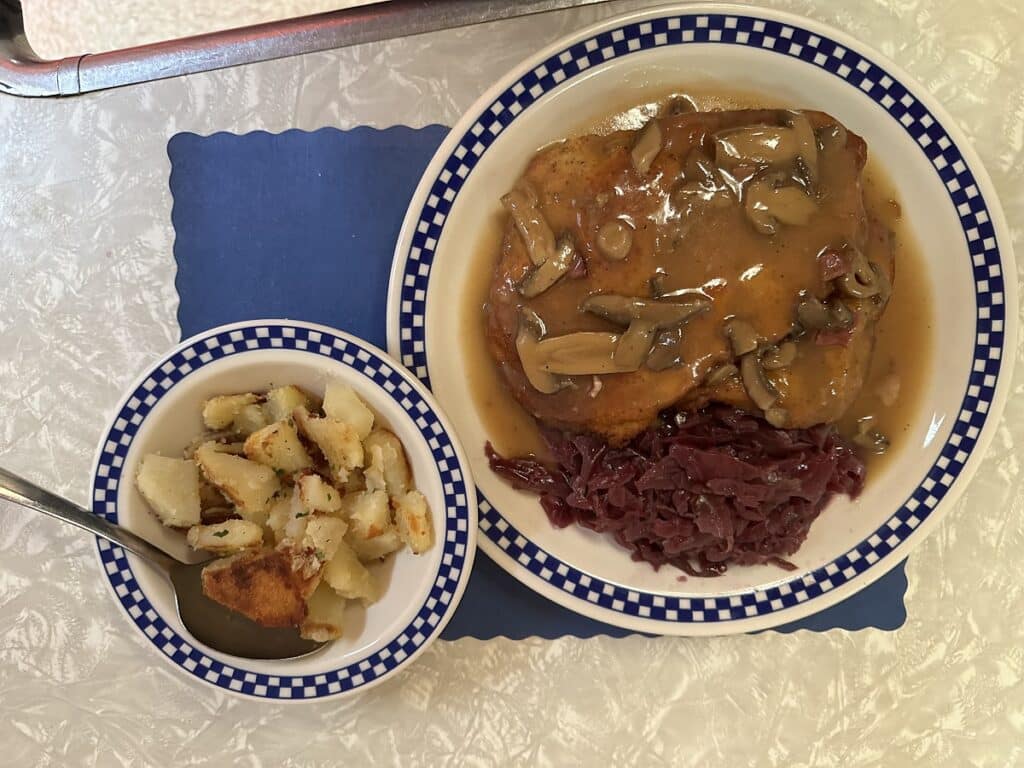
In terms of menu items, her husband introduced the Zuricher Geschnetzeltes, which, she explains, is a typical Swiss dish that includes sliced veal in creamy mushroom gravy. Typically, she continues, their menu consists of primarily German meals which a lot of local people remember if they were stationed in Germany in the military. “We have military customers, but we also have a lot of the German people living here as well as Americans. So, we have many regular customers which we are very proud of.” Most of their wait staff have also been there for 15 years or more so they know their customers. “Many of our customers walk in the door and [it’s] ‘the usual, the usual, the usual.’ And they get their iced coffee, and their order just goes in the kitchen.”
Another regular favorite is the Frikadellan, which is basically a German hamburger. “But we usually don’t put it on the bun. You eat it with fried potatoes and red cabbage or french fries.” Another dish is the Sauerbraten which is Bavarian beef marinated for about a week in a sweet, sour vinegar base. “And then you roast it in the oven.” The meat, she explains, has got a kind of tangy flavor to it because of the vinegar. “And it’s really good. It’s a tomato-based sauce, but there’s going to be different bell peppers in there so it’s really tasty too.”

The cordon bleu though has always been a favorite for Sabine. The special on Tuesday, she teases, is the chicken cordon bleu. It’s stuffed with ham and cheese, then breaded, and then pan-fried. “People love what we have on the menu and, I have to be honest, we haven’t changed our menu ever since we are here.”
If they change the menu, people complain. “Everything is more or less made from scratch. We don’t pre-cook our schnitzels.” This is also because she says they are limited in the kitchen space. “We have a smaller kitchen so we cannot do very fancy stuff in there,” she says with a laugh. “And my husband is the only cook. People love it. It’s consistent and it is always good when they come. So, we’re pretty proud of that.”
Another of the menu items she loves is the roulade. “I do love roulade. That’s a beef roll stuffed with pickles and onions and mustard and spices.” Her husband is also a big fan of the dish. “We do eat our own food, I have to say. And you can mess it up if you do not flavor it right. That’s for sure.”

Creating a Generational Restaurant
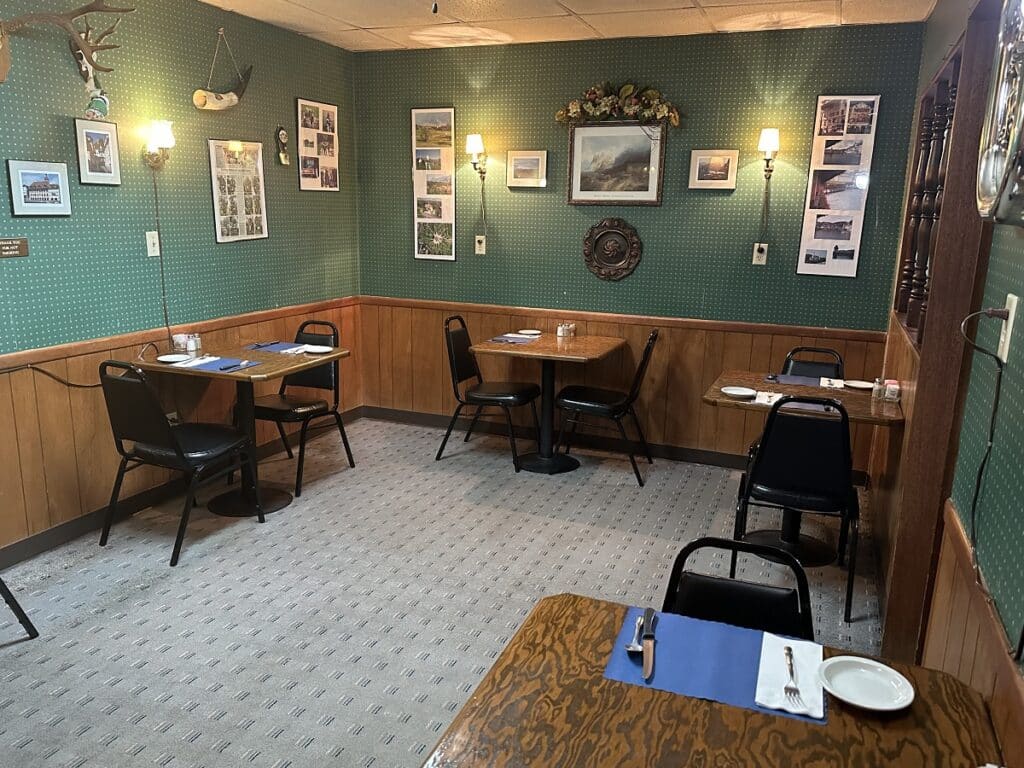
The restaurant, at this point, has now become generational. “People [initially] came in and then were pregnant and then they had kids. And now we have grandkids already. A lot of customers from 27 years ago are still coming in.” Berchtold explains that the parents will give their younger children schnitzel “and let them know it’s chicken nuggets.” The bratwurst is also a big favorite with kids. “We don’t have a kids’ menu, but as I said, usually, the schnitzel without the gravy…the kids like that too.”
She continues that all their meals can be taken home. “People do that. I mean, it’s always better when you have it fresh on the plate.” All their meals are made to be reheated. “Everything from our meals comes out of the pan or out of the pot straight into the box. It’s not sitting around for 10, 15 minutes. It goes in the box when they are here to pick it up.”
Sabine also makes all the salads with carrots, cucumbers, and tomatoes fresh every morning. “We make them a little different. They are already marinated like we do in Germany. I shred the carrots and cucumbers and cut the tomatoes, all in-house.” She says there is quite a bit of prep involved, cutting the meat, pounding the meat, then breading it, made to order. Her husband is also always cooking the sauerbraten and preparing the goulash in addition to the spaetzle. “There’s a lot of work in the morning.”
But for Berchtolds, it is worth it. “I love it with the people I see every day.” The couple are the first ones in the restaurant and the last ones out at night. “But cooking is only my husband so when he broke his finger in April, we were closed for two weeks. [With that], there’s nothing I can do. That’s just how it is.”