


PUBLISHER’S NOTE: This article contains medical information on the efficacy of Vitamin D in support of a healthy immune system. As always, please consult your physician on your personal health. The Maverick Observer is not a medical authority or specifically advocating a medical treament.
Toward the end of 2019 and into 2020, COVID-19 rocked the world. U.S. Health officials didn’t know how it spread or how contagious it was, so they recommended what they thought was best – shutdown the country.
Schools, businesses and anything deemed “non-essential” shut their doors, while everyone else stayed home. Without this shutdown, officials said, hospitals would be overrun and millions would die.
If you caught COVID, you stayed home unless you couldn’t breathe. Then, and only then, you went to the emergency room. Of course, there wasn’t much beyond intubation that an ER doctor could do, right?
Wrong. As it turns out, there were several things the National Institute of Health, the CDC, and the medical establishments could have done. Here is what they were, and how their failures continue to impact Colorado.
Prevention is key?
During the early days of COVID, one of the main messages was to control the spread. Thus, businesses closed, people stayed home, and when one ventured out, he or she wore a mask and maintained a social distance of at least six feet.
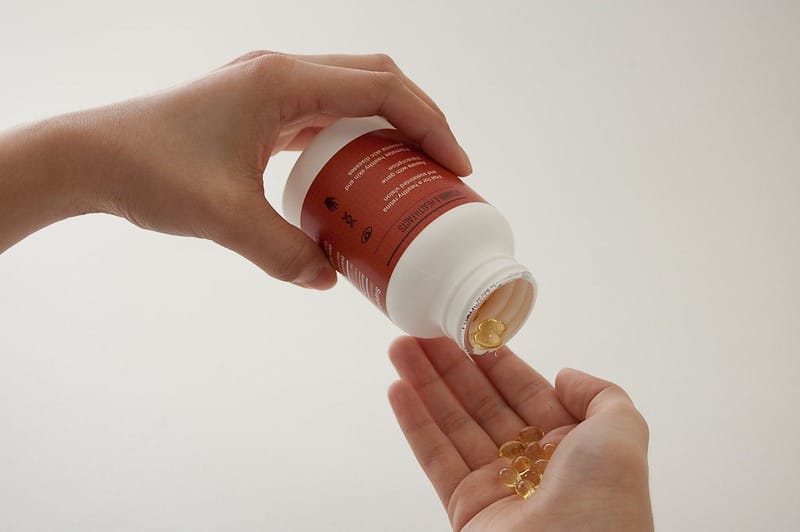
One thing people didn’t hear? Take enough vitamin D and why. According to the study circulating Vitamin D levels status and clinical prognostic indices in COVID-19 patients, people with vitamin D deficiency have a higher inflammatory response as well as higher pulmonary involvement when they catch COVID – 80 percent of hospitalized COVID patients were vitamin D deficient.
Simply put, you’re more likely to catch COVID and have a more severe case that impacts your lungs if you’re not taking vitamin D.
And that’s not all. Dr. Ryan Cole, a pathologist in Boise, Idaho, recently said adequate levels of vitamin D prevent one of the leading causes of COVID death – cytokine storm – and supplementing with vitamin D during the fall and winter is critical to maintaining adequate levels.
The importance of vitamin D in immune health isn’t new. In 2018, the National Center for Biotechnology Information (NCBI) reviewed 82 studies on vitamin D’s impact on upper respiratory illnesses. The NCBI found that vitamin D not only protects against upper respiratory illnesses but also quickens recovery.
Vitamin D plays a vital role in immune health and specifically respiratory health. As such, this should have been public health message number one. Dr. Anthony Fauci, himself, said he takes vitamin D to maintain a healthy immune system – regrettably, he didn’t mention this until September 2020.
Early treatment, no fanfare?
At the beginning of COVID, there were a lot of unknowns. But one thing health officials knew was what kind of virus they were dealing with – an RNA virus. They also knew about a safe and effective treatment for RNA viruses.
Ivermectin was first developed in the 1970s. Since then, it’s been used over 3 billion times to treat various ailments, including the RNA viruses Dengue, Zika and West Nile among others. The total severe adverse reaction in that 3 billion number? 28. You read that correctly. There have only been 28 severe adverse reactions to ivermectin. Plus, it’s safe in doses up to 10 times the recommended amount – it’s so safe and effective that its discovery won the Nobel Prize in 2015.
More importantly, as early as March 15, 2020 – just four days after the U.S. shutdown – four hospitals in Florida started studying the effects of patients treated with ivermectin. What they found was significantly lower mortality rates in the ivermectin group than those treated without ivermectin (15 percent vs. 25.2 percent).
Further, the hospitals in Florida weren’t the only ones successfully using ivermectin to treat COVID. According to the CHEST Journal, an online pulmonary research journal, during the initial outbreak, doctors around the world were using ivermectin to treat COVID. And, as early as April 2020, 37 clinical studies were investigating its usefulness. The good news about ivermectin didn’t stop there.
In October 2020, the Front Line COVID-19 Critical Care Alliance (FLCCC), a group of doctors that formed to research life-saving protocols for the treatment and prevention of COVID, added ivermectin as a “core medication” for prevention and treatment.
The reason? There are now over 80 studies looking at ivermectin as a COVID treatment, and 52 of those studies compare control groups. In the 52 studies comparing control groups, FLCCC found that 98 percent of people in the ivermectin control group showed a positive effect. Further, because of how ivermectin works against viruses, it’s effective against all COVID variants. And because of how safe it is, it doesn’t have to be used in a hospital setting.
Even with all of the safety data, and studies supporting it, health officials still won’t recommend ivermectin. In fact, the FDA, while admitting it hasn’t reviewed the data to support its use, warns against taking ivermectin. As a result, doctors either don’t know about it or are currently afraid to use it.
When there’s a new virus, lack of treatment options makes sense. What doesn’t make sense is waiting for double-blind, placebo-controlled studies to approve possible treatments, especially when the treatment is completely safe.
The fallout
When the U.S. government first announced the shutdown, it was for two weeks to “flatten-the-curve,” so hospitals wouldn’t be overrun, and deaths would be minimized. Over a year later “flatten the curve” has turned into “flatten the economy.”
According to the National Bureau of Economic Research (NBER) in February 2020, the U.S. officially entered a recession. In Colorado, the shutdown lead to the loss of over 217,000 jobs in the state’s labor market alone, according to the LEEDS School of Business.
Further, the 2021 Colorado Business Economic Outlook states, “The COVID-19 pandemic has caused a historic economic downturn in both Colorado and the nation, with record GDP and employment declines. While the economy has bounced back from the depths of the recession, much uncertainty remains around the pandemic and its recurring effects on the economy.”
Pointedly, for 2021, Colorado’s unemployment rate is 6.7 percent. That’s compared to 2.8 percent in 2019. Moreover, it’s the poor and blue-collar workers who have lost their jobs. The Colorado Business Economic outlook reports, “A significant result of the pandemic-induced recession is the disproportional effect it has had on the poor and less well off. The industries that observed the largest declines in employment were those of lower wages and service-based.”
The Colorado economy isn’t the only area to suffer due to the shutdown. According to KFF analysis of the U.S. Census Bureau, because of the pandemic, Coloradans have reported an increase in anxiety and depression, major depressive episodes, an increase in substance use and related deaths, and an increase in suicide. Further, because of the shutdown, people suffering from one of the above issues are finding it significantly more difficulty to get treatment.
The curse of the cure
As President Trump said, the cure shouldn’t be worse than the problem. COVID is a problem and having had it I can honestly say that it was horrible. But at this point, the cure of lockdowns is arguably worse and impacting more people than COVID itself.
Supplementary, the studies that support lockdowns to flatten the curve are, as the American Institute for Economic Research states, “shockingly thin, and based largely on comparing real-world outcomes against dire computer-generated forecasts derived from empirically untested models, and then merely positing that stringencies and “nonpharmaceutical interventions” account for the difference between the fictionalized vs. the real outcome.”
Plus, there are studies like NCBI’s Poorly known aspects of flattening the curve of COVID-19 that show when a society shuts down to “flatten the curve,” that flattening of the curve results in a delay of the curve’s midpoint, thus increasing the final infection numbers.
Now what?
The medical establishment has pushed the message that we have to hide in our homes, or we’re doomed. However, that is not a viable solution, and it hasn’t worked over the past year we’ve tried it.
In addition to pushing something dubious at best, the medical establishment has failed to inform the public on what it can do to help – namely, make sure you’re taking vitamin D (always consult your physician before making any changes to your vitamin D intake). Plus, even though it’s been proven to be effective in 52 studies, the medical establishment continues to recommend against ivermectin. It is for these reasons the one can accurately argue that the medical establishment has failed the American people when it comes to COVID.







[…] spring 2020, while most of the United States was under lockdown, vital donations of plasma, blood and organs struggled to keep up with medical needs, which had not […]
[…] Colorado Gov. Jared Polis, a Democrat, began the state’s reopening strategy relatively early compared to most of the United States, and, so far, it has been successful. Shops are now reopening, and restaurants are allowing dine-in operations at reduced guest capacities to ensure some degree of social distancing and separation. Open-air establishments, too, have skyrocketed into post-lockdown popularity due to the changing summer weather and many other happy coincidences (liquor stores and weed dispensaries staying open, for starters). […]
[…] built? The vaccine debate over mandates has shed light on a debate between personal autonomy and public health – but this debate is nothing […]