



In 2019, Governor Polis released his “Roadmap to 100% Renewable Energy by 2040 and Bold Climate Action” report, which included several projects designed to help Colorado become more environmentally friendly. One of the most critical parts of this initiative, according to Polis, involves 940,000 “zero emission vehicles” on the road by 2030.
But are zero-emission vehicles, aka electric vehicles, better for the environment? Or are there other factors to consider?
Gas vs. electricity – zero-emission vehicles
The term “zero-emission vehicles” sounds inspiring, but in reality, that term is far from true. Indeed, when someone says “zero-emission vehicles,” he or she is talking about what’s coming out of the tailpipe, not the vehicle’s entire lifecycle.
When you look at its entire manufacturing cycle, you’ll find battery electric vehicles (BEVs) aren’t anywhere near “zero-emissions.” Why? Because simply manufacturing a lithium-ion battery produces an additional 10,000 to 40,000-carbon debt compared to internal combustion engine vehicles (ICEVs).
Further, the only way to overcome this debt is to charge the BEV on clean energy sources and drive it for tens or even hundreds of thousands of miles. If a BEV is charged primarily on coal, it’ll produce more GHG emissions than many ICEVs, according to the Congressional Research Service (CRS).
And GHG emissions aren’t the only thing to consider when it comes to vehicles. In its June 2020 report, CRS found that while BEVs on average emit 33 percent less GHG emissions than ICEVs, they also produce 15 percent more fine particulate matter and 273 percent more sulfur oxide. This pollution is primarily due to the source used to charge the vehicle batteries and the battery production itself.
However, the above isn’t the worst part about electric vehicles. A vital component of any BEV is its lithium-ion battery, composed of cobalt, graphite, and lithium. And it’s these minerals that pose a risk to the environment.
Not my backyard, not my problem?
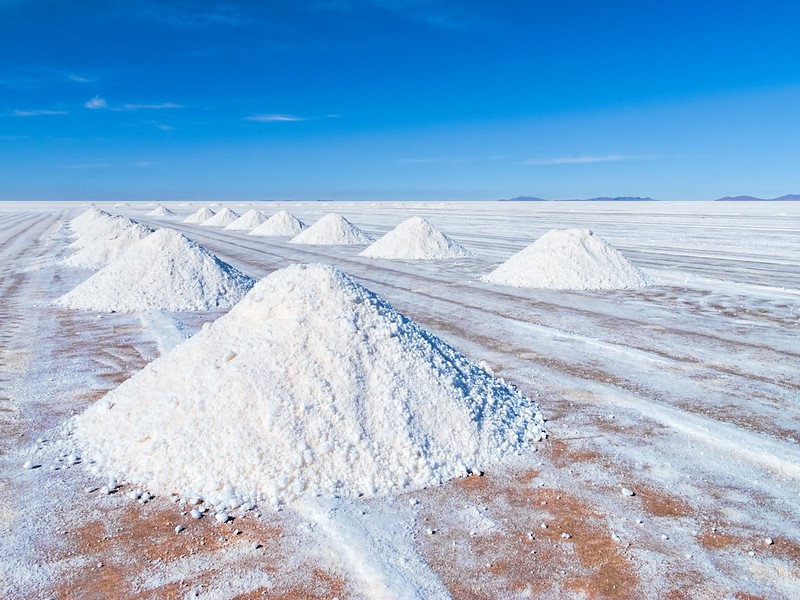
Lithium in its pure form doesn’t occur naturally on Earth. Consequently, it must be mined through hard rock or evaporation ponds called salar brines. Due to their cost-effective nature, salar brines are the most popular way to get lithium.
Because lithium is found in salt flats, the brine underneath must first be pumped to the surface through drilled holes and then into a series of large evaporation ponds to obtain lithium. As the water evaporates, the lithium concentration increases. Once it reaches optimum levels, the lithium solution is pumped into a recovery plant where extraction and filtering occur. Afterward, it’s chemically treated, resulting in lithium carbonate, which is then filtered and dried.
According to the United Nations Conference on Trade and Development (UNCTAD), more than half of the world’s lithium is beneath the salt flats in one of the driest areas on Earth — the Andean regions of Bolivia, Chile, and Argentina. Further, it takes 500,000 gallons of water to extract one metric ton of lithium. In Chile’s Salar de Atacama, 65 percent of the region’s water goes toward mining activities. This has forced local farmers and communities to find water elsewhere, and in some cases, completely abandon ancestral settlements.
For example, Chile’s Tilopozo meadow used to be a hub for shepherds traveling at night. But thanks to local mining activity, the water supply is now depleted, and the meadow is barren.
Further, salar brines often pollute the local water supply. In 2016, a toxic chemical leak from the Ganzizhou Rongda Lithium mine in Tibet resulted in thousands of dead fish, cows, and yaks floating downstream. Even worse? This was the third incident for this mine in seven years, according to the Institute of Energy Research.
Cobalt and 40,000 kids forced to work
As if the above wasn’t enough, lithium isn’t the only problem for batteries. More than half of the global supply of cobalt comes from the Democratic Republic of Congo, where some 40,000 children are forced to work. Besides the moral qualms around forced labor, these children are exposed to dust that’s full of toxic metals, including uranium.
Finally, cobalt mines contain sulfur minerals that can generate sulfuric acid. According to UNCTAD, this sulfuric acid can “devastate rivers, streams and aquatic life for hundreds of years.” UNCTAD goes on to say that graphite mining has similar environmental impacts.
Forget recycling
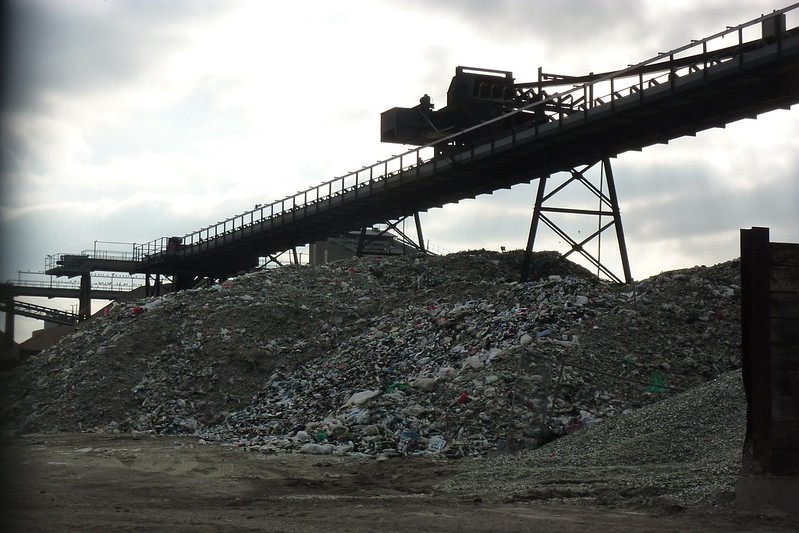
You might be reading the above and thinking, “what about recycling?!” But the fact is that less than 5 percent of lithium-ion batteries are recycled in the U.S., according to CRS. This is because recycling a lithium battery is expensive, and many recycling plants don’t have the technology to recycle these types of batteries. Further, even when lithium batteries are recycled, whether they are from cars to something as small as a cell phone battery, the lithium itself is turned into slag and added to concrete and mortar.
There are efforts to address this issue, but so far, emerging technologies and research shows a degradation of the particle structure, which gets worse the more times lithium is recycled. This, in turn, raises concerns about performance, according to Argonne National Laboratory.
The cradle-to-grave view
Currently, Polis and his administration are looking for ways to decrease Colorado’s carbon footprint. After all, we only have one planet, and if we can use better practices, we arguably should.
But just because something is labeled “green” or “zero emissions” doesn’t mean it’s environmentally friendly. In many cases, “green” is nothing more than a marketing ploy. This is the case when it comes to BEVs.
When you look at the materials used in lithium-ion batteries, you can see that we’re swapping one type of mining for another. Pointedly, the mining required to get lithium is environmentally devastating. Consequently, while BEVs generally reduce GHG emissions, they aren’t environmentally friendly. As such, the push for mass BEV adoption in Colorado is shortsighted.







[…] As I’ve written before, lithium-ion batteries are not environmentally friendly — mining the components of a lithium battery is devastating to the environment, and the batteries, themselves, are very rarely recycled. […]
[…] I previously detailed in “The Green Dream: Zero-Emission Vehicles Big Lie,” one of Governor Polis’ goals for Colorado is a dramatic reduction in Green House Gas […]
[…] https://themaverickobserver.com/zero-emission-vehicles-the-green-dream-big-lie/ […]
[…] of “green electric cars” is finally being scrutinized by clearer heads. People wake up, electric cars aren’t that frigging green! Yeah, those heavy metals and how they are mined really are […]